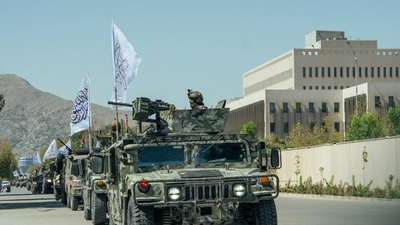
"The member states consider it extremely important to establish an inclusive government in Afghanistan with the participation of representatives of all ethnic, religious and political groups of Afghan society," the declaration read.
The SCO also advocated the formation of Afghanistan as an independent, neutral, united, democratic and peaceful state, free from terrorism, war and drugs, the document added.
The declaration came even as Pakistan Prime Minister Shehbaz Sharif said that peace in Afghanistan, where the Taliban formed government last year after toppling West-backed set up, will not only ensure peace in Pakistan but will also have positive impact on the regional development.
He added that “it would be a big mistake to ignore Afghanistan this time around”, emphasising that peace in region is interlinked with peace in Afghanistan. It is Pakistan’s opinion that strengthening Afghanistan in the security and counterterrorism domain should run parallel to the SCO’s socio-economic support to the Afghan people, he said.
However, President of Tajikistan, in the SCO meeting said that terrorism in Afghanistan is a threat for all country members of this organization. Emomali Rahmon added that drug trafficking from Afghanistan is still a challenge and the time has come to implement a system to combat it.
Meanwhile, Indian Prime Minister Narendra Modi, while indirectly referring to Pakistan’s delay in allowing passage of Indian relief to Afghanistan, called upon SCO member states to give transit access to each other and pitched for boosting connectivity for ensuring resilient supply chains for the region.
Heads of states from China, Pakistan, India, Kazakhstan, Kyrgyzstan, Russia, Tajikistan and Uzbekistan gathered in Samarkand to attend a summit of the central Asian security body, formed by Beijing. Afghanistan, Belarus, Iran, and Mongolia are observer countries, while Armenia, Azerbaijan, Cambodia, Nepal, Sri Lanka and Turkey attended the summit as “dialogue partner”.