Taliban Bans Afghan Girls From Participating in University Entrance Exams

The Taliban’s National Examination Authority announced that this year only male students can participate in the university entrance exam in Afghanistan.

The Taliban’s National Examination Authority announced that this year only male students can participate in the university entrance exam in Afghanistan.
The Taliban agency on Tuesday added that the ban on the participation of female students in the university entrance exams has been decided by the Ministry of Higher Education of the Taliban.
The Taliban's National Examination Authority emphasised that the organisation was not part of the decision-making process on the ban of Afghan girls from university entrance exams.
The Taliban insists that the ban on women's education is temporary, but the continued ban on girls’ participation in university entrance exams shows that the group has no intention to lift the ban on Afghan girls’ right to higher education this year.
However, the National Examination Authority said that the first round of entrance exams for Afghan government universities will be held on July 20 and 21 in Ghor, Sar-e Pul, Daikundi, Logar, Faryab, Khost, Jawzjan, Takhar, Paktia, Baghlan and Bamyan provinces.
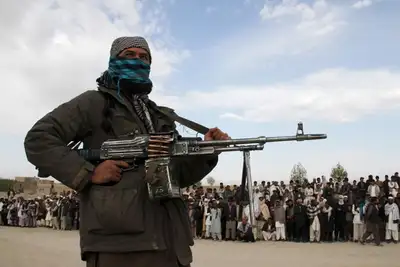
Mullah Yaqoob, the Taliban's defence minister, ordered the group’s armed forces members to wear military uniforms.
The Taliban’s Ministry of Defence uniform is similar to the uniform of the National Army of the previous Afghan government. It is also reported that the Taliban now uses the uniforms of the former government’s Ministry of Defence.
In an interview with Afghanistan International on Wednesday, Enayatullah Khwarizmi, Taliban’s spokesperson for the Ministry of Defence, confirmed Mullah Yaqoob’s order sent through a letter about the uniform in the Ministry of Defence.
In this letter, it has been stated that the military personnel of the Taliban’s Ministry of Defence should wear military uniforms during their duty.
The Taliban's defence minister has banned the Taliban’s defence forces from use of the traditional appearance with a scarf, slippers, and other civilian clothing.
Mullah Yaqoob emphasised that the group’s Ministry of Defence has prepared and distributed military uniforms to all personnel of the ministry.
After the Taliban’s takeover of Afghanistan in August 2021, the group’s forces and civil servants continued to use traditional clothes in military and civil offices.
In recent months, reports have been published that armed people in plain clothes have been harassing and robbing citizens using the Taliban police rangers.

In the latest move of implementing restrictions on Shia practices in Afghanistan, the Taliban governor in Kabul announced that Shias can only hold mourning ceremonies during the month of Muharram at mosques and other religious centers that “have no security risks”.
The Taliban’s new restriction imposed on Muharram ceremonies comes even though on Tuesday the Shia Ulema council had expressed dissatisfaction with the Taliban’s restrictions on the Shia religious ceremony across Afghanistan.
In a joint statement on Tuesday, the Kabul governor and the Taliban’s interior ministry promised that they will ensure security during the mourning ceremonies of Shias during the month of Muharram. In the statement, the Taliban asked Shia youth to cooperate with the group in providing security for the Shia religious ceremony.
While the Taliban have previously ignored any threats from the ISIS in Afghanistan, now close to the month of Muharram, the group has warned that ISIS plans to attack the Shia community members.
The Taliban has claimed that it has imposed restrictions on the Muharram ceremony in consultation with Shiite representatives. However, in response to the Taliban’s claim, on Tuesday, the Shia Ulema Council asked the Taliban to lift the restrictions imposed, so that Shia communities could hold the mourning ceremony during Muharram like the previous years.

A group of Afghan women protested against the Taliban’s order to shutdown beauty salons in Kabul. Video clips received by Afghanistan International show dozens of women gathered in the Share Naw area, chanting "bread, work, justice".
In the video, it can also be seen that Taliban members are trying to disperse the gathering of the women protesters with water cannons.
Recently, the Ministry of Promotion of Virtue and Prevent of Vice of the Taliban handed out a one-month ultimatum to owners of beauty salons to shut down their operations.
According to Afghanistan Chamber of Commerce and Industry, about 60,000 women will lose their jobs due to the closure of beauty salons in Afghanistan.
After Taliban’s brutal crackdown on women’s demonstration in Afghanistan, this is the first women's protest in recent months under the group’s reign.

Amidst recent events and the distorted portrayal of Afghanistan's reality, it has become imperative for us, especially the anti-Taliban constituency, to confront the intricacies of our struggles and shape the destiny of our nation.
While outsiders may have their own perceptions, they often fail to grasp the nuanced dynamics that underpin our challenges. Relying solely on external support or waiting for others to act on our behalf is not a sustainable solution. Instead, it is time for us to stand united as a nation, break free from the clutches of terrorism and forge our own path towards a liberated homeland.
The responsibility to liberate and safeguard Afghanistan rests firmly on our shoulders—the people of Afghanistan. By transcending our differences and embracing a collective vision of freedom and social justice, we have the power to defeat the Taliban. This call for unity is not mere rhetoric, it is an absolute necessity. We must unite as a formidable force, representing all voices that reject the Taliban's ideology of terror and oppression. This includes individuals and communities within our borders, as well as among the diaspora, exiled politicians, activists, and international supporters who believe in a free and democratic Afghanistan.
Through unity, we possess the means to effectively evade and counteract the normalisation of the Taliban, along with any undue influence stemming from external entities or individuals with questionable motives, such as Tobias Ellwood. The notion of "improved security," often touted by many in the Western world, may lack a comprehensive understanding of the intricacies involved in this issue, or it may be conveniently ignored for personal gains. However, it is crucial to acknowledge that ultimately, it is not their country, and thus, their perspective may not fully encompass the profound ramifications endured by our people.
The choice before us is stark: either political leaders in exile and all anti-Taliban individuals and parties unite and stand with the people and the resistance to liberate Afghanistan, or bear witness to the heart-wrenching destruction of our country and the obliteration of our rich history and culture before our very eyes. Alarming efforts are underway to normalise and whitewash the Taliban presenting a facade of peace and improved security. However, it is essential to confront the reality sourced from credible and reliable channels and listed below are some examples.
A report pertaining to the period of April 2022 by the UN team monitoring the Taliban's activities revealed a distressing truth: the Taliban maintain a disturbingly close relationship with al-Qaeda, providing them with a secure sanctuary and enabling their dangerous operations.
"The link between the Taliban, Al-Qaeda, and Tehrik-e-Taliban Pakistan (TTP) remains strong and symbiotic," stated the fourteenth report of the Analytical Support and Sanctions Monitoring Team, submitted pursuant to resolution 2665 (2022). This alliance allows various terrorist groups to operate with greater freedom under the Taliban's de-facto rule, posing a rising threat to both Afghanistan and the region.
Sadly, Afghanistan's descent into becoming a safe-haven for terrorism goes hand in hand with a harrowing reality for its citizens. Agnès Callamard, Amnesty International's Secretary General, paints a grim picture of human rights abuses within the nation. "Public critics of the Taliban's oppressive rules face arbitrary arrests, while women, girls, and ethnic Hazara people suffer from targeted executions. The Taliban's actions consistently violate the human rights of Afghanistan's population."
In Panjshir province, the Taliban have committed heinous war crimes, as documented by Amnesty International in the report titled 'Your Sons Are In The Mountains': The Collective Punishment of Civilians In Panjshir by the Taliban. These crimes include extrajudicial executions, torture, hostage-taking, unlawful detention, and the destruction of civilian homes. Civilians suspected of affiliation with the NRF face brutal targeting, while village-wide arbitrary arrests and nighttime curfews further exacerbate the suffering. The report highlights the mass extrajudicial executions of captured NRF fighters and the torture and unlawful killings of innocent civilians.
Adding to the horrors, the United Nations Assistance Mission in Afghanistan (UNAMA) reported numerous serious human rights violations by the Taliban since they took control in August 2021. Documenting 160 allegations of extrajudicial killings, 56 incidents of torture and ill-treatment, and over 170 arbitrary arrests and detentions of former government officials and security force members, UNAMA's findings reveal a pattern of gross abuse. Methods of torture, such as kicking, punching, slapping, and the use of electric shock devices, are employed alongside cruel, inhumane, or degrading punishments, including beating up of shopkeepers for not attending mosques.

The Shia Ulema Council of Afghanistan has confirmed that the Taliban has imposed restrictions on the mourning ceremony during the month of Muharram.
In a statement on Tuesday, this council asked the Taliban to lift the restrictions so that Shias can hold Muharram freely and like the previous years.
In the statement, it has been stated that Taliban officials, during a meeting with the representatives of this council, imposed restrictions on holding the Muharram ceremony due to security threats.
On Monday, after reports of the Taliban's restrictions on the Muharram ceremony, Zabihullah Mujahid, the group’s spokesperson announced that they "support religious minorities and have given [them] freedom to worship and perform their religious ceremonies".
However, Mujahid emphasised that "large gatherings and collective movement have been limited due to security measures”.
The Shia Ulema Council has stressed that the Shia clerics did not accept the Taliban's restrictions, and to address this issue, they assigned a delegation to convey their message and discuss it with the Taliban officials.
The council's statement said, "The officials of the Islamic Emirate [Taliban], in a meeting with the mentioned delegation, expressed their firm decision to impose restrictions in some areas of Kabul due to serious security threats."
The council emphasised that their delegation expressed "serious concern" about the consequences of imposing restrictions on the Muharram ceremony during the meeting with the Taliban officials.
In their statement, the Shia Ulema Council emphasised that there have been reports of Taliban restrictions on Muharram ceremonies from other provinces and districts too.
The council has also asked the people to organise the Muharram and Ashura ceremonies "in an orderly and magnificent manner" with the coordination and cooperation of the Taliban forces.
