Killed Three Taliban Members in Badakhshan, Claims NRF
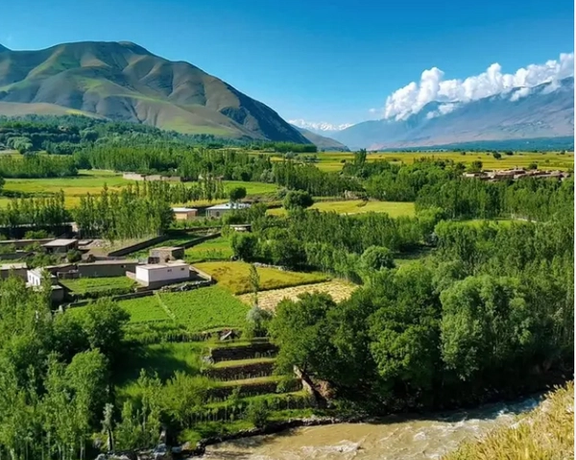
The National Resistance Front (NRF) announced that the front’s forces have killed three members of the Taliban in Sina village of Jurm district of Badakhshan province.

The National Resistance Front (NRF) announced that the front’s forces have killed three members of the Taliban in Sina village of Jurm district of Badakhshan province.
NRF told Afghanistan International that its forces were not harmed in the attack that took place on Sunday night.
In a statement, NRF added that the weapons and ammunition of these three Taliban members have been confiscated by the Taliban members.
The Taliban has not reacted to NRF’s statement so far.
NRF and Afghanistan Freedom Front (AFF), which continue to fight against the Taliban, have increased their military operations against the Taliban in recent days.
The two anti-Taliban resistance groups have reported several operations against Taliban forces in various provinces of Afghanistan.


Zalmay Khalilzad, the former US special representative for Afghanistan, said that former Afghan president Ashraf Ghani couldn’t deliver his tasks properly, therefore, he blames America for the fall of his government.
Khalilzad added that after the signing of the Doha agreement, the US continued their political and military support to Afghanistan.
Khalilzad referred to Ghani’s visit to Washington and how he was warmly welcomed by senior US officials and stressed that the trip took place after the signing of the Doha Peace Agreement between the Taliban and the US.
According to Khalilzad, America's military support to the Afghan security forces continued even after the signing of the agreement, and this support came even though, according to him, not one American soldier had been killed by the Taliban during this period.
This is even though many, including senior officials of the former government and those close to Ashraf Ghani, consider the signing of the Doha Agreement and the withdrawal of American troops from Afghanistan as the cause of the fall of the Afghan government and the rise of the Taliban.

Nai, Supporting Free Media in Afghanistan, announced that the Taliban forces detained three journalists in Kandahar on Sunday.
According to Nai, the detained journalists include Shamsullah Omari, Wahid ur-Rahman Afghanmal and Ataullah Omar.
The reason behind the detention of these three journalists is not yet clear.
On Monday, Nai stressed that the detention of journalists has increased in Afghanistan.
Nai stated that in the past two weeks, the Taliban have detained eight journalists across the country.
Nai urged the Ministry of Information and Culture of the Taliban, especially the Media Violation Commission, to conduct the necessary investigations on the fate of the detained journalists.

On the eve of the second anniversary of the fall of the republic order in Afghanistan, Afghan protesters staged demonstrations in various countries and asked the international community to help them overthrow the Taliban government.
The demonstrators urged the international community to stop their engagement with the Taliban.
Protesters declared the continuation of Taliban rule as a threat to Afghanistan, the region and the world.
On Sunday, Afghan protesters in Canada, Germany, and some other countries criticised the world's engagement with the Taliban on the occasion of the "Solidarity with the Afghan People against the Taliban" week and described it as "alignment with terrorism".
These protesters criticised the "secret engagements and negotiations behind closed doors" of some countries with the Taliban and called for an end to such engagements.
They said that the Taliban is a threat to the security of the region and the world and "any disregard for it will result in severe consequences”.
About two weeks ago, Thomas West, and Rina Amiri, US representatives for Afghanistan, met with Taliban’s Foreign Minister Amir Khan Muttaqi in Doha. This meeting was met with a wave of criticism from Afghans.
These protesters also referred to the "war crimes, gender apartheid, forced migration, genocide, and attacks on religious ceremonies of Shiites” and asked the United Nations and human rights organisations to cooperate in "referring the Taliban and its crimes to the International Criminal Court”.

The Taliban governor's office in Khost announced that "Pakistani refugees and residents of Khost province" had been killed in an explosion which occurred on Monday in Khost city.
According to a statement from the governor’s office in Khost, three dead individuals and seven wounded have been taken to a hospital for treatment.
The statement added that "the explosion took place around 11 in the morning on Monday at a hotel in Khost city”.
Meanwhile, an official of the Pakistani government confirmed to Afghanistan International that members of the Tehreek-e-Taliban Pakistan (TTP) suffered casualties on Monday during the attack in Khost city, the capital of the province.
However, this Pakistani official denied the use of airstrikes by the country’s government.
Local sources informed Afghanistan International on Monday that airstrike targeted members of Tehreek-e-Taliban Pakistan present inside a hotel in the center of Khost province.
According to local sources, in the attack, the roof of the hotel building collapsed, and some people were trapped inside the building.

In a report to the United Nations Security Council, Antonio Guterres, the UN Secretary-General, said that ISIS has increased its "operational capacity" in Afghanistan and is a serious threat to Afghanistan and the region.
The report expressed concerns over ISIS’ access to NATO weapons and the weapons transfer to regional countries.
Although the Taliban has always emphasised that ISIS has been suppressed in Afghanistan, the UN report said that ISIS in Afghanistan is more "skilled" in its attacks against the Taliban than in the past, and their focus is on eliminating high-ranking Taliban officials.
The report stated, "Attacks against high-profile Taliban figures in Balkh, Badakhshan, and Baghlan provinces raised ISIL-K morale and boosted recruitment.”
In this report, the number of ISIS forces in Afghanistan has been estimated to be 4,000 to 5,000 fighters.
In this report, the member countries expressed concerns over the danger of the weapons left by NATO for the security of the countries in the region. These governments think that a large amount of these weapons can be transferred to the regional countries by ISIS and groups affiliated with the Taliban and Al-Qaeda, such as the Tehreek-e-Taliban Pakistan.
In response to this report, one of the Taliban spokespersons said that these weapons have not fallen into the hands of other groups.
This is the 17th report of the Secretary General of the United Nations to the Security Council over the threat of ISIS, which was prepared by the Analytical Support and Sanctions Monitoring Team of this Council on August 12.