Taliban Official's Appeal to Afghans in Germany: "Don't Trust the Media"

Abdul Bari Omar, Director of the Taliban's National Food and Drugs Administration, addressed Afghans in Cologne, Germany.

Abdul Bari Omar, Director of the Taliban's National Food and Drugs Administration, addressed Afghans in Cologne, Germany.
He urged the audience to judge the Taliban based on their "achievements," rather than media portrayals. In a video clip released by the Taliban official on social media, Omar's speech, which echoed the Taliban's unified governance under their leader, received support from those present.
The timing of the event is uncertain but coincides with Omar's visit to the Netherlands for the World Local Production Forum.
On 6 November, the Bakhtar News Agency, controlled by the Taliban, reported Omar's participation in the conference in the Hague, Netherlands.
Following his attendance at the Hague forum, Omar is said to have travelled to Germany at the invitation of an Afghan cultural activist.
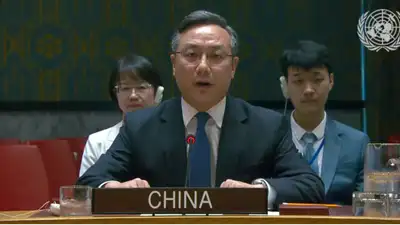

Evgeny Vinokurov , the chief economist of the Eurasian Development Bank, has warned that the establishment of the Qosh Tepa canal by the Taliban will lead to a water crisis in Central Asia.
Vinokurov said that the canal would reduce the water supply of the Amu River and affect the regional water agreements.
Kazakh media outlets quoted the chief economist of the Eurasian Development Bank and reported that according to forecasts, Central Asia will face a chronic water shortage by 2028.
He said at a round table conference in Almaty on Thursday, "The Taliban is now building the Qosh Tepa canal and its inauguration is planned for 2028, which will reduce the flow of river water in Central Asia."
Qosh Tepa Canal is one of the largest water transfer canals in Afghanistan and the region, which starts from Kaldar district in Balkh province and will transfer the water of the Amu river to Andkhoi district of Faryab province.
Earlier, Shavkat Mirziyoyev, the president of Uzbekistan, had warned that the construction of the Qosh Tepa Canal by the Taliban could fundamentally change the water regime in Central Asia.
Despite the criticism, the Taliban has continued to build the canal. Recently, the group announced the construction of the second phase canal in Afghanistan.
During a ceremony to celebrate the start of the second phase of the canal, Mullah Yaqoob, the Taliban's defence minister, said in a statement that seemed to be a response to Uzbekistan, "Neighbours should not worry, we will never violate the rights of our neighbours in using the water of Amu Darya."

Taliban’s intelligence agency detained, Parisa Azada, an Afghan women's rights activist on Wednesday, in Kabul.
Shamail Tawana Naseri, leader of the Afghan Women's Movement for Justice and Freedom, told Afghanistan International that the activist had been detained from Dashte Barchi area in western Kabul.
Azada is a member of the Afghan Women's Movement for Justice and Freedom.
According to Naseri, on Thursday, the Taliban intelligence agency informed Parisa Azada's family that she had been detained by the group.
Taliban officials have not commented on the detention of the female activist.
The Afghan Women's Movement for Justice and Freedom was established in January 2022 and since then has repeatedly protested against the policies of the Taliban.
Fereshta Abbasi, the Afghanistan researcher at the Human Rights Watch, demanded the immediate release of this member of the protest movement in Afghanistan.
She wrote on X social media platform that the Taliban should end arbitrary arrests of these women activists and hold their forces accountable.
In recent months, the Taliban also detained three other women rights activists in Kabul.

The government of Pakistan announced that 317,225 Afghan immigrants have returned to Afghanistan from Pakistan.
According to the Pakistani government, 212,225 people entered Afghanistan from the Torkham crossing and 105,000 from the Chaman border crossing.
The process of forced deportation of Afghan immigrants without residency documents from Pakistan continues, despite the criticism of international organisations.
Bilal Karimi, the Taliban’s Deputy Spokesperson, said that over the last two weeks, 12,430 refugee families, including 73,208 people, have returned to the country through Spin Boldak border crossing.
Pakistan ordered immigrants without official residency documents to leave the country voluntarily until November 1. After the deadline, Pakistan's Ministry of Interior started a door-to-door search operation to identify and arrest Afghan immigrants without official documents.
At the same time, Jan Achakzai, the Minister of Information of the Baluchistan province of Pakistan, has once again announced that Afghans can enter Pakistan only with passports and visas. Before this, Afghan travellers could cross the border and enter Pakistan with a national identity card too.
On Wednesday, Amnesty International criticised the behaviour of the Pakistani police towards Afghan immigrants and demanded their release from the detention centers, and urged Pakistan to stop arbitrary detentions of these immigrants. The human rights group said that the mass deportation of Afghans from Pakistan deprives many of them of access to their basic rights.

The Taliban’s Ministry of Interior announced the formation of a special unit to ensure the security of the Qosh Tepa channel.
In a statement, the ministry wrote that these special forces have the "necessary military equipment and devices" to protect the canal.
Over the past few months, the Taliban has focused on the construction of the Qosh Tepa Canal. Some critics of the Taliban said that the Taliban intends to transfer their support base to this northern strategic geographic location.
However, earlier the Ministry of Agriculture of the Taliban called the reports about the distribution of lands around the Qosh Tepa Canal unfounded and said that these land parcels would be distributed only on the orders of the group’s leader.
The Taliban has not officially specified to whom the land parcels around Qosh Tepa Canal will be distributed.
The National Resistance Front (NRF), the main anti-Taliban resistance group, had said last year that the Taliban had started distributing land around the Qosh Tepa Canal.
According to NRF, these lands will be distributed "to terrorists transferred from Pakistan and other non-indigenous people".
The 280-kilometre long and 100-metre wide Qosh Tepa Canal starts from the Kaldar district of Balkh province passes through Jowzjan province and reaches Andkhoi district of Faryab province.
The Qosh Tepa Canal transfers the water of the Amu River to parts of Balkh, Jowzjan, and Faryab provinces, which will irrigate about 700,000 hectares of land.

The Afghanistan Freedom Front (AFF) launched an assault on a Taliban outpost in Kandahar City on Wednesday evening. According to AFF, the attack resulted in the death of one Taliban member and injuries to two others.
AFF disclosed details of the offensive on social platform X, stating it occurred in Kandahar's first district.
The Taliban has not yet issued a statement regarding the incident.
This attack follows a recent AFF operation against a Taliban police command in Baghlan City, where two Taliban members were killed.