3 Taliban Fighters Killed in 2 Separate Attacks, Claims NRF

The National Resistance Front (NRF) announced that it has killed at least three Taliban members and wounded five others in two separate attacks in Parwan and Kapisa provinces.

The National Resistance Front (NRF) announced that it has killed at least three Taliban members and wounded five others in two separate attacks in Parwan and Kapisa provinces.
So far, the Taliban has not commented in this regard.
The front has also shared videos with the media showing the front’s guerrillas launching rockets at targets in Parwan and Kapisa.
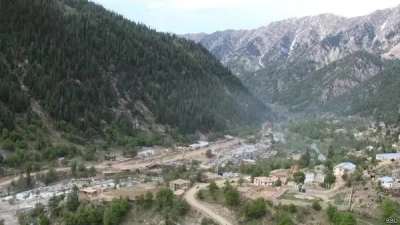
In a statement released on Friday, the front stated that it successfully targeted a Taliban base in Bagram district of Parwan province. The operation resulted in the death of two Taliban members, with three others sustaining injuries.
It also added that in a separate operation, its guerrilla forces attacked a Taliban base in the capital of Kapisa province, after which one Taliban member was killed and two got injured.
The front stated that their forces weren’t harmed in these operations.

Hanif Atmar, former Afghan Foreign Minister, criticised Pakistan's Army Chief's statement that one Pakistani life is more important than the entirety of Afghanistan, terming it as irresponsible and deeply concerning.
Rahmatullah Nabil, former intelligence chief of Afghanistan, identified Pakistan as Afghanistan's "historic enemy," stating that General Asim Munir's remarks reflect Islamabad's long-term policy towards Afghanistan.
In a gathering with students, Pakistan's Chief of Army Staff declared, "The life of one Pakistani is more important than the whole of Afghanistan." This statement has sparked widespread criticism from Afghan political figures and the general public on social media. However, there has been no official response from the Taliban.
Atmar, in his reaction, stressed that given the Army Chief's significant influence in Pakistan's internal and foreign policies, his comments should be a serious concern for Afghanistan, its neighbours, and the international community. Atmar interpreted Munir's remarks as a combination of covert and overt threats and an overt incitement of anti-Afghan sentiments among Pakistanis.
Atmar labelled parts of Munir's speech as deceitful and dangerous, particularly the accusation that Afghanistan has long supported the insurgency in Balochistan and has never been friendly towards Pakistan. He refuted these claims, stating that the Afghan people have never intended to harm Pakistan and have always been deeply grateful for the support of Pakistani people during their displacement.
He warned of the significant implications these statements could have on Afghanistan-Pakistan relations and the broader regional context.
Rahmatullah Nabil, responding to Munir's comments, indicated that these remarks are not new and represent Pakistan's long-standing approach towards Afghanistan, portraying Pakistan as a 'historic enemy' always trying to destabilise Afghan governments and society.
Masoom Stanekzai, the former chief peace negotiator for the Afghan government, also reacted, recalling his 2018 conversation with Munir in London. He urged Munir to fundamentally change Pakistan's outlook towards Afghanistan, warning of the eventual repercussions of their policies.
Asim Munir's address to Pakistani students included claims that Pakistan has provided sustenance to five million Afghan citizens since the last fifty years and that the Pakistani Army would target anyone threatening Pakistan's citizens. He also accused Afghanistan of supporting the Balochistan insurgency and never being a friendly neighbour to Pakistan.
These remarks from Pakistan's Army Chief underscore the deep-seated dissatisfaction among Pakistani officials with the Taliban. The relationship between Islamabad and the Taliban-controlled Kabul has worsened due to increasing insecurities in Pakistan since the Taliban's ascent. Pakistani authorities blame the Taliban for providing safe havens to anti-Taliban militants like the Tehreek-e-Taliban Pakistan (TTP) and allege their involvement in recent attacks against Pakistani forces. However, Taliban spokespersons have consistently refuted these claims, accusing Islamabad of projecting its security failures onto the Taliban.

The US State Department, through Deputy Spokesperson Vedant Patel, has declared Afghanistan as one of the most perilous countries for American citizens.
Patel stressed on the paramount importance of safeguarding US nationals, particularly those in captivity or facing hostage situations.
During a recent press conference, Patel informed Afghanistan International journalist Marzia Hosseini about the US' dedicated efforts, spearheaded by the special representative for hostage affairs, to secure the release of Americans held by the Taliban.
Since the Taliban's ascent to power two years ago, many countries, with the US leading the charge, have strongly discouraged their citizens from traveling to Afghanistan.
Earlier, the State Department specifically warned against travel to Afghanistan, citing severe threats such as terrorism, unlawful detentions, kidnappings, and criminal activities.
Secretary of State Antony Blinken has acknowledged the detention of several US citizens by the Taliban and disclosed ongoing efforts by the US government for their liberation and safe return.
However, detailed statistics regarding the number of Americans detained by the Taliban remain undisclosed by the US.

Mujib Khilwatgar, head of Nai, a prominent organisation supporting free media in Afghanistan, has announced a temporary halt to its activities in the country.
Khilwatgar indicated that he will elaborate on the reasons for this suspension at a later date.
Established in 2005, Nai has been committed to its mission of fostering a free media landscape, as Khilwatgar expressed in a recent video message.
The Taliban spokesperson previously declared that Nai, operating externally, lacks the legitimacy to comment on Afghan media affairs, thereby denying it official recognition.
Khilwatgar voiced his aspiration for Nai's future operations, contingent on positive developments in Afghanistan's political and social environment. He cited the challenging current political climate and unfavourable conditions in Afghanistan as the primary reasons for this pause in operations.
Following this announcement, Khilwatgar emphasised that no individual is authorised to represent Nai in Afghanistan, in either a real or nominal capacity.
In his address, Khilwatgar reflected on the ongoing hardships faced by Afghanistan. Nai, known for its advocacy and extensive reporting in support of journalists, has played a critical role in the Afghan media sector.
Post the Taliban's ascension to power in 2021, a significant number of media outlets ceased operations, and numerous journalists were forced to leave Afghanistan. Over the past two years, Nai has actively responded to instances of journalist detentions by the Taliban through official statements. Despite these challenges, Nai has maintained a non-confrontational stance towards the Taliban, referring to them as 'officials' in its communications.

Mullah Abdul Kabir, the Taliban's Deputy Prime Minister for Political Affairs, has announced that their representative has been invited to the forthcoming Doha meeting on Afghanistan.
The second United Nations conference, involving special representatives from various countries, is scheduled to be held in Qatar starting from February 18 to February 19.
The Taliban’s Prime Minister's office stated on Thursday that Mullah Abdul Kabir met Paul Klouman Bekken, Chargé d'Affaires at the Norwegian Embassy in Afghanistan. The Norwegian diplomat confirmed that the Doha meeting about Afghanistan is planned for February 18, and the Taliban's representative is expected to attend it.
UN spokesperson Stéphane Dujarric, in a press briefing on Wednesday, had said that the aim of the Doha meeting is to align different nations' approaches towards Afghanistan and discuss independent assessments of the country.
The first UN meeting in Doha, hosted by UN Secretary-General António Guterres, took place on May 1. Representatives from the USA, European Union, Russia, and Afghanistan's neighbours attended the meeting, but the Taliban and opposition forces had not been invited.
During his meeting, Mullah Abdul Kabir expressed the Taliban's wish for reciprocal respect from the US, Europe, and neighbouring countries. The Taliban's statement noted that the Norwegian Chargé d'Affaires emphasised on the importance of education for girls and women and the creation of job opportunities for them.
The Taliban's Deputy Prime Minister remarked that they are not against the education of women and girls. He noted that a special committee has been established on the Taliban leader's orders to promote education for women and girls.
Kabir encouraged Norway and other European countries to reopen their embassies in Kabul. He also stated that the Tehreek-e-Taliban Pakistan (TTP) has no place in Afghanistan and that ISIS has been subdued.
According to the Taliban's statement, Norway has dedicated 93 million dollars for managing natural disasters in Afghanistan and seven million dollars for aiding migrants returning from Iran and Pakistan.

The United Nations, spearheaded by Secretary-General António Guterres, is set to organise a conference on Afghanistan in Doha on the 18th and 19th of February.
Stéphane Dujarric, the spokesperson for the UN, has confirmed the participation of special representatives from various countries involved in Afghan affairs.
Announced at a press briefing on Wednesday, the conference aims to synchronise the approaches of different nations towards Afghanistan and to deliberate on independent assessments of the situation in the country.
This upcoming meeting follows the first UN-led conference in Doha last May, which saw attendance from representatives of the USA, EU, Russia, and Afghanistan's neighbouring countries. Notably absent from the previous summit were representatives from the Taliban and opposition political forces.
Following the earlier conference, Guterres announced efforts to cultivate a consistent stance on Afghanistan among all participants. However, discrepancies among representatives from different countries were reported, as highlighted by Zamir Kabulov, Russia's Presidential Representative for Afghanistan.
In preparation for this meeting, international human rights organisations have urged the UN to include Afghan women in their discussions on Afghanistan.
Complementing these diplomatic efforts, a regional meeting is slated to occur in Kabul prior to the Doha conference. According to Rasoul Mousavi, Director-General for South Asia at Iran's Ministry of Foreign Affairs, Kabul is set to host a regional meeting next week with representatives from Iran, Pakistan, Russia, and China.