Do Not Travel to Afghanistan, UK Warns Its Citizens Again

The UK has once again warned its citizens against travelling to Afghanistan, advising them to not go to the country.

The UK has once again warned its citizens against travelling to Afghanistan, advising them to not go to the country.
In the UK government's statement, while highlighting the potential risk of terrorist attacks in Afghanistan, it has been noted that Kabul's airport does not meet international safety standards.
The country has particularly warned of the risk of terrorist attacks near religious sites and during religious ceremonies and holidays.
The statement emphasised that travel to Afghanistan is "extremely dangerous”, and there is also a risk of British citizens being arrested.
The UK stressed that if British nationals are detained in Afghanistan, London may not be aware of their situation as there are significant challenges regarding consular communication.

The Ministry of Foreign Affairs of Pakistan announced on Friday that Rahim Hayat Qureshi, the official in charge of Afghanistan and West Asia affairs in the ministry, met China's special representative for Afghanistan.
According to the ministry, both parties emphasised on their countries' commitment to assisting in establishing peace and stability in Afghanistan.
The Ministry of Foreign Affairs of Pakistan announced that the meeting took place on Friday and Qureshi and Yue Xiaoyong stressed on the need to increase coordination to ensure regional stability.
The ministry added that both sides also emphasised on the vital role of Afghanistan's neighbouring countries in achieving peace, stability, and prosperity in the region.

Majid Shoja, Commander of the Khorasan Razavi Iranian Border Guards, reported the interception of 171 kilograms of methamphetamine in a recent anti-drug operation.
According to Shoja, the stash was hidden inside a lorry that was identified as it entered Iran from Afghanistan.
As per ISNA's Friday report quoting Shoja, the narcotics were ingeniously concealed in the lorry’s floor by "skilled smugglers."
Shoja further mentioned that both the lorry and the individual involved in drug trafficking, along with the confiscated drugs, have been handed over to the Iranian judicial authorities.
The increase in executions within the Islamic Republic of Iran’s prisons has sparked concerns amongst human rights groups. These organisations have identified that amongst those executed are political detainees and individuals accused of drug trafficking.
Additionally, there have been media reports about the execution of Afghan nationals in the Islamic Republic's prisons.

The US Embassy for Afghanistan, based in Doha, has refuted recent reports regarding the reopening of its consulate in Afghanistan.
An embassy spokesperson informed Afghanistan International that the US position on Afghanistan remains consistent, with no immediate plans to recommence diplomatic operations in Kabul.
Earlier, Voice of America's English division reported that the US was tentatively exploring the option of reopening its consulate in Taliban-controlled Afghanistan, without formally recognising the regime. According to this report, the consideration was mentioned in a recent strategic document by the US State Department.
The report had indicated that such a move could signal a potential alteration in US strategy for engaging with the Taliban, aimed at fulfilling multiple security, political, and economic goals.
Nonetheless, the US Embassy in Doha emphasised to Afghanistan International that there has been no alteration in the United States' approach towards Taliban-governed Afghanistan.

Voice of America (VoA) English service has reported that the United States is cautiously evaluating the possibility of reopening its consulate service in Afghanistan under the Taliban control, without officially recognising the group.
According to VoA, the issue has been included in a new strategic document by the US State Department.
The report indicates a potential shift in the US policy towards engaging with the Taliban to achieve various security, political, and economic objectives.
Voice of America states that the US State Department's strategy document mentions, "With the Taliban, we advocate for consular access, transparency and accountability for Americans.”
The document also emphasises on support for the work of the US Special Envoy for Hostage Affairs in securing the release of American hostages imprisoned in Afghanistan.
Following the fall of the previous government and the Taliban takeover of Afghanistan in 2021, the US closed its embassy in Afghanistan. Currently, the embassy operates under the supervision of a Chargé d'Affaires from Doha.
The new US State Department document reads, "Even as — and for as long as — the United States does not recognise the Taliban as the legitimate government of Afghanistan, we must build functional relationships that advance our objectives and further our understanding of the Taliban’s readiness and ability to fulfil their commitments to us."
According to the report, the US' new strategy encompasses four areas: counter-terrorism, economic aid, local engagement, and providing consular services to American citizens and assistance with the migration of Afghans to the US.
Voice of America's report further highlights that the US will continue discussions on the fundamental rights of the Afghan people, particularly the rights of women and girls.

The Special Inspector General for Afghanistan Reconstruction (SIGAR) reported to the US Congress that the threats of Al-Qaeda in Afghanistan are re-emerging.
In the report, SIGAR stated that the Al-Qaeda leader, who is probably in Afghanistan, called for attacks on American, European, and Israeli embassies and buildings.
This organisation presented its quarterly report to the US Congress on January 30.
In this report, SIGAR has detailed the extent of US assistance to Afghanistan following the Taliban's takeover. The report also covers the economic situation and human rights in Afghanistan under Taliban control.
As per the report, following the war between Israel and Hamas, the leader of Al-Qaeda, who is believed to be based in Afghanistan, released three press statements in which he called for attacks on American, European and Israeli embassies and buildings.
According to this report, a UN sanctions monitoring team previously reported that the relationship between Al-Qaeda and the Taliban is close and that the Taliban supports the group.
In its report, SIGAR also mentioned that ISIS attacks on Hazara and Shia communities in Afghanistan have increased. It also added that the terrorist threats in Afghanistan have continued in this quarter, while the US, UN and regional countries expressed concerns regarding the Taliban’s ability and willingness of counterterrorism commitments.
Earlier, the United Nations Security Council had reported that the Taliban maintained its ties with Al-Qaeda and the terror group had established eight new training camps in Afghanistan.
According to the report, four Al-Qaeda camps have been established in Ghazni, Laghman, Parwan and Uruzgan provinces, and they have established a weapons depot in Panjshir as well.
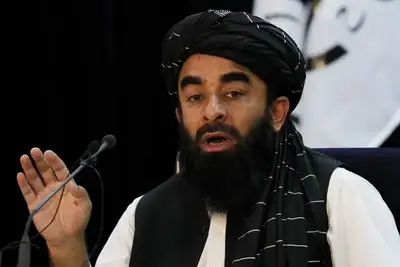
However, Zabihullah Mujahid, the Taliban’s spokesperson dismissed UNSC’s report about the presence of Al-Qaeda in Afghanistan and called it a "regular programme" to spread accusations and rumours against the group.
Previously, even the Long War Journal had disclosed that several members of the Al-Qaeda network held prominent positions within the Taliban administration.
As per the magazine's report, individuals such as the Taliban's deputy intelligence director, the education director of the Ministry of Defence, and the governors of Kapisa and Nuristan are some of the members of Al-Qaeda actively serving in the Taliban administration.