India Calls On Taliban To Block Activities Of Terror Outfits In Afghanistan
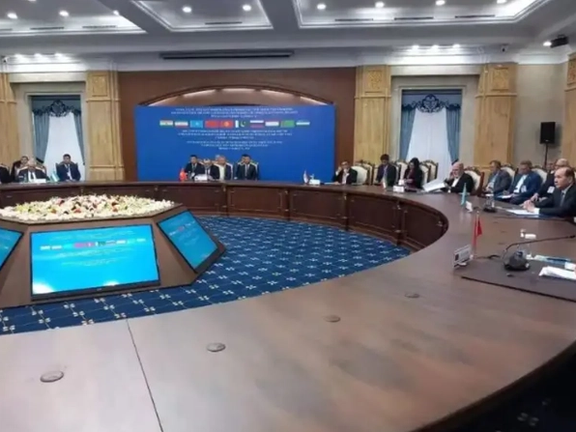
An Indian security official has urged the Taliban to prevent Lashkar-e-Taiba and Jaish-e-Mohammed from operating within Afghanistan.

An Indian security official has urged the Taliban to prevent Lashkar-e-Taiba and Jaish-e-Mohammed from operating within Afghanistan.
Vikram Misri, India's Deputy National Security Advisor, at a regional security meeting in Bishkek, advocated that the Taliban should deny these organisations the opportunity to train and establish sanctuaries in Afghanistan.
"News18," an Indian news platform, reported that Misri, during the regional national security advisors' meeting in Bishkek, stressed on the necessity for the Taliban to disallow terrorists, particularly those affiliated with Lashkar-e-Taiba and Jaish-e-Mohammed, from maintaining training sites and safe havens within Afghanistan.
Lashkar-e-Taiba and Jaish-e-Mohammed, identified as Pakistani religious factions, are labelled as terrorist organisations by India. Lashkar-e-Taiba has been implicated by India in numerous fatal assaults on its soil, notably the 2001 attack on the Indian Parliament and the 2008 Mumbai Taj Hotel attack.
These entities strive for the secession of Kashmir from India and are recognised as "terrorist" organisations by various Western nations, including the United States.
Misri issued this plea during the regional national security advisors' assembly on Friday in Bishkek, the capital of Kyrgyzstan.
He underscored India's enduring and future role as a pivotal player in Afghanistan, advocating for a "consensus approach" to address the Afghan predicament.
Representatives from Iran, Russia, China, India, Pakistan, Tajikistan, Kyrgyzstan, Kazakhstan, Uzbekistan, and Turkmenistan participated in the conference.


Pakistan’s foreign ministry has reacted to the comments made by Abbas Stanekzai, the Taliban's Deputy Foreign Minister, regarding the non-recognition of the border between Afghanistan and Pakistan as "self serving and fanciful.”
The ministry urged the Taliban to address Pakistan's security concerns instead of focusing on this issue.
In a statement released on Friday, the Foreign Ministry of Pakistan stated, "Any self-serving and fanciful claims regarding the legality and sanctity of the Pak-Afghan border cannot change the facts of geography, history and international law."
Previously, Stanekzai had stated at a conference commemorating the anniversary of the former Soviet army's withdrawal from Afghanistan in Logar that internal disputes among Afghans during the reign of Ahmad Shah Durrani's descendants led to the British invasion of Afghanistan.
Stanekzai also mentioned that as a result of these internal conflicts, Britain divided half of Afghanistan by drawing the "imaginary Durand Line," and now Pakistan is "unjustly" expelling Afghan migrants from there.
He emphasised, "We have never recognised the Durand Line in our lifetime, and we do not recognise it."
Reacting to the Taliban’s Deputy Foreign Minister's remarks, the Foreign Ministry of Pakistan advised the group to focus on the real security concerns of Pakistan instead of "divert[ing] public attention by such unfortunate public pronouncements.” The ministry stated its commitment to facilitating the regulated movement of people and commercial goods across the border, based on intergovernmental standards.
The dispute over the border between the two countries is not a new issue. Almost all Afghan governments in recent decades have not recognised this border. During Hamid Karzai's presidency, government agencies were instructed to refer to it as the "imaginary Durand Line," but Pakistan asserts that this line is the official border between the two countries, recognised internationally.

Kioumars Heydari, the commander of the Iranian Army's Ground Forces, has responded to the Taliban's objections against the plan to seal the border, declaring, "We intend to seal our borders, and no one has the right to object."
The Taliban had previously asserted that Afghanistan does not pose a threat to any nation and questioned the necessity of such a plan.
In reaction to Iran's border closure initiative with Afghanistan, Taliban spokesperson Zabihullah Mujahid informed the press that any such measure should be founded on mutual agreement.
Mujahid further remarked that Afghanistan does not endanger the security of any nation, including Iran, and stated, "There is currently no need for such measures."
Countering the statements made by the Taliban spokesperson, the Iranian Army's Ground Forces commander said, "We have always respected the principle of good neighbourliness with all our geographical neighbours, and the Islamic Republic has never had the intention to threaten, invade, aggress upon, or occupy even an inch of neighbourly territories."
Heydari further mentioned, "It's a common practice for all countries to implement border closures according to their own strategies and plans, and no one has the right to question our actions near our border."
He underlined that it is the prerogative of the Islamic Republic to decide on measures for securing its borders and "thus, others cannot impose on us what actions we should take along our borders”.
The Ground Forces commander had previously announced that the initial phase of the Afghanistan-Iran border closure project, extending over 74 kilometres, is in progress.
Heydari has referred to this initiative as one of "Iran's most significant national projects”.
This military official from Iran disclosed that the initial phase of border sealing is being carried out through four construction operations, with fencing currently being erected and road construction set to commence subsequently.
Following the Taliban's ascension to power in Afghanistan, there have been multiple confrontations between Taliban forces and Iranian border guards in Iran's western regions.

The United Nations Assistance Mission in Afghanistan (UNAMA) has released findings from a recent survey involving Afghan women, revealing significant concerns regarding the potential recognition of the Taliban.
Interviews with 745 women across Afghanistan's 34 provinces showed that nearly 67% view the recognition of the Taliban as a move that could exacerbate the women’s rights crisis and increase the risk that the group would reinforce and expand existing restrictions targeting women and girls.
According to the survey, 32% of respondents advocate for the Taliban's recognition only if all imposed restrictions on women are completely lifted.
The report details that 25% of the women are in favour of recognition after the removal of a quarter of the existing restrictions. However, 28% firmly believe that the Taliban should never be recognised under any conditions.
A separate survey conducted by UNAMA in July 2023 highlighted that an overwhelming 96% of women prefer that any recognition of the Taliban be contingent on significant improvements in the situation of women or not happen at all.
The United Nations has explicitly stated that the Taliban has introduced 50 laws targeting women's rights directly. Earlier women's protest groups claimed more than 80 such decrees issued by the Taliban.
The recent arbitrary detentions executed by the Taliban have instilled fear among women, many of whom now hesitate to leave their homes or venture onto the streets.
The study found that 57% of participants, accounting for more than half of the women surveyed, are afraid to exit their homes without a "mahram" (male family member), highlighting that each new Taliban decree exacerbates women's anxiety levels.
Remarkably, only 1% of the women surveyed believe they have a significant or complete influence on community-level decision-making.
The report further points out a drastic decline in women's participation in family decision-making, plummeting from 90% in 2023 to 32% by January 2024.
Afghan women have thus urged the international community against recognising the Taliban without first ensuring the removal of restrictions on women and girls. Additionally, the report notes women's expressed disillusionment with countries that pursue relations with the Taliban, disregarding the group's oppressive treatment of women.

The Foreign Ministry of Pakistan has declared that Asif Durrani, Pakistan's special envoy for Afghanistan, will attend the upcoming Doha meeting dedicated to Afghanistan affairs.
Scheduled by the Secretary-General of the United Nations, the second Doha meeting will take place on 18 and 19 February.
Similarly, the US Department of State has confirmed the participation of Thomas West and Rina Amiri as the American representatives.
The meeting is set to bring together special envoys from a range of countries and international organisations, focusing on the ongoing situation in Afghanistan.
The UN's earlier invitation to the Taliban has been met with caution, as the group awaits further details on the meeting's participants and objectives before confirming its attendance.
Acknowledging the critical role of Afghan women and civil society, the UN has extended invitations to their representatives for this meeting, though specifics on the invitees remain undisclosed.
Amidst these preparations, a wave of protest calls by Afghan citizens in various cities has emerged on social media, highlighting opposition to the Taliban's potential involvement in the meeting. Critics emphasise that the Taliban, facing allegations of severe human rights abuses and war crimes, should be addressed in international legal forums rather than political negotiations.

The capital of Kyrgyzstan, Bishkek, hosted the sixth session focused on Afghanistan's security on Friday, gathering security officials from Iran, Russia, China, India, Pakistan, Tajikistan, Kyrgyzstan, Kazakhstan, Uzbekistan, and Turkmenistan.
At the onset of this summit, leaders of the participating delegations engaged in discussions with the Kyrgyz President, as reported by media outlets in Kyrgyzstan and Russia.
Preliminary to the summit, there were strategic meetings among the security council secretaries and advisors from the countries involved.
Originating from a proposal by Tehran, this meeting marks the sixth iteration, taking place in different cities across the region. It serves as a platform for top security officials to deliberate on Afghanistan's pivotal security and political challenges and their broader impact on the region and its populace.
Details regarding the summit's discussions have been scant in media coverage.
According to the Islamic Republic News Agency (IRNA), Ali Akbar Ahmadian, representing Ali Khamenei and acting as the secretary of the Supreme National Security Council, articulated Iran's stance on the region's political and security matters. However, the report did not delve into the particulars of these positions.
RIA Novosti, a Russian news agency, earlier conveyed remarks by Nikolai Patrushev, the Russian Security Council's Secretary, indicating the presence of 20 terrorist groups with an estimated 23,000 militants in Afghanistan under the Taliban's dominion.
Patrushev highlighted the persistent issue of drug trafficking from Afghanistan to Central Asia, cautioning that narcotics, produced within Afghanistan, are expected to be smuggled from longstanding reserves to Central Asian territories shortly.