Pak Punjab Government Starts 2nd Phase Of Afghan Migrants’ Deportation Programme

The Ministry of Interior in Punjab, Pakistan, has officially announced the initiation of the second phase of deporting Afghan migrants from the region.

The Ministry of Interior in Punjab, Pakistan, has officially announced the initiation of the second phase of deporting Afghan migrants from the region.
Sources referenced by Pakistan's Jang newspaper reveal that the federal government plans to distribute a list of Afghan migrants possessing temporary Afghan Citizen Cards (ACC) to the police for the purpose of deportation.
Initially issued by the Pakistani government in 2017 and 2018, these ACCs were intended as temporary identification for Afghan migrants.
With the expiration of these cards, the validity period has come to an end.
The government of Punjab is urging all ACC holders to voluntarily repatriate to Afghanistan by the deadline of April 15. Those remaining beyond this date will face arrest and forced deportation.
Insights from Pakistani sources suggest that the completion of this phase will pave the way for the subsequent deportation of individuals holding permanent residency cards, marking the third phase of the operation.
The extent of this policy's application, whether confined to Punjab or applicable across Pakistan's other provinces, remains uncertain.
A deportation initiative has been underway since November 2023, with Pakistan's interim government committing to the expulsion of approximately 1.7 million undocumented Afghan migrants.
This move contrasts with previous statements from the Pakistani government, which had assured that holders of both temporary and permanent residence cards would not be subject to deportation.
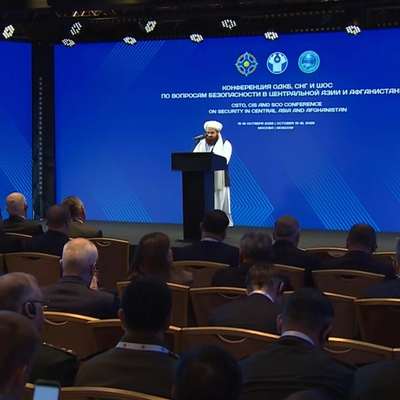
The Taliban’s Ministry of Defence has reported that their border forces targeted military installations in Pakistan using heavy artillery as a countermeasure to what they described as "Pakistan's aggression”.
The ministry emphasised that its forces are fully prepared to counter any further aggressive acts.
Earlier, residents from the Dand-e-Patan district in Paktia province relayed to Afghanistan International that a violent encounter broke out between Taliban forces and Pakistani border guards along the Durand Line. The confrontation reportedly commenced at 7am on Monday, March 18.
Following a missile attack launched by Pakistan, local media reported that inhabitants of the Dand-e-Patan area were forced to evacuate their homes.
This recent skirmish follows a series of air strikes conducted by the Pakistani Air Force on targets within the Khost and Paktika provinces.
Zabihullah Mujahid, spokesperson for the Taliban, in an earlier statement, disclosed that these air strikes had resulted in the deaths of six individuals, including three women and three children, underscoring the human cost of the conflict.
The Taliban has issued a stern warning about the potential severe repercussions that continued Pakistani military actions could provoke, suggesting consequences that could extend beyond Pakistan's ability to control.
Local sources have shared with Afghanistan International that the early Monday operations by the Pakistani Air Force were aimed at positions associated with the Tehreek-e-Taliban Pakistan within the territories of Khost and Paktika.
These assaults, as detailed by sources, took place around 3am in both the Spera district of Khost and the Barmal district of Paktika, marking a significant escalation in the region's ongoing tensions.

Zabihullah Mujahid, the Taliban spokesperson, revealed that air strikes in Khost and Paktika have led to the loss of six lives, including three women and three children.
The Taliban spokesperson refuted claims of Abdullah Shah Mehsud, a commander of the Pakistani Taliban, being in Afghanistan and warned that continued assaults would have dire consequences outside Pakistan's control.
Contrary to some media reports which allege Abdullah Shah Mehsud's death along with his family in the recent air strikes in Khost and Paktia, the Tehreek-e-Taliban Pakistan released a video denying his presence in Afghanistan.
Zabihullah Mujahid, the spokesperson for the Taliban, disclosed on social media platform X, "Pakistani aircraft targeted civilian homes in Barmal district, Paktika, and Spera district, Khost, around 3am last night. This assault resulted in six casualties, encompassing three women and three children.
Mujahid clarified, "Abdullah Shah Mehsud, the Taliban commander alleged by Pakistan to have been the target of this strike, is located in Pakistan."
The Taliban's statement pointed out that the stricken regions are home to individuals who routinely cross the border for familial visits.
They vehemently denounced Pakistan's actions as an infringement on Afghan territory, asserting their stance against any form of aggression on their land. The statement further highlighted, "The Pakistani populace and its new civilian government must halt certain Pakistani military generals from persisting with policies that have historically harmed the camaraderie between the two neighbouring Muslim nations."
The Taliban urged Pakistan not to attribute its internal shortcomings, lack of governance, and problems to Afghanistan.
In a firm denouncement, the Tehreek-e-Taliban Pakistan labelled the Pakistani air strikes in Afghanistan as "ruthless," highlighting that the attacks targeted Waziristan refugees within Afghan borders.

Nasir Ahmad Andisha, the Afghan representative in Geneva, has garnered the support of forty countries for a mission statement aimed at bolstering support for Afghan women.
This document underscores the critical situation of women in Afghanistan and calls for the Taliban's "full accountability”. The statement advocates for the full, equal, and meaningful participation of women and girls in all aspects of public life.
The majority of the endorsements come from Western nations, with Albania, Australia, Austria, Belgium, Bulgaria, Chile, Colombia, Costa Rica, Croatia, Czech Republic, Denmark, Estonia, Finland, France, Germany, Greece, Iceland, Latvia, Ireland, Liechtenstein, Lithuania, Luxembourg, Malta, Montenegro, the Netherlands, New Zealand, Poland, Portugal, Romania, Slovenia, Spain, Sweden, Switzerland, Italy, and Hungary among the signatories.
Notably, Tajikistan is the only neighbouring country of Afghanistan to sign the letter, with Yemen and Guatemala also showing their support.
The statement highlights the extraordinary bravery of Afghan women and girls in the face of the Taliban's oppressive measures, emphasising that "their grave situation demands a coordinated international response”.
The statement invokes the Convention on the Elimination of All Forms of Discrimination Against Women suggesting that the Taliban's treatment of women could lead to gender-based violence due to its extensive and systematic nature.
Signatories called upon members of the Rome Statute to collaborate with the International Criminal Court in investigating Afghanistan's circumstances. They further encouraged countries to stress on Afghanistan's obligations to human rights and the significant involvement of women in forthcoming discussions whenever engaging with the Taliban.
Despite having placed broad restrictions on women and girls for over two and a half years, the Taliban have consistently dismissed international critiques as meddling in their internal affairs, maintaining that their actions are in alignment with their laws.

During a Security Council session, US Ambassador to the United Nations, Linda Thomas-Greenfield, advocated for the appointment of a Special Representative for Afghanistan.
She also noted that renewing the mandate of the United Nations Assistance Mission in Afghanistan (UNAMA) would empower the mission to facilitate essential dialogues between Afghanistan's relevant actors.
In December of the previous year, the United Nations endorsed a resolution urging for a United Nations Special Representative's appointment to streamline communication and coordination for Afghanistan on the global stage.
This role is envisioned to foster reconciliation through dialogue among key stakeholders.
In the meeting that resulted in the extension of UNAMA's mandate for an additional year, Ambassador Thomas-Greenfield emphasised on the United States' call for the complete enactment of the Security Council's resolution concerning the Special Representative's appointment.
The Taliban have consistently opposed this appointment, arguing that UNAMA's existing presence negates the need for such a role. Similarly, countries like Russia and Iran have linked their support for this appointment to the Taliban's approval.
Earlier, a meeting concerning Afghanistan, convened by UN Secretary-General António Guterres in Doha, failed to conclude the discussions on appointing a Special Representative, with the Taliban abstaining from participation.
Moreover, the US Ambassador underscored that the ongoing efforts of UNAMA are crucial for addressing the humanitarian crisis and bolstering the endeavours to revive fundamental rights and freedoms for all Afghans, particularly women.

On Friday, the United Nations Security Council unanimously adopted a resolution to extend the mandate of the United Nations Assistance Mission in Afghanistan (UNAMA) for one more year.
Japan, tasked with overseeing the Afghanistan portfolio at the Security Council, was the architect behind the resolution.
During the UN Security Council meeting, Japan's delegate reaffirmed the country's ongoing commitment to the Afghan populace and its support for UNAMA's pivotal role.
Highlighting the acute human rights challenges, particularly concerning women and girls, along with the dire humanitarian situation in Afghanistan, the Japanese envoy underscored the indispensability of UNAMA at this critical juncture.
The extension of UNAMA's mission, according to the Japanese representative, signals a robust commitment from the United Nations, endorsed by the Security Council, to persistently support the Afghan people, especially those facing adversity.
UNAMA's Role
Established on March 28, 2002, by UN Security Council Resolution 1401, UNAMA aims to assist Afghanistan's development and humanitarian needs.
The Security Council annually reviews and, as needed, extends UNAMA's mandate to align with Afghanistan's evolving requirements.
The UN's involvement in Afghanistan dates back to 1946 when Afghanistan joined the UN General Assembly, with UN agencies such as UNICEF operating in the country since 1949.
UNAMA's main office is located in Kabul, with additional operations spread across Afghanistan and in neighbouring countries, Iran and Pakistan.
The mission employs approximately 1,187 staff members, including 799 Afghan nationals and 293 individuals from other countries.
Following the Taliban's ascent to power and the subsequent imposition of strict constraints on women's participation, female UNAMA employees have been barred from their duties.
Roza Otunbayeva, former Foreign Minister of Kyrgyzstan, currently serves as the UN Secretary-General's Special Representative for Afghanistan and leads UNAMA.
