Taliban Sentences 3 Individuals to Long-Term Imprisonment For Political Activities
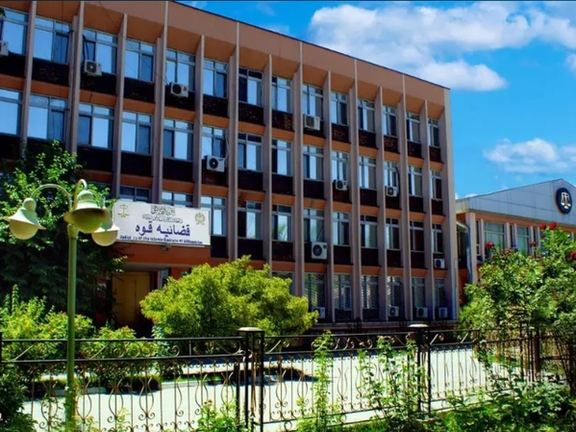
The Taliban has put three individuals on trial, for their involvement in political activities, in a military court in Kandahar.

The Taliban has put three individuals on trial, for their involvement in political activities, in a military court in Kandahar.
On Thursday, the Taliban’s Supreme Court stated that two of the accused have been sentenced to 15 years of imprisonment each, while the third individual has received a sentence of 30 lashes.
As per the statement issued by the Taliban’s Supreme Court, the third individual has also been handed a prison sentence, although the duration of this imprisonment is not specified.
This marks the first official announcement by the Taliban’s Supreme Court regarding the trial and punishment of individuals for engaging in political activities. Previously, numerous individuals were detained by the Taliban for their civil and political engagements, yet the group refrained from explicitly addressing penalties for political activities in their official communications.
Earlier, the Taliban's Ministry of Justice had announced the dissolution of all political parties upon the group's takeover of power in August 2021. The group had declared that political activities within the country were strictly prohibited under its control.


The Shanghai Cooperation Organisation (SCO) has urged the Taliban to fulfil their commitments towards combating terrorism, especially in suppressing terrorist groups threatening the member states of the organisation.
National Security Advisors of the SCO member states issued a statement on Wednesday stating that the presence of international terrorist groups and other groups based in Afghanistan poses a serious threat to the member states of the SCO.
The joint statement was issued after the SCO meeting in Kazakhstan. Reviewing the security situation of the SCO member countries was the main topic of this meeting.
During its nineteenth annual meeting, the Security Councils of the SCO emphasised on the importance of expanding cooperation to address terrorist threats, transnational organised crime, suppression of channels financing terrorism, and illegal migration.
China, India, Russia, Pakistan, Kazakhstan, Kyrgyzstan, Tajikistan, Iran, and Uzbekistan constitute the SCO's membership. These nations have voiced concerns multiple times over the past two years regarding the presence of terrorist groups in Afghanistan.

The Taliban’s Supreme Court announced that two individuals in Kabul have been publicly flogged on charges of extramarital affairs, and another person in Kandahar has been flogged for involvement in drug-related crimes.
According to the statement, the two individuals in Kabul received 35 lashes each, and the other individual in Kandahar received 30 lashes.
On Thursday, the Taliban’s Supreme Court wrote that a man accused of extramarital relationships in the Deh Sabz district of Kabul province has been sentenced to four years of imprisonment, and the woman has been sentenced to three years of imprisonment.
A court of the group in Kandahar has also sentenced an individual to three years of imprisonment for involvement in drug-related crimes.
The Taliban’s Supreme Court has not provided any details regarding the identities of these individuals.
Following the takeover of power in Afghanistan in 2021, the Taliban has resumed physical punishments such as lashing, amputation, and execution.
Human rights organisations and the international community have repeatedly urged the Taliban to cease the cruel and inhumane punishments against the Afghan citizens.

Hassan Kazemi Qomi, Iran's Special Representative for Afghanistan, has announced that the technical obstacles hindering the allocation of Iran's water rights by the Taliban have been removed.
Qomi expressed hope that in the future, no other technical problems would arise regarding the water rights.
Furthermore, he highlighted the potential for collaboration between Afghanistan and Iran on water supply issues. He emphasised that Afghanistan could emerge as a new option for attracting foreign investment for significant projects in Iran.
Despite not formally recognising the Taliban, Iran maintains close economic and diplomatic ties with the group and Afghanistan's embassy in Tehran has been transferred to Taliban control.
In an interview with Tasnim News Agency, Qomi said, "During the Taliban's rule, the issue of the water rights has been a mandatory treaty and they have declared commitment in this regard from the early days when the new rulers settled in Kabul."
The special representative of Iran has questioned the construction of the Kamal Khan Dam by the previous Afghan government, stating that the insufficient reservoir capacity of the dam has led to the inability to store water, especially during flood conditions, causing the diversion of water to a region known as Goud-e Zareh.
However, Qomi said that the Taliban has resolved this issue.
According to him, one of the measures undertaken by the Taliban in the past year has been to address the ongoing issues with the Kamal Khan Dam.
Iran's Special Representative clarified, "Based on a report provided by the Taliban, repairs have been made to the dam wall, diverting water towards Goud-e Zareh, adjustments have been made to the ground level in front of the dam, and ultimately, the issues with the dam gates have been resolved."
Qomi emphasised that these repairs resulted in a significant development towards the end of the last year [Persian calendar] and at the beginning of this year, following the accumulation of water behind the Kamal Khan Dam, the dam gates were promptly opened, allowing 32 million cubic meters of water to swiftly enter Iranian territory.

Afghan Journalists in Exile and several other sources reported that Abdul Aleem Saqib, also known as Ahmad Hanayesh, an Afghan journalist based in Islamabad, has been attacked by unidentified individuals.
Hanayesh sustained injuries to his foot and head and is currently receiving treatment in a hospital.
Based on statements from the journalist's family, the Afghan Journalists in Exile described his condition as dire and stated that he is awaiting surgery at the hospital.
Images of Hanayesh, showing him bloodied on a hospital bed, have also been circulating on social media.
Authorities in Islamabad have not yet commented on this matter.
In a statement, it had been mentioned that Hanayesh is the head of "Kahkashan Media Network". He, along with his family, is awaiting a US visa in Pakistan. The Afghan Journalists in Exile also stated that this journalist has been a reporter for Radio Azadi in Afghanistan for about two decades.
Afghan journalists in Exile have urged the United Nations High Commissioner for Refugees and destination countries to expedite the processing of immigration cases for Afghan journalists.
The statement said that there are reports that Afghan journalists and media personnel are even more vulnerable in third countries than in their own country, and the reason for this has been attributed to the diplomatic presence of the Taliban in those countries.
This institute stated that Afghan journalists in third countries have previously been targeted for assassination and assaults. For instance, in recent weeks, Mirwais Khawarin, former head of the Afghan Senate television, was severely injured due to an attack by armed individuals in Islamabad, Pakistan.
Following the takeover of the Taliban in August 2021, a significant number of journalists left for third countries like Pakistan and Iran to pursue their immigration cases to European and North American countries.

Rahmatullah Nabil, the former head of the National Directorate of Security of Afghanistan, said that in a drone attack in Giru district of Ghazni province, members of Al-Qaeda in the Indian Subcontinent (AQIS) were targeted.
He added that this attack was conducted from bases in Pakistan. Sources also informed Afghanistan International that 12 individuals lost their lives in this attack.
Afghanistan International received a letter indicating that the Taliban leader convened an emergency meeting to discuss the drone attack in the Giru district and its surveillance.
On March 25, the Taliban's governor's office in Ghazni province had reported that, following the explosion of a leftover shell from a Soviet attack in Zardan village of the Giru district, five women and four children were killed.
However, sources speaking to Afghanistan International rejected the Taliban’s statement and said that the incident resulted from a drone strike. The strike killed 12 individuals, including three employees of the Taliban’s Ministry of Mines, among them Matiullah Bakhtzoi's son, a member of the ministry's evaluation commission, two Taliban fighters, four women, and three children.
Following the publication of this news, Nabil posted on X social media platform, stating that the target of the attack were members of AQIS (Al-Qaeda in the Indian Subcontinent) group. According to him, AQIS is a branch of Al-Qaeda that aims to fight Pakistan, India, Bangladesh, and Myanmar, with the goal of establishing an “Islamic Caliphate”.