Taliban Arrests Afghan Activist For Third Time In Kabul

On Wednesday, the Taliban arrested Noor Agha Ibrahimi, an activist, in Kabul, for the third time.

On Wednesday, the Taliban arrested Noor Agha Ibrahimi, an activist, in Kabul, for the third time.
He has been previously detained on charges of collaborating with the National Resistance Front.
A source close to Ibrahimi's family told Afghanistan International that they do not know his current whereabouts.
Ibrahimi was first arrested during the early days of the Taliban's return to power, but was released after some time when the Taliban could not prove his collaboration with the National Resistance Front (NRF).
However, according to Ibrahimi's relatives, he was detained again a few months ago on charges of cooperating with the NRF and spent four months in a Taliban prison.
Before the Taliban's return, Ibrahimi was active in social and political activities. His father, Waseel Ibrahimi, was an advisor to the First Vice-President in the previous government.
The Taliban have not yet commented on the detention of this activist.
According to information from the Taliban's prison administration, over 12,000 people are being detained in their prisons nationwide.
Taliban officials claim that there are no political prisoners in their jails. However, the United States recently stated that more than 90% of prisoners under the Taliban are political prisoners.
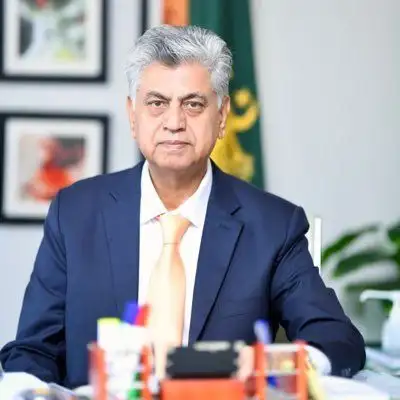

The Taliban's government, led by Mullah Abdul Kabir, the Deputy Prime Minister for Political Affairs, has held a session to discuss their potential participation in the upcoming Doha meeting.
The United Nations has slated the third session of this meeting for June 30 and July 1.
According to a statement from the Taliban Prime Minister's office on Thursday, the discussion at the Sepidar Palace also covered the current situation in Afghanistan and the region, focusing on delivering humanitarian aid to those in need.
Previously, the UN had declared that the meeting would feature special representatives for Afghanistan, with the aim to "enhance structured and consistent international engagement with Afghanistan”.
The UN Deputy Secretary-General, Rosemary DiCarlo, extended an invitation to Taliban officials during her visit to Kabul.
Abdul Kabir emphasised that their participation hinges on the acceptance of the Taliban's positions. He assured DiCarlo that Afghanistan is completely under Taliban control, asserting that the country "has one emir and is obedient to him”.
The appointment of a UN special representative for Afghanistan will likely be a key discussion point at the meeting, which partly explains the Taliban's reluctance to participate previously. The Taliban have repeatedly argued that with UNAMA already present, there is no necessity for a new UN representative.
Furthermore, the Taliban had previously demanded to be the sole representative of Afghanistan at the last Doha meeting, a condition that the UN did not agree to, resulting in their absence.

The Taliban announced that Abdul Ghani Baradar, the Taliban’s Deputy Prime Minister for Economic Affairs, and Amir Khan Muttaqi, the group's Foreign Minister, have left for Tehran to attend the funeral ceremony of Ebrahim Raisi.
Today, May 22, marks the second day of the funeral ceremonies for Raisi and his companions.
On Wednesday, Baradar’s office announced on the X social media platform about the officials' trip to Tehran. The first round of the official funeral ceremonies for Raisi and his companions began on Tuesday morning in Tabriz. Their bodies were then transferred to Tehran.
During Wednesday's ceremony, the bodies will be moved to Tehran's Mosalla mosque, where another ceremony will be held. On Thursday morning, the funeral ceremony will take place in South Khorasan province, after which the bodies will be transferred to Mashhad city.
The death of Raisi and his companions in a helicopter crash on the way to Tabriz has sparked widespread reactions around the world.
Previously, Mohammad Hassan Akhund, the Taliban's Prime Minister, expressed deep sadness and sorrow over the death of Raisi, the President of Iran, and his companions in a statement.

Ishaq Dar, Pakistan's Foreign Minister, said on Tuesday at the Shanghai Cooperation Organisation (SCO) meeting that the Taliban must adhere to the principle of inclusive politics and respect for all Afghans' rights.
He said that the contact group for Afghanistan should be revived within the SCO to create a platform for practical cooperation.
The first meeting of the SCO Afghanistan contact group was held in 2021.
The Deputy Prime Minister and Foreign Minister of Pakistan once again called on the Taliban to prevent terrorist groups from operating in Afghanistan.
He stated that the interim government of Afghanistan should take tangible and effective measures to ensure that Afghanistan's territory is not used against any country.
He also emphasised that the Taliban should adhere to globally accepted principles, including participation and respect for the rights of all Afghans, especially women and girls.
Additionally, he called for meaningful relations between the international community and the Taliban to improve economic conditions and address the humanitarian situation of Afghans.
Dar traveled to Astana, the capital of Kazakhstan, on Monday to attend the two-day meeting of the SCO Council of Foreign Ministers.

The United Nations announced that the third Doha meeting with the participation of special representatives of countries for Afghanistan will be held on June 30 and July 1.
The UN said that the purpose of this meeting is to increase international engagement with Afghanistan in a coherent and structured manner.
On Tuesday, the UN provided details about Rosemary DiCarlo, the UN Under-Secretary-General's meeting with senior Taliban officials.
DiCarlo met with Taliban officials and some Afghan figures, including Hamid Karzai, the former president of Afghanistan, in Kabul between May 18 and 21. During this trip, DiCarlo invited Amir Khan Muttaqi, the Taliban's foreign minister, to participate in the third Doha meeting.
The United Nations stated that DiCarlo also met with a number of Afghan civil society activists during her visit to Kabul.
Abdul Kabir, the Taliban's Deputy Prime Minister for Political Affairs, conditioned participation in the third Doha meeting on the acceptance of the group's stance.
Abdul Kabir told DiCarlo this week that Afghanistan is under the complete control of the Taliban and that the country "has one emir who is obeyed”.
In a statement, the UN said that Afghan figures told the UN Under-Secretary-General that any strategy for international engagement with Afghanistan must address the humanitarian, developmental, and economic challenges facing Afghanistan.
The statement adds that they also pointed to the dangers and threats posed by drugs and terrorist groups.
The Under-Secretary-General discussed the human rights situation in Afghanistan, particularly the restrictions on women's education, with the Taliban and Afghan figures in Kabul.

The Russian Ministry of Foreign Affairs has "strongly" urged its citizens to avoid traveling to Afghanistan due to an attack on foreign tourists in the country.
In a statement, the ministry expressed concern over "terrorist attacks" on foreign tourists in Afghanistan.
On Friday evening, May 17, armed assailants attacked foreign tourists and their companions in the Bamiyan province.
According to the Taliban's Ministry of Interior, six people, including three foreign nationals and three Afghan citizens, were killed, and seven others, including four foreigners, were injured in the attack.
ISIS has claimed responsibility for the attack.
Referring to this attack, the Russian Ministry of Foreign Affairs warned of the deteriorating security situation in Afghanistan.
The statement, published on the official website of the Russian Ministry of Foreign Affairs on Monday, declared, "Given the current circumstances, the security situation in Afghanistan is extremely challenging, and we 'strongly' advise against traveling to this country for personal reasons, including tourism."
Meanwhile, Joe Sheffer, founder of the Safarat tourism agency, told AFP that if the attacks continue, "Afghanistan’s tourism industry will be over."
Sheffer said that after the armed attack in Bamiyan, several clients canceled their trips to Afghanistan, and the agency is reviewing its operations in the country.
He told AFP, "We will reduce group sizes... We are cancelling itineraries in remote locations... We are reducing walking in public places."