Russian Intelligence Chief Expresses Concern Over Developments In Afghanistan

Alexander Bortnikov, the head of Federal Security Service (FSB), expressed concerns about Afghanistan’s situation during a Commonwealth of Independent States meeting.

Alexander Bortnikov, the head of Federal Security Service (FSB), expressed concerns about Afghanistan’s situation during a Commonwealth of Independent States meeting.
He highlighted the significant threat posed by the expansion and influence of terrorist groups in Afghanistan and Pakistan to regional security.
Bortnikov stated that the Taliban could establish order in Afghanistan if external actors refrain from intervening in Kabul.
Additionally, he noted ongoing Anglo-Saxon efforts to influence Afghanistan, aiming to establish a foothold in Central Asia for regional influence.
Bortnikov also described the collaborative efforts between Russia and the Taliban to combat international terrorism as a “positive development”.
This statement follows remarks by Zamir Kabulov, Russia’s special envoy for Afghanistan, who recently declared that the Taliban are no longer considered an enemy by Russia. Since the Taliban’s rise to power, Russian officials have actively sought to maintain relations with the group.
A Taliban court in Parwan forcefully married Shahpari, a 25-year-old imprisoned girl, with a member of the group.
Relatives of Shahpari told Afghanistan International that the Taliban detained her six months ago on kidnapping charges in Parwan and subsequently, the group’s urban court sentenced her to three years in prison. The Taliban have not provided information about her charges and the forced marriage.
Relatives told Afghanistan International that Shahpari was forcibly married off by a Taliban city court judge while she was sentenced to three years in prison. Sajjad, Shahpari’s brother, said that the Taliban member named Raihan has since confined Shahpari inside a house in the Ghorband Valley. According to Sajjad, Shahpari has managed to make several phone calls to her family requesting for her rescue during this time.
Shahpari, originally from Dasht-e-Barchi in Kabul, had her relatives approach the Taliban courts in Parwan after receiving her phone calls. Her brother told Afghanistan International that this Taliban member works for a local Taliban media outlet in Parwan and was married to another women too.
Complaints in Taliban Courts
Shahpari’s mother, in a complaint letter obtained by Afghanistan International to the Taliban appellate court in Parwan, wrote, “My daughter Shahpari, a single woman, who was sentenced to five years of imprisonment by the Islamic Emirate’s Sharia court, was serving her time in Parwan prison.”
Her mother further wrote, “Shahpari was not ready for marriage, but the prison officials and the court gave her away to a husband.” Quoting her daughter, the mother stated that Shahpari is currently in house arrest at a private residence by an unknown person.
According to a document obtained by Afghanistan International, Mufti Abdul Wali Halim, the head of the Taliban appellate court in Parwan, wrote in a letter to the urban court’s criminal panel, “Consider the contents of the complaint and proceed according to procedural and investigation principles.”
Sajjad said that the Taliban initially told them Shahpari was sentenced to five years for kidnapping but later, upon their approach to the Taliban city court in Parwan, announced her sentence was three years. He added that they do not have access to the case details or the specifics of the charges against Shahpari, and the Taliban have only informed the family of the charge and the duration of imprisonment. He also said the Taliban did not inform them about the forced marriage.
Sajjad added that his sister had gone to a friend’s house in Parwan province and was arrested by the Taliban on kidnapping charges.
Threats and Forced Religious Conversion
Sajjad, Shahpari’s brother, said that after receiving a phone call from his sister, he approached the Taliban city court. He said that the judge of this court threatened them with imprisonment and forcibly expelled them from the office.
Sajjad added, “We told the Taliban city judge to bring Shahpari and her husband and if my sister was happy with this marriage, we would have no problem. However, the Taliban judge refused to do so.”
Sajjad said, “I also spoke with Raihan, a Taliban member, but he warned me not to make any more phone calls to Shahpari and claimed that Shahpari is his lawful wife.”
The brother also said that this Taliban member has pressured Shahpari to convert from “Shia to Sunni” sect of Islam after the forced marriage.
Last month, the US Commission on International Religious Freedom reported that the religious freedom of minorities, including Shiites, has been violated in Afghanistan.
Recently, the US Department of State in its annual human rights report stated that 16 women out of 90 imprisoned in the provinces of Jowzjan, Faryab, and Samangan became pregnant after being raped by Taliban members.
The US Department of State also stated that the Taliban have executed at least four women in Samangan after repeated rapes by its members.

The National Resistance Front (NRF) announced on Friday that it has killed two Taliban members and injured another in the 12th police district of Herat.
NRF stated that no harm was done to its forces or civilians in this attack.
In a statement released by the Front on Friday, it had been mentioned that this attack took place last night.
NRF said that it will continue its attacks in various parts of the country against the Taliban until the group's "illegitimate" rule in Afghanistan has ended.

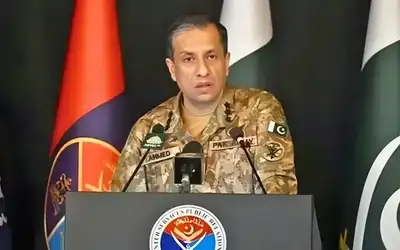
The Pakistan army announced that "29 terrorists have been killed" during a series of operations along the border with Afghanistan in the past one month.
According to Pakistani army officials, these operations began on April 21 in the border areas with Afghanistan.
The media wing of the Pakistan army announced on Wednesday that their security forces have killed 29 terrorists along the Afghanistan border over the past month.
Pakistan considers these operations part of a broader effort to curb the influence of "terrorists" who target security forces and civilians in Pakistan.
This comes as last week, Pakistani security forces clashed with the Taliban in the border region of Dand Wa Patan. The clashes ended after five days with the mediation of local elders from both sides of the border.
The media unit of the Pakistan Army also stated that they have repeatedly asked the Taliban in the past to assure effective management of the border areas.
In recent months, Pakistani officials have frequently accused the Taliban of harbouring Tehreek-i-Taliban Pakistan (TTP) following an increase in terrorist attacks in the country.
Pakistan claims that terrorist attacks in the country are planned and organised from Afghanistan soil, but the Taliban have consistently rejected these claims, stating that armed groups opposing the Pakistani government are not present in Afghanistan.

Abdullah Abdullah, former Chairman of the High Council for National Reconciliation (HCNR), met representatives from the European Union, the United Kingdom, and Spain in Kabul.
On his X social media account, Abdullah wrote that during this meeting, they discussed and exchanged views on the "current situation of the country and the third Doha meeting”.
In the picture shared by Abdullah, Raffaella Iodice, Chargé d’Affaires of the European Union Delegation to Afghanistan; Robert Chatterton Dickson, Chargé d'Affaires of the UK Mission to Afghanistan, and Ricardo Losa, Spanish Ambassador to Afghanistan, are present.
The Chairman of the High Council for National Reconciliation of the former Afghan government did not provide details about his discussions with the European diplomats regarding the third round of the Doha meeting.
In the note published by Abdullah, he mentioned that he asked the European diplomats to increase humanitarian aid to the flood victims in Afghanistan.
The United Nations announced on Wednesday that the third round of the Doha meeting, with the participation of special representatives from various countries for Afghanistan, will be held on the June 30 and July 1.

Mohammed bin Abdulaziz Al-Khulaifi, Qatar's Minister of State at the Foreign Ministry, during his visit to Kabul, urged the Taliban to send their representative to the third meeting of special representatives in Doha.
During his meeting with Abdul Ghani Baradar, Taliban’s Deputy Prime Minister for Economic Affairs, Al-Khulaifi said that Qatar hopes that the third Doha meeting will come to a conclusion with the presence of the Taliban representative.
The press office of this Taliban official wrote in a statement on Thursday that Baradar met with him in his office.
The office of Mullah Baradar, quoting Al-Khulaifi, wrote that such meetings "will not yield results" without a Taliban representative.
According to Al-Khulaifi, Qatar has made its position clear to the United Nations on this matter.
The Taliban's Deputy Prime Minister for Economic Affairs also stated that without the presence of a Taliban representative, the international conference on Afghanistan will not reach any conclusion. This Taliban official emphasised that the Taliban's position should be respected in such meetings.
The third Doha meeting is scheduled to be held on June 30 and July 1.
In the previous two Doha meetings on Afghanistan, hosted by the United Nations, a Taliban representative was not present. The United Nations hopes that a representative from the group will participate in the third meeting.
Meanwhile, the Taliban's Political Commission held a meeting on Thursday, chaired by Abdul Kabir, the Taliban's Deputy Prime Minister for Political Affairs, to discuss the upcoming Doha meeting.
