• العربية
  • پښتو
  • فارسی
Brand
  • Afghanistan
  • Sport
  • Markets
  • Afghanistan
  • Sport
  • Markets
  • Theme
  • Language
    • العربية
    • پښتو
    • فارسی
  • Afghanistan
  • Sport
  • Markets
All rights reserved for Volant Media UK Limited
volant media logo

Third Doha Meeting Repetition of Failed Bonn Experience, Says Hezb-e Islami Leader
May 27, 2024, 13:52 GMT+1

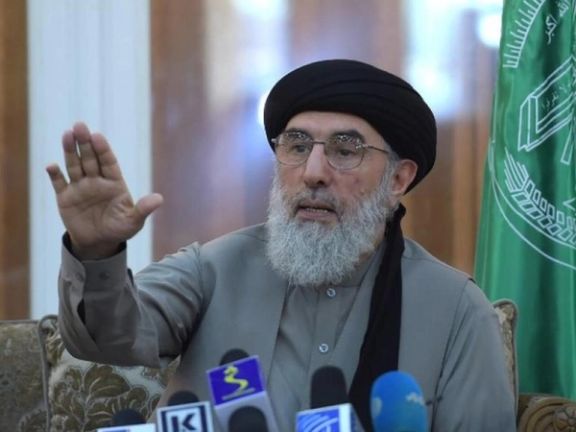
Gulbuddin Hekmatyar, the leader of Hezb-e Islami party of Afghanistan, called the third Doha meeting a "repetition of the failed Bonn experience”.

Hekmatyar said that the goal of this meeting is to appoint another Lakhdar Brahimi and Benon Sevan to create consensus among the countries involved in Afghan affairs.

He claimed that the new UN special representative for Afghanistan will be someone approved by the United States.

Benon Sevan and Lakhdar Brahimi were special representatives of the UN Secretary-General for Afghanistan during the transition from the first Taliban government to the Islamic Republic of Afghanistan.

These two prominent UN diplomats played significant roles in the Bonn Conference and the political developments in Afghanistan in 2001 and thereafter.

The Bonn Conference refers to more than a week of discussions in December 2001 between Afghan politicians and representatives from regional and global countries in Bonn, Germany. Participants of the Bonn Conference signed a two-phase agreement that laid the foundation for the creation of the Islamic Republic of Afghanistan after the fall of the Taliban regime.

The Taliban and Hezb-e Islami, led by Gulbuddin Hekmatyar, did not play an influential role in the Bonn Conference.

The third Doha meeting, with the presence of special representatives of countries for Afghanistan, is scheduled for June 30 and July 1.

The United Nations has stated that the goal of this meeting is to increase international engagement with Afghanistan in a "coherent and structured" manner.

Taliban officials previously told Afghanistan International that the group has set six conditions for participating in the third Doha meeting.

According to these sources, one of the conditions is to grant Afghanistan's seat at the UN to the Taliban.

Taliban sources, who wished to remain anonymous, told Afghanistan International that the second condition is the UN withdrawing its special representative for Afghanistan.

The third condition is consulting the Taliban on the agenda and composition of the third Doha meeting.

A diplomatic source also told Afghanistan International that the Taliban strongly opposes the participation of representatives from Afghan civil society and political groups in the third Doha meeting.

According to sources within the Taliban, the group also informed the UN and Qatari delegations in Kabul that issues such as girls' education, women's employment, and the formation of an inclusive government should not be on the agenda for the third Doha meeting.

Most Viewed

Inside The Taliban’s Bid To Rebuild Its Military With Russian Support
1

Inside The Taliban’s Bid To Rebuild Its Military With Russian Support

2

Russia Again Calls For Release Of Afghanistan’s Frozen Assets

3

Afghan Women’s Cricket Team Makes Historic Return

4

Taliban Skips Ashura While Tightening Restrictions On Shia Muslims

5

Taliban Official Defends One-Man Leadership, Warns Of Chaos

•
•
•

More Stories

Taliban's Passport Chief Detained On Group’s Leader’s Order

May 27, 2024, 12:20 GMT+1
Taliban's Passport Chief Detained On Group’s Leader’s Order
100%

Sources informed Afghanistan International that Abdul Karim Hasib, the Taliban's General Director of Passports, has been detained since Thursday, by the order of Hibatullah Akhundzada.

Abdul Matin Qane, the Taliban's Ministry of Interior spokesperson, confirmed that Hasib was summoned to Kandahar in relation to the Nangarhar protests.

On Monday, Qane posted on the social media platform X that Hasib was called to Kandarhar to provide explanations concerning the protests in Nangarhar.

Local residents in the Barikab area of Nangarhar province protested over a land dispute with the Taliban, leading to the blockade of the Torkham-Jalalabad road. The Taliban's response escalated the situation into violence, resulting in at least three fatalities.

Qane also noted that in addition to Hasib, several officials from the Ministries of Interior and Defence were summoned to Kandahar regarding the protests.

According to Qane, the operations at the General Directorate of Passports are continuing normally in Hasib's absence, and there are no concerns within the department.

However, Afghanistan International sources claim there are deeper disagreements between the Taliban leadership and Abdul Karim Hasib after the Nangarhar protests, which led to his detention.

The sources suggested that financial disputes have arisen between Hasib and the Taliban leadership, who have accused him of corruption.

Afghan-Pak Kharlachi Border Crossing Reopens After Six Days

May 26, 2024, 13:50 GMT+1
Afghan-Pak Kharlachi Border Crossing Reopens After Six Days
100%

The Kharlachi border crossing located in the Dand Wa Patan district of Paktia, Afghanistan, has reopened after a six-day closure due to clashes between Taliban forces and Pakistani border guards.

The conflict, which lasted five days, was resolved last week through the mediation of local elders and officials from both sides. The initiation of the skirmish was attributed to the construction of a checkpoint by Pakistani forces at the zero point on the border.

Haji Raouf, a member of the local jirga involved in resolving the conflict, confirmed that the Kharlachi border crossing resumed normal commercial activities on Friday, 24 May.

During the clashes, local residents sent videos to Afghanistan International showing significant damage to shops and residential structures in the Dand Patan district market.

The Kharlachi border gate is one of the 18 official crossings between Afghanistan and Pakistan, facilitating the daily passage of approximately 100 to 150 lorries. Transit trade at this crossing operates under a bilateral agreement signed in 2010.

The recent closure led to substantial financial losses for both Afghan and Pakistani merchants, many of whom depend on the steady flow of commercial goods across the border.

Iran Challenges Taliban’s Claims On Reduction Of Drug Production

May 26, 2024, 12:36 GMT+1
Iran Challenges Taliban’s Claims On Reduction Of Drug Production
100%

Iraj Kakavand, the head of Iran’s anti-narcotics police, debunked the Taliban’s claims of diminishing drug production in Afghanistan by revealing the seizure of over 662 tons of various drugs within Iran in 2023 and the early months of 2024.

Speaking at the BRICS Anti-Drug Working Group meeting in Moscow on Thursday, Kakavand highlighted the persistent trafficking and transit issues of drugs originating from Afghanistan, noting no significant reduction.

He also highlighted Iran’s willingness to enhance collaboration with BRICS nations in areas such as information sharing and anti-narcotics strategies.

Iran, whose BRICS membership was approved last year, is actively engaging with the group, which consists of Brazil, Russia, India, China, and South Africa.

This engagement marks Kakavand’s first participation in the BRICS Working Group, where he openly challenged the Taliban’s narratives about drug reduction. Etemad Online reported that such direct refutation by a prominent Iranian security official is unprecedented in the past year.

This media outlet also noted a growing domestic criticism within Iran against the lenient approach towards the Taliban, particularly due to the Taliban’s stance on withholding Hirmand water rights from Iran, perceived as an affront to Iranian national interests.

Taliban Intelligence Leadership Dispute Intensifies, Reports AGT

May 26, 2024, 10:49 GMT+1
Taliban Intelligence Leadership Dispute Intensifies, Reports AGT
100%

The Afghanistan Green Trend (AGT), headed by Amrullah Saleh, has reported escalating tensions within the Taliban due to recent reshuffles in the provincial intelligence leadership.

According to AGT, the past two months have seen significant discord, particularly between the Kandahari Taliban and the Haqqani network factions.

On Saturday, May 25, AGT’s intelligence unit disclosed that the Taliban’s General Directorate of Intelligence (GDI) is sharply divided. Mullah Wasiq, the GDI head, supported by Taliban leader Mullah Hibatullah, and the Haqqani network are the main contenders. The position of Kabul province’s intelligence head, currently held by a Mullah Wasiq ally, is a focal point of the dispute.

Further disruptions occurred when Abdullah Ghaznawi, Wasiq’s son-in-law and Chief of Staff of GDI chief, was ousted following criticisms from the Haqqani network. In contrast, Shamsullah, Wasiq’s grandson, remains the head of foreign relations within Taliban intelligence. The Haqqani network’s preferred candidate, Tajmir Jawad, serves as the first deputy head of the intelligence agency.

Relations between Wasiq and Tajmir Jawad are reportedly strained, with Mullah Hibatullah having met with Tajmir only once. AGT claims Tajmir Jawad is actively seeking to replace the current Kabul intelligence head. Although recent disagreements led to armed confrontations, intervention by Kandahar authorities helped to quell the clashes.

Taliban Sets Conditions For Participation In Third Doha Meet

May 26, 2024, 10:19 GMT+1
Taliban Sets Conditions For Participation In Third Doha Meet
100%

Taliban officials told Afghanistan International that the group has set six conditions for participating in the third Doha meeting during discussions with UN and Qatari delegations in Kabul.

According to the sources, one of the conditions is granting Taliban the Afghanistan's seat in the United Nations.

Taliban sources, who wished to remain anonymous, told the Pashto section of Afghanistan International that the second condition is the UN withdrawing its special representative for Afghanistan. The third condition is consulting the Taliban on the agenda and composition of the third Doha meeting.

A diplomatic source also told Afghanistan International that the Taliban strongly oppose the participation of representatives from Afghan civil society and political groups in the third Doha meeting.

The source added that the Taliban's demand for the UN seat is a tactical move, as they know it is unlikely to be granted.

According to sources within the Taliban, the group also informed the UN and Qatari delegations in Kabul that issues such as girls' education, women's employment, and the formation of an inclusive government should not be on the agenda for the third Doha meeting.

The Taliban told these delegations that these are internal matters for Afghanistan and that the group is working to find appropriate solutions.

The sources added that the Taliban stated they would only participate in the meeting if it focuses on Afghanistan's security, drug eradication, and the fight against armed groups, particularly ISIS.

Meanwhile, according to sources, the UN delegation in Kabul told Taliban officials that the third Doha meeting will discuss girls' education, women's employment, the formation of an inclusive government, human rights violations in Taliban prisons, the group's relationship with Al-Qaeda, and ultimately the international community's engagement with the group.

Taliban sources said the group is still waiting for their conditions to be accepted before deciding whether to participate in the third Doha meeting.

This meeting, hosted by the UN, is scheduled to be held on June 30 and July 1 with the presence of special representatives for Afghanistan from various countries.

The UN has stated that the purpose of the meeting is to "increase the international community's coordinated and orderly engagement with Afghanistan."

The Taliban did not participate in the previous two Doha meetings.