UN Human Rights Council To Hold Meeting Regarding Afghanistan’s Situation
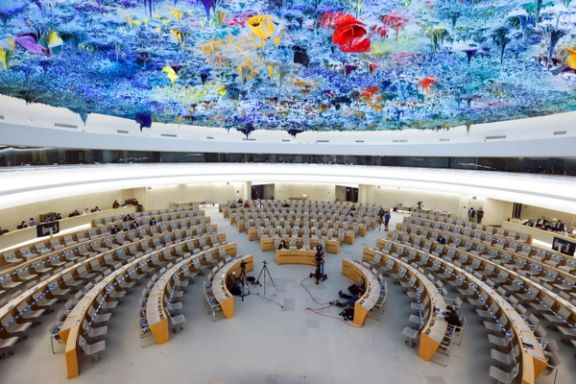
The UN Human Rights Council will review the situation in Afghanistan on Tuesday, June 18, during its 56th session.
The UN Human Rights Council will review the situation in Afghanistan on Tuesday, June 18, during its 56th session.
During this meeting, Richard Bennett, the UN Special Rapporteur on Human Rights, will present a report on the situation of women and girls in Afghanistan under Taliban control.
In this report, Bennett will provide information to the UN Human Rights Council about the discriminatory actions of the Taliban against Afghan women and girls.
Previously, Heather Barr, Human Rights Watch associate women’s rights director, said that Bennett's new report on the "shocking and escalating abuse of Afghan women by the Taliban" is explicit and critical.
Barr stated that in an effort to gain Taliban cooperation, the UN has ignored the report of its Special Rapporteur.
Human Rights Watch has also called on countries to establish a mechanism for accountability and investigation of Taliban crimes within the framework of the Human Rights Council.

Human Rights Watch (HRW) said that the exclusion of women from the third Doha meeting is a violation of the UN Security Council resolution.
According to the organisation, countries' disregard of the harassment and mistreatment of women by the Taliban is disappointing.
The organisation called on countries to establish a mechanism for accountability and investigation of Taliban crimes within the framework of the Human Rights Council.
This international body expressed concern about the "oppressive" situation of Afghan women and girls, urging the world to recognise gender apartheid as a crime against humanity.
Human Rights Watch released its statement a day before the new session of the UN Human Rights Council to review the new report by Richard Bennett, UN Special Rapporteur for Afghanistan.
Human Rights Watch is one of the major international organisations that has supported the recommendations in Richard Bennett's report. The report emphasises on the recognition of gender apartheid and called on countries to bring the Taliban to the International Court of Justice for human rights violations.
Human Rights Watch has also urged members of the Human Rights Council to file a complaint against the Taliban in this court.
Meanwhile, the United Nations has excluded Afghan women from the third Doha meeting. Human Rights Watch has stated that this action by the United Nations is a clear violation of UN Security Council Resolution 1325 on women, peace, and security.
In a speech before the Eid al-Adha prayer at the presidential palace (Arg) in Kabul, the Taliban's Prime Minister, Mullah Hassan Akhund, asked the group's opponents to stop opposing them.
He called on politicians to join their "brothers" by taking advantage of the "general amnesty" and to "have a peaceful life”.
The Taliban's Arg page on the X social media platform reported that the Eid prayer ceremony was held in the presence of Mullah Hassan and other officials of the group at the Arg in Kabul.
The Taliban's statement mentioned that in his speech, Mullah Hassan asked Taliban officials and fighters to treat people "with respect and politeness”.
He also called on the country's merchants to help needy families during the Eid days.
Nearly three years after the Taliban's return to Afghanistan, the group still lacks domestic legitimacy and international recognition.
They have also imposed extensive restrictions on women, excluding them from various sectors of society.
International organisations have reported that despite the announcement of a general amnesty, the Taliban has widely killed its opponents, particularly former Afghan government employees.
Members of the Taliban have shared an audio file of Sheikh Abdul Ali Deobandi on X, in which he declares that teaching women to read and write, even at home, is prohibited.
Ziaullah Hashmi, the spokesperson for the Taliban's Ministry of Higher Education, reposted the file, calling it an "important fatwa”.
In the audio file, Sheikh Abdul Ali Deobandi cites narratives from the early days of Islam, asserting that women are not allowed to attend congregational prayers or learn to write.
This Taliban mufti criticises Islamic countries that grant women the right to education, stating that while these countries are called "Islamic," they are not capable of implementing Sharia law in reality.
Abdul Ali Deobandi emphasises that women's participation in congregational prayers and learning to write leads to "corruption”.
For over a thousand days, the Taliban have prevented the reopening of secondary and higher education schools for girls. Since December 20, 2022, the Taliban have also stopped women from continuing their university education.
In the audio, Abdul Ali Deobandi responds to a radio listener's question about education for women from the perspective of "Islamic Sharia”. He states, "If women learn to write, they will write letters to others." He adds, "Old and young women have been banned from education and attending congregational prayers because our times are times of temptation, and this leads to women's corruption."
Deobandi also warns about women using mobile phones, stating that women use them to "form relationships and turn to immorality and vices”.
Agence France-Presse, citing diplomatic sources, reported that representatives of Afghanistan's civil society have not been invited to the third Doha meeting. The UN Secretary-General will also not attend the session.
This announcement follows the Taliban's declaration on Sunday that they will participate in the meeting. According to the report, plans are in place to consult with civil society members before and after the Doha meeting, but they will not attend sessions where the Taliban members are present.
It remains unclear who these consulted civil society members will be.
Unlike the previous two Doha meetings, UN Secretary-General Antonio Guterres will not travel to Qatar for this session. The Taliban and UN officials have been negotiating in Kabul for weeks regarding the group's participation in the Doha meeting.
On Sunday, the Taliban confirmed that a delegation from their group would attend the third Doha meeting. However, they warned that any changes to the composition or agenda of the meeting could affect their decision to participate.
In the second Doha meeting, the UN attempted to persuade the Taliban to attend, but these efforts were unsuccessful. At that time, the Taliban set conditions, including that no one but their group should represent Afghans at the meeting.
It appears that for the third Doha meeting, the UN has accepted the Taliban's demands, and the meeting will be held with the Taliban as the sole representatives from Afghanistan.
Women's protest movements and political parties opposing the Taliban have repeatedly stated that holding the Doha meeting without representatives of women and political parties is akin to giving concessions to the Taliban. On June 5, in a joint statement, political groups and protesting women wrote, "Engaging with terrorist groups will not solve the problem and will exacerbate the consequences of the crisis."
In an audio recording broadcast by Afghanistan's National Television, Taliban leader Hibatullah Akhundzada expressed concern over internal differences within the group during his Eid speech in Kandahar.
Akhundzada stated that he would be happy to step down from his position if the Taliban could resolve their differences.
In the 22-minute audio file, broadcast by Taliban-controlled Radio Television Afghanistan, Akhundzada primarily addressed his concerns about internal conflicts within the Taliban.
Akhundzada urged Taliban members to set aside their differences and turn enmity into friendship. He remarked, "Pharaoh tried to divide people into different groups and rule over them."
Akhundzada further stated that he could create discord among others and remove one group through another, but he refrains from doing so, considering the creation of divisions among people a "Pharaonic policy”.
Addressing the group members, he said that if they all came together one day and removed him from leadership, he would be pleased, but he does not want any discord among them.
Last week, the International Research Council for Religious Affairs (IRCRA) published a new study revealing that the Taliban is not a monolithic group and has various internal conflicts.
According to this Pakistani organisation, Taliban leaders and members have ideological, tribal, and organisational differences.
The study, released on June 10 by the International Research Council for Religious Affairs in Pakistan, shows that ideologically, there are differences between hardline Taliban and those who support a relatively moderate approach.
Researchers traveled to Afghanistan and interviewed dozens of Taliban officials, including Mullah Shirin, the group's governor in Kandahar and senior advisor to Hibatullah Akhundzada, as well as researchers and members of Afghan civil society.
The study also highlights intra-Pashtun differences within the Taliban. For example, it mentions conflicts between Kandahari and Paktika Taliban.
The report also notes that the disconnect between the Taliban's political leaders and field fighters has led to organisational differences among them.