• العربية
  • پښتو
  • فارسی
Brand
  • Afghanistan
  • Sport
  • Markets
  • Afghanistan
  • Sport
  • Markets
  • Theme
  • Language
    • العربية
    • پښتو
    • فارسی
  • Afghanistan
  • Sport
  • Markets
All rights reserved for Volant Media UK Limited
volant media logo

Afghanistan’s Religious Minorities Face Violence, Discrimination, Says US State Department

Jun 28, 2024, 09:35 GMT+1

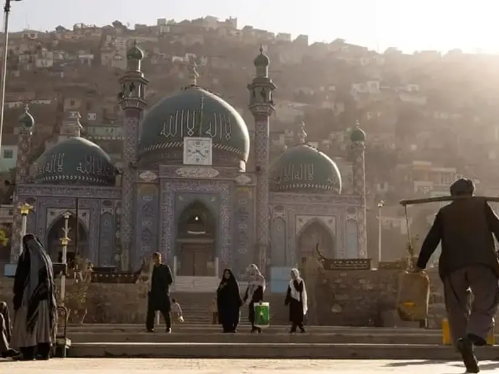
The US State Department released its annual report on "International Religious Freedom" on Wednesday, stating that religious minorities in Afghanistan faced violent attacks and widespread discrimination last year.

US Secretary of State Antony Blinken, while presenting the department's annual report, said that millions of people worldwide do not enjoy religious freedoms.

The report emphasises that over the past year, the Taliban has not protected places of worship in Afghanistan.

The US State Department's annual report mentions the declining population of Sikhs and Hindus, attacks on Shia places of worship, and assaults on Hazaras.

Referring to the killing of a Salafi cleric in February 2023 in Kapisa province, the report notes that thousands of Salafi followers have left Afghanistan since the Taliban took control.

The report cites sources indicating that the killing, torture, and forced displacement of Hazaras by the Taliban, as well as the seizure of their land and homes, have occurred in Bamiyan, Daikundi, Maidan Wardak, Baghlan, Balkh, Kunduz, Badakhshan, Herat, Ghazni, Sar-e Pul, Kandahar, Uruzgan, Takhar, and Samangan.

The report states that Sikhs and Hindus are concerned about their safety under the Taliban rule in Afghanistan and fear torture if they file a complaint in court.

According to the US State Department, more than 900 Sikh and Hindu citizens have left Afghanistan since the Taliban's takeover, with only six remaining to protect their sacred sites and books.

The report quotes a Christian rights organisation as stating, "The Taliban are striving for the complete eradication of Christianity or any other religious minority from the country."
Referring to the ban on the teaching of Shia jurisprudence in all schools, the report notes that no Shia clerics have participated in the country's religious councils.

The report also mentions that in July 2023, the Taliban banned the celebration of Eid al-Ghadir in Kabul, Balkh, Herat, and Daikundi provinces.

The US State Department report states, "In addition to religious issues, the Taliban have prepared an extremist violent curriculum for schools, which includes military training."

The report, referring to suicide attacks on worshippers in Baghlan in October 2023, an attack on a sports club in a Hazara-majority area of Kabul in November, and a bombing on a bus carrying Hazaras in Kabul on November 8, states that systematic attacks against Hazaras have not ceased.
Most Viewed

Pakistan Hosts Regional Meet On Afghanistan Without Taliban
1

Pakistan Hosts Regional Meet On Afghanistan Without Taliban

2

Taliban Ignore Afghanistan’s Interests By Backing Militants, Says Pakistan Army Chief

3

United Nations Delivers Education Kits To Four Million Afghan Children

4

European Parliament To Review Petition On Gender Apartheid, Taliban Status

5

Taliban Leaders In South-West Hold Security Meet In Kandahar

•
•
•

More Stories

Taliban Defeated US In Doha, Claims Iranian Official

Jun 27, 2024, 16:01 GMT+1

Rasoul Mousavi, General Director of the Iranian Foreign Ministry's West Asia Department, described the Taliban's policies as "very intelligent and calculated”.

In a note on X social media platform addressed to the Taliban's opponents, Mousavi wrote, "Whether you agree or not, they defeated the US both on the battlefield and in Doha."

In the note, which seems to be written to the Taliban's opponents, it states, "Your lack of approval for the Taliban's policies does not change the reality that the decision-making centre and policies of the Taliban are intelligent."

Mousavi described the UNAMA head's statement about the Taliban "coming from the mountains" as "a major misunderstanding of the Taliban”.

During a press conference in New York, in response to a question from Maryam Rahmati, a reporter for Afghanistan International, about the Taliban's opposition to the presence of women in the Doha talks, Roza Otunbayeva, head of UNAMA said, "[The Taliban] are not like you and me. The Taliban have come from the mountains and from war, and turning them into people who sit around the negotiation table and accept our principles is not easy."

The Iranian diplomat's defensive statement in favour of the Taliban comes at a time when the Taliban's decisions and policies have faced widespread anger from Afghan citizens. In nearly three years of governance, the Taliban have made a series of decisions that Afghan citizens perceive as violations of fundamental human rights and insults to their human dignity.

The Taliban have issued dozens of decrees depriving women of basic rights such as the right to education, work, sports, free travel, political activity, and participation in gatherings.

The group has also imposed extensive restrictions on Hazaras and Shia Muslims in Afghanistan, with no women, Hazaras, or Shia citizens holding any positions in the group's cabinet.

Chinese Envoy Evades Commenting On Girl’s Education Ban In Afghanistan

Jun 27, 2024, 13:24 GMT+1

Yue Xiaoyong, China's Special Envoy for Afghanistan, evaded commenting on the ban on girls' education in Afghanistan.

In an interview with the Iranian media outlet IRNA, Xiaoyong said that the international community should respect the "culture of the Afghans" and their "way of handling internal affairs”.

This Chinese diplomat emphasised again that the international community should avoid any interference in Afghanistan's internal affairs and recommended refraining from "imposing foreign solutions to solve Afghanistan's issues”.

Xiaoyong, who visited Tehran to participate in a regional contact group meeting ahead of the third UN meeting on Afghanistan, said, "The international community should avoid imposing foreign solutions to solve Afghanistan's issues."

China has accepted the Taliban’s representative as Afghanistan's ambassador in Beijing, but has refrained from recognising the Taliban administration as the official government of Afghanistan.

China has also maintained its diplomatic representation in Kabul at the ambassadorial level and has close relations with the Taliban. The country is seeking economic opportunities, particularly access to Afghanistan's mineral reserves.

Xiaoyong said that the third UN meeting on Afghanistan would be "informal" and held behind closed doors.

However, he added, "We want to reintegrate Afghanistan into the international community as soon as possible.”

He described the previous UN meetings on Afghanistan in Doha as "unsuccessful" because Taliban representatives were not present. He argued that representatives of an independent country were not present in a meeting discussing that country.

Taliban Flogs Three Individuals Publicly In Paktia Province

Jun 27, 2024, 12:19 GMT+1

The Taliban’s Supreme Court announced on Thursday, that three individuals were publicly flogged in Paktia province on charges of theft and extramarital relations.

In a statement, the court said that each of these individuals had been sentenced to 30 lashes and 11 months in prison.

In a recent case, the Taliban publicly punished a woman in Herat and another woman and man in Parwan on charges of "extramarital relations" and "running away from home”.

Human rights organisations report that the principles of fair trial are not observed in Taliban prisons and courts.

A human rights organisation named Rawadari, in an investigative report, stated there are discriminatory decisions, torture and forced confessions from the accused in Taliban courts and lack of independence and impartiality, and the principle of acquittal is violated.

Human Rights Activist Declines UN Invitation To 3rd Doha Meeting

Jun 27, 2024, 11:21 GMT+1

Zubaida Akbar, a human rights activist, has announced that she received an invitation from the United Nations to participate in the Doha meeting, but has decided not to attend it.

Akbar expressed her anger over the UN's decision to exclude women from the main table of discussions in Doha.

Human rights activists report that the UN has removed women from the composition and agenda of the main Doha meeting. However, according to them, "Some women and civil society activists" will be invited to meet with special representatives of countries in smaller meets. It is still unclear who exactly has received invitations from the UN.

Akbar wrote on the X social media platform, "I am outraged by the UN's decision to exclude women from the Doha 3 on Taliban’s terms." She added that the Doha meeting, without women, achieves nothing but appeasement for the Taliban.

According to this human rights activist, considering that Afghanistan is experiencing the most serious women's rights crisis in the world, the issue of women should have been a priority on the Doha meeting agenda.

The Taliban will send their representatives to Qatar late next week to attend the two-day meeting in Doha with senior UN officials and special representatives from 25 countries for Afghanistan.

This is the third meeting led by the UN and the first meeting to include Taliban officials. However, the exclusion of women and civil society representatives from the main meeting has sparked widespread criticism.

Doha Meeting Not Aimed at Recognising Taliban, Says UN Under Secretary-General

Jun 27, 2024, 10:13 GMT+1

Rosemary DiCarlo, the UN Under Secretary-General, stated on Wednesday during a meeting with Afghanistan International and four other news agencies that the third Doha meeting will not discuss recognising the Taliban government.

Responding to criticisms about the exclusion of Afghan women and civil society, she said, "This is not an intra-Afghan meeting."

DiCarlo emphasised, "I want to stress that the Doha meeting is a process. We have been heavily criticised for not including Afghan women and civil society in the discussions. I must clarify that this is not an intra-Afghan dialogue."

She added, "I hope we will reach that point someday, but we are not there yet."

The Under Secretary-General is scheduled to meet with Afghan women and civil society representatives on the second day of the Doha meeting on July 1.

Representatives from 25 countries have been invited to this meeting. DiCarlo noted that engaging with the Taliban does not equate to recognition.

"This is not a recognition meeting. This meeting will not lead to the recognition of the Taliban... Engaging does not mean recognising. This meeting is not about the Taliban; it is about Afghanistan and its people."

The Taliban had stipulated the exclusion of civil society and women's representatives as a condition for their participation in the Doha meeting, which was accepted by the UN.

DiCarlo mentioned that the Taliban had requested a meeting with António Guterres, the UN Secretary-General.

She explained that since she is chairing the meeting, it will not be possible for the Taliban delegation to meet with the UN Secretary-General in Doha.

DiCarlo emphasised that the goal of the Doha meeting is to commit the Taliban to international laws and the UN Charter. She expressed hope that the UN will achieve this step by step.