60 Percent of SIM Cards In Kabul Registered, Claims Taliban
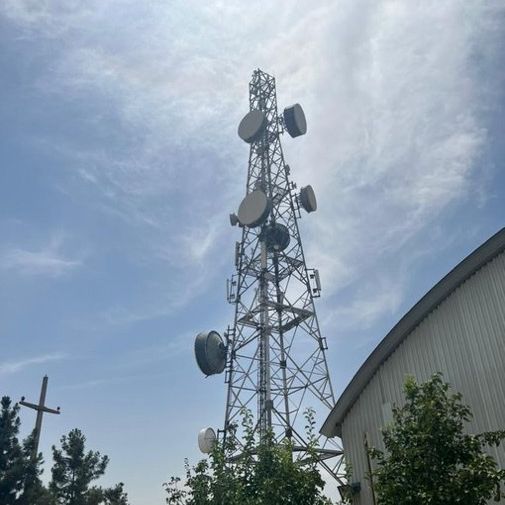
The Taliban's Ministry of Communications and Information Technology announced that 10 million SIM cards have been registered in Afghanistan so far.

The Taliban's Ministry of Communications and Information Technology announced that 10 million SIM cards have been registered in Afghanistan so far.
The ministry stated that the registration process for 60% of the SIM cards in Kabul has been completed, with the registration of the remaining 40% still underway.
On Monday, the Taliban’s ministry issued a statement saying that approximately 23 million SIM cards are currently active in Afghanistan.
The ministry has called on all telecommunications companies to register their customers' SIM cards according to the registration guidelines for the SIM cards.

Local sources in Herat informed Afghanistan International that the Taliban have removed and torn flags and banners that Shia Muslims had put up for the month of Muharram.
Images provided by these sources show individuals taking down and tearing these flags in the streets. The photos depict the torn flags.
According to these sources, those involved in these actions are members of the Taliban. This action is in contrast to the Taliban officials’ assurances in Kabul and Herat that they would ensure security for Shia mourning ceremonies during Muharram.
A Shia resident of Herat told Afghanistan International, "They promised to secure our ceremonies so we could hold them peacefully. How does tearing down our flags provide security?”
He further questioned, "Their security commanders and governors assure us of protection; then who are these individuals tearing down our flags?"
Several other sources also reported to Afghanistan International that Taliban ombudsmen from the propagation of virtues department in Herat have been removing flags of Muharram mourners from shops and homes, warning people against displaying such flags.

Sources told Afghanistan International that on Sunday, the Taliban closed several currency exchange shops in the Spin Boldak district of Kandahar, citing the lack of licenses.
This action has led to widespread dissatisfaction among money exchangers, prompting around 400 of them to close their shops in protest. As a result, the currency exchange market in this district is now completely shut down.
Sources reported that on Sunday morning, the Taliban entered the shops with weapons and threatened the owners.
Some shopkeepers stated that the Taliban have made the licensing conditions excessively difficult, preventing them from obtaining licenses.
The exchangers also complained that the Central Bank has set high costs for obtaining a license. They fear that if this situation continues, they will be forced out of business, leading to thousands of people becoming unemployed.
Local Taliban officials have not yet commented on the matter.

Iranian media reported that the railway transportation company, Raja, has increased train ticket prices for foreign nationals by 50% without any explanation or prior notice.
This Iranian state-owned company is responsible for selling train tickets.
Officials of the Islamic Republic of Iran primarily use the term "foreign nationals" to refer to Afghan immigrants in Iran.
According to Shahrara News, Raja Railway Transportation Company stated in an announcement, "At all railway stations, tickets will be checked and matched with identification documents before boarding."
The announcement specifies that passengers must carry a copy of their ticket along with valid identification, and those without tickets or with mismatched tickets will be denied entry to the train.

Shabir Ahmad Saeedi, the Taliban's head of the Traffic Directorate in Jowzjan, reported that eight members of a family lost their lives in a traffic accident on the Sheberghan-Maimana highway.
According to Bakhtar News Agency, which is controlled by the Taliban, four of the deceased were children.
The report, published on Monday, stated that the accident occurred when the vehicle carrying the family members collided with a fuel tanker.
Saeedi cited the main cause of the incident as the drivers' high speed and recklessness.
The lack of standard roads and the drivers' recklessness are considered primary causes of traffic accidents.
On April 15, Taliban’s General Directorate of Traffic announced in a statement that 50 people lost their lives in various parts of Afghanistan during Eid al-Fitr this year.

Sources from western Kabul reported that the Taliban has destroyed the statue of Abdul Ali Mazari, the former leader of Hezb-e-Wahdat Islami, at the Pul-e Sokhta intersection in Kabul.
According to local residents, on Saturday night, the Taliban defaced the statue of Mazari with a drill and then covered it with plaster.
Residents told Afghanistan International that on Sunday, the presence of Taliban members at the Pul-e Sokhta square was higher than usual, preventing people from taking photos of the damaged statue.
Witnesses said that on Saturday night, Taliban members struck the face of Abdul Ali Mazari’s statue with a drill and nails, causing damage to it.
They added that another group of Taliban members then attempted to cover the damaged part of the statue with plaster.
Locals say that some other statues at the Pul-e Sokhta intersection have been destroyed too.
The Taliban has not yet commented in this regard.
In a similar move in November 2021, the Taliban destroyed Abdul Ali Mazari’s statue in Bamiyan province and replaced it with a stone plaque bearing verses from the Quran.
Abdul Ali Mazari was the former leader of Hezb-e Wahdat party who was imprisoned and subsequently killed during the Taliban’s first reign in the 1995. The Islamic Republic of Afghanistan had given him the title of “Martyr of National Unity”.
In another incident on Saturday, July 6, the Taliban destroyed the image of Amanullah Khan, a former king of Afghanistan, in Torkham, Nangarhar province, and replaced it with their flag.
