Attacked 2 Taliban Outposts In Parwan & Kapisa, Claims NRF

The National Resistance Front (NRF) has claimed that in two attacks on Taliban forces in Parwan and Kapisa, three Taliban fighters had been killed and three others were wounded.

The National Resistance Front (NRF) has claimed that in two attacks on Taliban forces in Parwan and Kapisa, three Taliban fighters had been killed and three others were wounded.
So far, Taliban members have not commented on this claim by the NRF.
On Wednesday (July 17), the NRF in a statement said that the first attack took place on a Taliban checkpoint on the outskirts of Charikar city, resulting in the death of one Taliban member and injuries to two others.
The front added that the second attack occurred in the Hesa Duwum district of Kapisa province on a Taliban base, resulting in the deaths of two fighters and the wounding of one Taliban fighter.
NRF stated that no harm came to their forces in these attacks.
The front is one of two armed groups that occasionally attack Taliban forces in various central and northern provinces.
The Freedom Front is another armed group opposing the Taliban, which occasionally reports attacks on Taliban military centres.
Taliban officials have repeatedly stated that these groups have not succeeded in capturing any territory so far.
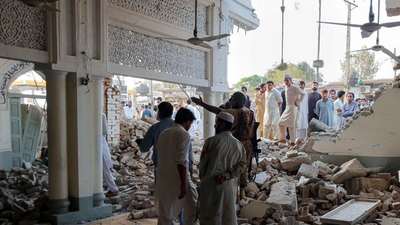
On Wednesday, Pakistan's Ministry of Foreign Affairs summoned the Taliban's deputy ambassador in Islamabad following a recent attack by forces loyal to Hafiz Gul Bahadur, a commander of Tehrik-i-Taliban Pakistan (TTP), in Khyber Pakhtunkhwa.
Pakistan has urged the Taliban to conduct a thorough investigation into the attack and take immediate action.
In a statement released on Wednesday, Pakistan's Ministry of Foreign Affairs stated, "The interim Afghan government has been asked to thoroughly investigate and take immediate, strong, and effective measures against the perpetrators of the Bannu attack."
The statement reiterated Pakistan's request for the Taliban to prevent the use of Afghan soil for carrying out such attacks.
"Pakistan reiterated its serious concerns about the presence of terrorist groups inside Afghanistan that continue to threaten Pakistan's security. These incidents are contrary to the spirit of bilateral relations between the two brotherly countries," the statement added.
Pakistan stated that this attack highlights the serious threat terrorism poses to regional security.
The attack by forces loyal to Hafiz Gul Bahadur on a Pakistani army base in Khyber Pakhtunkhwa resulted in the death of eight soldiers.
The Pakistani army has stated that Hafiz Gul Bahadur's group is based in Afghanistan and that the army will take necessary action against threats emanating from Afghanistan.
The Taliban have consistently denied any attacks against neighbouring countries originating from Afghan soil.

A delegation from the Taliban's Deputy Ministry for Counter-Narcotics of the Ministry of Interior travelled to China on Wednesday.
According to a statement from the Taliban's Ministry of Interior, Hasibullah Ahmadi, Chief of Staff of the Deputy Ministry for Counter-Narcotics, along with several directors and managers of this department, will participate in a scientific conference.
This visit comes a week after Abdul Haq Akhund, the Taliban's Deputy Minister for Counter-Narcotics, announced the complete eradication of poppy fields in Afghanistan.
In a recent report, the UN Security Council's Technical Monitoring Team on Sanctions had stated that while Taliban leaders have benefited from the ban on poppy cultivation in Afghanistan, farmers have suffered significantly.
The report also noted that the Taliban leader's orders to ban poppy cultivation in Badakhshan have been ignored. The provision of alternative crops for farmers was a key agenda item at the third Doha meeting. During this meeting, the Taliban requested the international community's assistance in providing alternative crops for Afghan farmers.

The Taliban's Directorate of Information and Culture in Panjshir has announced that several Russian businessmen and geologists are interested in investing in the province's mines.
Mohammad Agha Hakim, the Taliban’s governor in Panjshir, stated that the Taliban welcome foreign investors in this province.
In a statement issued on Wednesday, the Taliban's Directorate of Information and Culture in Panjshir noted that, in addition to Russian businessmen, traders from other countries have also expressed interest in collaborating with the Taliban to invest in Panjshir's emerald mines.
The Taliban have frequently reported on the extraction and sale of Panjshir emeralds.
Recently, the Taliban's head of Mines and Petroleum in Panjshir stated that over 60,000 carats of Panjshir emeralds have been sold for four million dollars.
Since taking power in August 2021, the Taliban have significantly intensified mining activities. However, critics argue that the Taliban's extraction of mines lacks legitimacy and transparency, with no clarity on where the revenues are directed.

The Taliban has disarmed and imprisoned one of their Tajik commanders in the Chah Ab district of Takhar province.
Local sources told Afghanistan International that Haji Ghulam Hussain had been arrested six days ago, and 350 of his forces had been disarmed.
Apparently, a special unit of the group and Taliban intelligence forces from Kabul were sent to Takhar to disarm and arrest Haji Ghulam Hussain.
Sources said that Haji Ghulam Hussain had been collaborating with the Taliban since 2016. He was previously a commander under Amir Bashir, a former Mujahideen leader in Takhar.
Bashir was a former commander of the Hizb-e-Islami who later joined the Jamiat-e-Islami Party. Bashir and his forces played a significant role in the Taliban's fight against former government forces in Takhar.
Sources mentioned that Haji Ghulam Hussain is currently imprisoned at the 40th Directorate of the Taliban Intelligence Agency in Kabul.
There is no information about the motive behind the disarmament of this Tajik Taliban commander in Takhar. He was described as a prominent military figure of the Taliban in Takhar and the northeastern region, having a role in controlling gold mines in Chah Ab district of Takhar.
This is not the first time the Taliban group has arrested one of their local commanders in the northern provinces. Previously, several Uzbek commanders in Faryab and Takhar had also been arrested and disarmed.
Recently, the UN Security Council's technical sanctions committee reported tensions between Pashtun and non-Pashtun Taliban in northern Afghanistan. The report mentioned that the Taliban leadership in Kandahar is seeking to strengthen its position and influence over non-Pashtun Taliban.
According to the report, due to these tensions, some orders from the Taliban leader, including the ban on poppy cultivation in Badakhshan, have been ignored.

Amid Khan Muttaqi, the Taliban's Foreign Minister, has strongly criticised international reports suggesting that Afghanistan has become a haven for terrorism and is witnessing widespread human rights violations.
During a meeting with employees of the Taliban Ministry of Foreign Affairs on Wednesday, Muttaqi labelled these reports as "baseless" and "nonsense”.
Muttaqi claimed that various entities are trying to undermine the Taliban's achievements in security, counter-narcotics efforts, and major projects.
Last week, the UN Security Council's sanctions monitoring team released a 26-page report stating that Afghanistan remains a sanctuary for terrorists, with the Taliban's inability to control the situation reinvigorating groups like Al-Qaeda and ISIS.
Additionally, the UN Special Rapporteur on Human Rights in Afghanistan recently expressed concern over the worsening human rights situation in the country, indicating that such violence might constitute crimes against humanity.
Reports indicate that since the Taliban took over Afghanistan, terrorist groups have sought refuge in the country and are operating under Taliban protection. The Taliban have also been accused of enforcing gender apartheid by excluding women from public life.
Muttaqi questioned the data collection methods of Western organisations concerning human rights, women's rights, and the presence of terrorist groups in Afghanistan. He stated, "These reports are taken from biased, dubious sources and enemies of Afghanistan and then published under the guise of documented reports."
He accused Western countries of unfairness, suggesting that if they are truly concerned about Afghanistan's situation, they should reopen their embassies in Kabul and assess the situation through diplomatic channels.
Muttaqi criticised countries advocating for human rights, accusing them of destroying Gaza and massacring 38,000 people. He claimed these countries highlight minor incidents in Afghanistan while ignoring the genocide in Gaza.
The UN Security Council's technical committee reported that Al-Qaeda has quietly re-established bases and offices in five provinces, including Kabul and Nangarhar, and has infiltrated the Taliban's Ministries of Defence, Interior, and Intelligence.
Previously, Richard Bennett, the UN Special Rapporteur on Human Rights for Afghanistan, stated during the 56th session of the UN Human Rights Council in Geneva that "violence against women and girls in Afghanistan is very severe and widespread”.
Bennett also noted that the Taliban have increased public executions and amputations.
