Taliban Publicly Flogs 3 Individuals In Khost Province
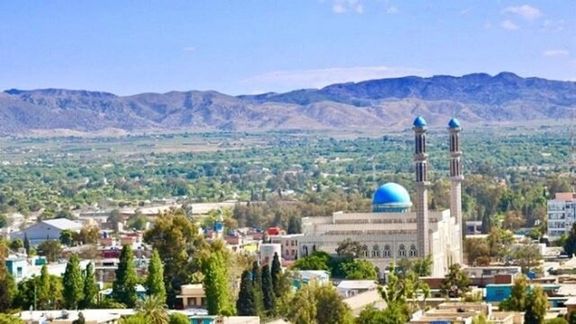
The Taliban's Supreme Court announced that three people, including a woman, were flogged in Khost province on charges of fleeing from home and kidnapping.
The Taliban's Supreme Court announced that three people, including a woman, were flogged in Khost province on charges of fleeing from home and kidnapping.
The court stated that the accused were sentenced to 35 lashes and prison terms ranging from one year and six months to three years.
On Thursday, August 29, the Taliban's Supreme Court announced that the group’s court of Ali Shir District in Khost Province publicly punished the three accused with lashes in the presence of the group's judicial officials.
The court did not disclose the identities of the accused.
Previously, on Tuesday, the Taliban had also lashed three individuals in Babaji District of Helmand Province in front of the public. The court sentenced the accused to 30 and 39 lashes and imprisonment ranging from eight months to two years.
Since taking control of power in August 2021, the Taliban has resumed corporal punishments such as lashing, stoning, and executions. The previous Afghan government, due to its commitment to international human rights conventions, had prevented cruel and inhumane punishments.

Abdul Ghani Baradar, the Taliban’s Deputy Prime Minister for Economic Affairs, travelled to Uzbekistan on Thursday, August 29.
Baradar's office stated that he travelled to participate in the inauguration ceremony of the "Termez International Trade Centre”.
The Taliban announced that the trip was made at the official invitation of Uzbekistan.
According to the statement, the Termez International Trade Centre will be inaugurated on Thursday in the presence of the Taliban's Deputy Prime Minister for Economic Affairs, the Prime Minister of Uzbekistan, the Deputy Prime Minister of Azerbaijan, and officials from Kazakhstan and Kyrgyzstan.
Although Uzbekistan, like other countries, does not officially recognise the Taliban government, it maintains close political and economic relations with the group.
Senior Taliban and Uzbek officials have hosted each other on several occasions in Afghanistan and Uzbekistan.
The United States has not yet granted residency to several senior military and civilian officials who were transferred to the country even three years after the fall of the Islamic Republic of Afghanistan, informed sources have told Afghanistan International.
Among these individuals are two ministers, two army chiefs of staff, eight deputy ministers, and dozens of generals. The Pashto section of Afghanistan International managed to speak with 75 former military personnel, security services heads, deputies, and department heads residing in the US about their residency status in the country.
Additionally, a source from a US immigration organisation, informed Afghanistan International that its offices in Virginia, California, Ohio, Maryland, West Virginia, and Philadelphia have assisted 118 former Afghan military personnel and generals. According to this organisation, these individuals have not yet received their permanent residency documents.
After the fall of the Afghan government to the Taliban on August 15, 2021, American and NATO forces transferred thousands of former security forces and former government officials along with their families.
Officials of the Ministry of National Defence
Afghanistan International’s interviews with 21 generals, including former chiefs of staff of army and deputy ministers of the former Ministry of National Defence revealed that 89 former generals, corps commanders, chiefs of corps staff, and brigade commanders, including two chiefs of army staff and four former deputy defence ministers, have not yet received permanent residency documents in the US.
One of the former deputy defence ministers, who wished to remain anonymous, spoke about being interviewed thrice by the US Citizenship and Immigration Services, part of the Department of Homeland Security, however he has not yet received any news regarding the approval or rejection of his residency. He added that many of his colleagues face a similar situation.
Ministry of Interior Officials
Two former ministers, five deputy ministers, 61 generals, and former chiefs of police and commanders of the Ministry of Interior have not yet received permanent residency documents in the US as per the interviews of 24 former generals, commanders, and senior officials of the former Ministry of Interior.
Additionally, sources from the Lorton immigration organisation in Virginia confirmed that the US government has rejected the asylum requests of Abdul Sattar Mirzakwal, the former Minister of Interior, four commanders, and the former minister’s office chief.
One of the former advisors to the Ministry of Interior, who wished to remain anonymous, told Afghanistan International that he has been in the US for over two years and gave an interview for residency last year, but is yet to receive a response.
This source also added that dozens of generals from the Ministry of Interior have not yet received residency, and only a few have been successful in obtaining asylum.
The former police commander of Kunar province told Afghanistan International that during his interview with the US immigration office strange questions. He added, “They were asking me very strange questions; for instance, how many people did you torture? Who did you kill and when? I told them that we were at war and we had no choice but to kill people.”
He added that he is in contact with many of his former colleagues in the US, and only two of them have received residency.
Officials of the National Directorate of Security
In addition to interviewing sources related to immigration agencies in the US, Afghanistan International spoke with 13 former directors, former generals, and members of the former National Directorate of Security (NDS) of the Islamic Republic of Afghanistan, including four deputy directors of the intelligence agency.
According to information, 72 former NDS officials, interrogators, prosecutors, and generals, including three deputy directors, have not yet received residency permits. One former general with the NDS, who wished to remain anonymous, confirmed that despite three interviews, he has not yet been able to obtain his residency documents.
Another source also provided Afghanistan International with a list of NDS officials whose residency documents have been rejected by the US government. This list includes the names of 19 senior officials of this agency, including three deputy directors.
Presidential Palace Officials
Afghanistan International interviewed eight former directors, deputy directors, and other officials of the Presidential Palace (Arg) of the former Afghan government. According to findings, five directors, 13 experts, and three deputy directors of various President office departments have not yet managed to obtain residency documents in the US.
The main reason for the US not issuing documents to senior officials of the former Afghan government is unclear. One employee of the Administrative Office of the President stated that he was told to wait even after four visits to the immigration office.
Presidential Protective Service (PPS)
Several members of the PPS have reported that 41 of their colleagues, including 11 generals, have not yet managed to obtain residency documents. Some PPS members, along with former President Ashraf Ghani, initially fled to Uzbekistan and then to the United Arab Emirates, from where they were transferred to the US under the evacuation programme.
One of them said that many PPS members faced the problem of their work permit's expiration, which the US government has since extended.
Najib Ehsanzai, a legal advisor on Afghan immigration affairs in the US, explained that the process of reviewing immigration documents for Afghans usually takes between one and one and a half years, but the review of cases for former government officials may take longer due to security checks.
He added, "One of the crucial steps in this process is the background check, which includes reviewing human rights violations, connections with terrorist groups, financial corruption, and security threats to the US".
Ehsanzai predicted that this process might take up to five years. However, if a case is rejected, individuals can appeal to the court.
Pakistan's Interior Minister announced that the country would soon begin the second phase of deporting undocumented Afghan migrants.
On Wednesday, Mohsin Naqvi, during a meeting with Indrika Ratwatte, the Deputy Special Representative of the United Nations Assistance Mission in Afghanistan (UNAMA), said that no one is allowed to remain in Pakistan without proper residency documentation.
Pakistan’s Dawn newspaper reported on Thursday, that during the meeting with the UN representative, the Interior Minister emphasised on the role of the United Nations and the international community in the return of Afghan refugees.
Meanwhile, Dawn, citing a source, reported that in the second phase of the deportation of Afghan migrants from Pakistan, those holding Afghan Citizen Cards (ACC) would also be expelled.
According to the United Nations High Commissioner for Refugees (UNHCR), around 880,000 Afghan refugees with ACCs are currently living in Pakistan.
The first phase of Afghan migrant deportations began last October, during which approximately 600,000 Afghan refugees were expelled from Pakistan.
Ratwatte, UNAMA’s Deputy Special Representative, mentioned in the meeting that the United Nations is working closely with Taliban officials on the return of Afghan refugees.
According to UN statistics, there are currently 1.3 million other Afghan migrants living in Pakistan with Proof of Registration (PoR) cards, whose validity was recently extended by the Pakistani government for another year.
Additionally, last month, Pakistan’s Foreign Ministry announced that about 44,000 Afghans in Pakistan remain in limbo, despite their immigration cases being accepted by countries like the United States, Australia, the United Kingdom, Canada, and Germany.
In his discussions with the UN delegation, the Pakistani Interior Minister also stated that the Tehreek-e-Taliban Pakistan (TTP) is organising its attacks against Pakistan from Afghan soil. Naqvi added that these attacks "must be stopped”.
Reliable sources informed Afghanistan International that several European countries have been discussing the recent letter from the Taliban’s Ministry of Foreign Affairs with Afghan ambassadors.
One of the topics of these discussions has been the closure of Afghan embassies in Europe.
Sources reveal that on July 30, the Taliban’s Ministry of Foreign Affairs dispatched a letter to all countries that had not yet transferred control of Afghan embassies to the group.
The letter declared that the assignments of the previous government’s ambassadors had concluded, asserting that these individuals no longer represent the Taliban and that their activities no longer carry any legitimacy with the group.
A day before sending this letter to Western countries, the Taliban’s Ministry of Foreign Affairs had announced that the consular services of 14 Afghan diplomatic and consular missions in European countries, Canada, and Australia are no longer valid.
A diplomatic source told Afghanistan International that European officials have said that the Taliban’s letter needs to be assessed. According to sources, one of the issues discussed was the closure of Afghan embassies in European countries.
Sources indicated that among the host countries, Norway and Germany have increased pressure on Afghan diplomats more than other European countries. Some European countries, according to the sources, have not ignored the Taliban’s letter.
Following the fall of the previous government, Afghan embassies and consulates continued their operations, and the Taliban accepted the consular documents issued by most of these missions despite the ambassadors' and consuls' refusal to engage with the Taliban.
For about a month now, the Taliban have refused to accept consular documents from most Afghan diplomatic centres in European countries, Canada, and Australia.
In August, the Taliban’s Ministry of Foreign Affairs introduced collaborating missions in Spain, Netherlands, Bulgaria, Czech Republic, and Munich, Germany.
The Ministry has asked Afghans and residents of Europe seeking consular services to approach the group’s collaborating missions in Europe.
Assault on Human Rights
The discussion of closing Afghan embassies in European countries and increasing pressure on Afghan diplomats comes amid recent actions by Hibatullah Akhundzada, the Taliban leader, who has recently signed a law known as the "Propagation of Virtue and Prevention of Vice" to restrict the rights of Afghan people, especially women.
Under this law, the Taliban have classified women’s voices and faces as "Awrah" [intimate body part of their body] and mandated full covering for women.
This law has faced widespread backlash.
Josep Borrell, the EU’s foreign policy chief, stated that EU members are horrified and concerned about the Taliban’s Propagation of Virtue law.
Amnesty International has labelled the Taliban’s law as an assault on human rights, stating that it imposes severe and new restrictions on Afghan women and girls.
The German Foreign Minister has also commented that the Taliban’s law once again demonstrates that it is impossible to maintain relations with extremist Islamists.
Fasihuddin Fitrat, the Chief of Staff of the Taliban Army, has stated that the Tehreek-e-Taliban Pakistan (TTP) controls areas within Pakistan and plans and executes its operations from there.
Fitrat mentioned that Pakistan has not provided any evidence of the TTP’s presence in Afghanistan. According to this senior Taliban military official, TTP operates from Pakistan and has control over certain regions there.
He added that Pakistan has no proof that the group is present in Afghanistan or that it conducts its operations against Pakistan from Afghan soil. Fitrat emphasised that the Taliban does not allow the TTP to carry out operations against Pakistan from Afghan territory.
Fitrat remarked, “Pakistan should not repeatedly place the blame for its shortcomings on Afghanistan, and we certainly reject these claims. The TTP is not funded or equipped from here.”
Meanwhile, on Tuesday, a day after a series of coordinated insurgent attacks in Balochistan, Pakistan, which resulted in over 70 fatalities, Pakistan’s Interior Minister Mohsin Naqvi claimed that they have undeniable evidence of foreign involvement in these attacks.
Regarding the presence of ISIS, this Taliban’s senior military official responded to questions about reports of ISIS activity in Afghanistan, stating that ISIS has no physical presence anywhere in the country. He acknowledged that while ISIS may conduct destructive operations in some areas, it is not in Afghanistan and could be in “other regions”. He added, “ISIS’s presence in Afghanistan is entirely false and baseless.”
Fitrat also criticised the agreement between Uzbekistan and the US concerning helicopters and military aircraft of the former Afghan army, stating that the US should not be generous in this regard. He said that the Taliban considers these aircraft to be their property and will use any means necessary to obtain them, urging Uzbekistan not to accept such deals.
Apart from this, Fitrat stated that Afghanistan’s airspace has been repeatedly violated in the past, and the Taliban has attempted to prevent further violations through diplomatic means. He mentioned that the Taliban’s Defence Ministry has been working on this issue and that Afghanistan’s airspace will soon be fully under the group's control.
Meanwhile, Fitrat noted that occasional conflicts occur due to “violations by neighbouring countries,” and the Taliban have had to respond. He said efforts are being made to control these clashes through committees and coordination centres, aiming to reduce them to zero in the coming year.
In a briefing about the Taliban’s Defence Ministry’s organisation, Fitrat revealed that the number of army members has grown from 100,000 to over 180,000. He added that the army’s personnel will continue to increase according to needs, potentially exceeding 200,000.