• العربية
  • پښتو
  • فارسی
Brand
  • Afghanistan
  • Sport
  • Markets
  • Afghanistan
  • Sport
  • Markets
  • Theme
  • Language
    • العربية
    • پښتو
    • فارسی
  • Afghanistan
  • Sport
  • Markets
All rights reserved for Volant Media UK Limited
volant media logo

Iran Declares Readiness to Punish Perpetrators of Daikundi Hazara Killings

Sep 13, 2024, 10:38 GMT+1

The Embassy of the Islamic Republic of Iran in Kabul on Friday, September 13, condemned the shooting of Shia civilians in Daikundi province and called for the punishment of those responsible.
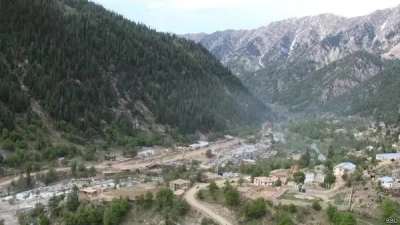
The embassy also expressed its willingness to cooperate in this matter.

ISIS-Khorasan claimed responsibility for the attack on Thursday, September 12, announcing that 15 civilians, all men, were killed in Daikundi.

The Iranian embassy stated, "We demand the prosecution of those responsible for this great tragedy and declare our readiness to assist in this regard."

Nasser Kanaani, spokesperson for Iran’s Ministry of Foreign Affairs, described the ISIS attack as "criminal" and said the Islamic Republic strongly condemns it.

According to Mehr News Agency, Kanaani welcomed the Taliban's "anti-terrorist actions" and called for immediate steps to bring the perpetrators of the shooting to justice.
Several Afghan politicians and political and military groups have also condemned the shooting of Hazaras in Daikundi, labelling it a "genocide and crime against humanity”.

Most Viewed

Russia Accuses Britain Of Supporting Armed Anti-Taliban Groups
1

Russia Accuses Britain Of Supporting Armed Anti-Taliban Groups

2

China Continues Mediating Between Islamabad & Taliban, Says Pak Newspaper

3

Taliban ‘National Keyboard’ App Risks User Surveillance, Says Cybersecurity Researchers

4

Iran Pledges Support For Easing Taliban-Pakistan Tensions

5

UN Condemns Deadly Train Attack In Balochistan

•
•
•

More Stories

ISIS Used US-Made Weapon To Murder Hazara Civilians in Daikundi

Sep 13, 2024, 10:07 GMT+1

Information received by Afghanistan International indicates that ISIS terrorists used a US-made weapon to kill at least 14 Hazara civilians in Daikundi.

After the fall of the Afghan government in August 2021, US military equipment which had been supplied to the Afghan National Security and Defence Forces fell into the hands of the Taliban.

On Thursday, September 12, ISIS-Khorasan claimed responsibility for the killing of 15 civilians in Daikundi, all of whom were men. Images from the scene show that ISIS used several weapons, including an American pistol, to shoot the civilians in the head and body.

A military source told Afghanistan International that the pistol seen in the video released by ISIS is an American "GLOCK 19 in 9mm," which had been distributed to Afghanistan’s former security forces. The source added that four models of this weapon had been provided to the previous government’s forces, with the "GLOCK 19 in 9mm" being the most common.

Following the Taliban's takeover, Afghanistan’s army was disbanded, and all the weapons provided by the US fell into Taliban hands. In addition, during its withdrawal from Afghanistan, the United States left behind a significant amount of light and heavy weaponry, which, according to former US President Donald Trump, was valued at $85 billion.

The Taliban have repeatedly claimed that ISIS-Khorasan does not exist in Afghanistan, yet ISIS continues to claim responsibility for deadly attacks in the country from time to time.
The Shia-majority province of Daikundi was considered one of the safest in Afghanistan during the previous Afghan government.

According to local sources, the victims of the recent massacre were on their way to welcome pilgrims returning from Karbala city in Iraq which houses Shia holy shrines. ISIS had previously threatened, just months after the Taliban’s return to power, to kill Shia Muslims "from Baghdad to Khorasan”.

Taliban's Ministry of Justice Threatens To Prosecute Critics of Their Laws

Sep 12, 2024, 14:10 GMT+1

Following widespread criticism of the Taliban's laws, the group's Ministry of Justice issued a warning that anyone opposing their ratified legislative documents will be brought to trial.

The ministry stated that the Taliban’s laws are "100 percent Sharia-based" and that opposition to them is an "objection to Sharia," which is unacceptable.

According to the ministry, their legislative documents are derived from the "Holy Book of Allah, the traditions of the Prophet, and recognised Islamic jurisprudential texts”.

In a statement released on Thursday, the ministry emphasised that there is no article in their legislative documents that hasn't been sourced from the mentioned texts. They also noted that committees composed of scholars, muftis, and sheikhs within the ministry work on these legislative documents.

"If anyone criticises the ratified legislative documents out of prejudice or with the intention of undermining the system, this criticism is considered an objection to Sharia and will not be tolerated under any circumstances," the statement added.

The ministry further warned that "if any individual publicly criticises the ratified legislative documents of the Islamic Emirate, whether in the media or in other forums, and does so with malicious intent or hostility, they will face Sharia-based consequences and will be referred to the courts."

Over the past three years, the Taliban have ratified laws that have deprived citizens of their civil, political, and social rights. Among these are the bans on girls' education and women's employment. Recently, the Taliban's "Law on the Propagation Virtue and Prevention of Vice" has faced widespread criticism, as it has imposed even more restrictions on citizens, particularly women. This law mandates the Taliban's version of the hijab and declares women's voices as inappropriate for public spaces.
In addition to human rights activists and citizens, even some clerics supportive of the Taliban have criticised this law, arguing that it contradicts Islam.

Taliban’s Move To Jam Satellite Frequency Assault on Free Press: Afghanistan International

Sep 12, 2024, 12:20 GMT+1

In a blatant violation of the free flow of information, satellite frequency of Afghanistan International, an independent news channel, has been jammed by the Taliban, inviting strong condemnation.

The news channel criticised the Taliban’s deliberate crackdown to jam the satellite frequency, which started on September 5, and called it a direct assault on press freedom.

The news channel in a statement called on the international community, International Telecommunication Union (ITU) member states, human rights organisations, and media advocacy groups to condemn this violation of ITU regulations and hold the Taliban accountable for their illegal actions.

Harun Najafizada, Executive Editor of Afghanistan International, stated, "The Taliban's jamming of our satellite signal is a desperate attempt to silence the voice of the Afghan people. It is a continuation of their systematic campaign to suppress independent media and deny Afghans access to vital information. The group fears a well-informed populace and seeks to maintain its grip on power through censorship, misinformation, and propaganda."

Sources informed Afghanistan International that this orbital jamming is being conducted by sending disruptive signals from a ground station within Afghanistan back to the satellite, interfering with its broadcast.

A statement from the news channel highlighted that the Taliban’s action marks the first instance of satellite jamming targeting the distribution of a TV channel in Afghanistan. “Such actions violate international regulations established by the ITU, which govern the fair and open use of communication satellites,” the statement added.

The statement also emphasised that the act of orbital jamming by the Taliban not only attacks press freedom, but also violates international standards and highlights the regime’s increasing efforts to dismantle free expression and restrict Afghan citizens' access to truthful information.

Afghanistan International has been a crucial source of reliable, unbiased news for the Afghan people, particularly in the wake of the Taliban’s takeover. The media outlet stressed that pressure has to be applied to ensure that the fundamental rights of freedom of expression and access to information are upheld in Afghanistan.

Earlier too, in May 2024, the Taliban had warned journalists and experts against working with Afghanistan International TV. It was the first time that they had told people not to cooperate with a specific outlet. A spokesman for the Taliban-controlled Ministry of Information and Culture alleged the station was committing professional violations and violating moral and legal boundaries.

Afghanistan International TV, which is headquartered in London, is accessible through satellite, cable and social media.

Also in April, the Taliban had suspended two TV stations for failing to “consider national and Islamic values.”

Nearly 3 Million Children in Afghanistan Suffering from Malnutrition, Says WHO

Sep 12, 2024, 11:47 GMT+1

The World Health Organisation (WHO) has announced that food insecurity is rapidly becoming a widespread crisis in Afghanistan, with 2.9 million children under the age of five currently facing malnutrition.

The organisation further reported that 850,000 of these children are suffering from acute malnutrition.

On September 11, WHO Director-General Tedros Adhanom Ghebreyesus stated that one-third of Afghanistan’s population lives in food-insecure regions, with floods and drought exacerbating the situation.

He noted that WHO health workers have treated 21,000 children with acute malnutrition in 140 health centres across Afghanistan, but stressed that the assistance provided is insufficient and that the children require further aid.

In a post on social media platform X, Tedros called on the international community to immediately support WHO and its partners in delivering essential healthcare and food aid.

Earlier, on Sunday, September 8, WHO had announced that it had sent around 20 tons of medicine and medical equipment to health centres in five northern provinces of Afghanistan. The supplies included kits for treating pneumonia, measles, cholera, and surgical and dressing sets.

Kandahar’s Morality Police Imposes More Restrictions on Female Healthcare Workers

Sep 12, 2024, 10:45 GMT+1

Sources in Kandahar reported on Wednesday that the Department of the of Virtue and Vice has been harassing and humiliating the families of female healthcare workers, making it increasingly difficult for these women to continue their jobs.

The pressure has led some families to prevent their female members from working in healthcare, especially when it involves travel to rural districts. The morality police has now mandated that female health workers must not only be accompanied by a male guardian (mahram) when travelling to districts, but also carry an official permit from the the Department.

Previously, only an ID card issued by the Department of Public Health was required for the movement of female healthcare workers.
Families of these healthcare workers shared their experiences with Afghanistan International, stating that when they sought permission from the morality police, they were insulted and reprimanded for allowing their female relatives to work.

One relative of a female healthcare worker in Kandahar recalled that the director of the department of vice and virtue in Kandahar spoke to him condescendingly, saying, "Why can’t you keep your wife at home? If she doesn’t have a husband, we can help you. You are a Pashtun; have some shame."

Another man, who went to the Ministry to obtain a mahram permit for his wife, was similarly humiliated, with the official stating, “In foreign organisations, men and women take off their clothes and do whatever they want. Have some decency; how can you send your wife to such places?"

A source in Kandahar’s Department of Public Health confirmed that the director of department of vice and virtue had openly opposed the employment of women in foreign health organisations during a public gathering.
This situation has resulted in many families restricting their female members from working in rural districts, which has, in turn, severely limited healthcare services for women in these areas, posing a serious threat to the health of women and children.