One Taliban Members Killed In Kapisa, Claims NRF

The National Resistance Front (NRF) said on Sunday that one Taliban member was killed and two others were wounded in an attack by its fighters in Kapisa.

The National Resistance Front (NRF) said on Sunday that one Taliban member was killed and two others were wounded in an attack by its fighters in Kapisa.
According to the front, the attack took place in the village of Mughal Baik Khel in Kapisa province.
So far, the Taliban has not commented on the incident.
The National Resistance Front said that the Taliban's weapons were also seized by its forces and a Taliban military vehicle was destroyed in the attack.
This is the second attack by this front against the Taliban in the past three days. On Sunday, the NRF said that it attacked a Taliban base in Takhar on Friday, October 18.
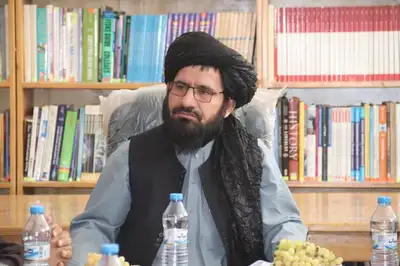

The Afghanistan Freedom Front (AFF) announced on Sunday evening, October 20, that it had attacked the military section of the Kabul Airport from several directions.
This front wrote in a statement that this operation started with the launch of several rockets and inflicted heavy casualties on the Taliban.
This front has not provided statistics on the number of casualties.
The statement said that the attack first began with the firing of several missiles at specific targets, and after inflicting casualties and creating panic in the enemy's ranks, the infantry section of the Afghanistan Freedom Front took action.
AFF said that the operation lasted ten minutes and its forces left the area after the operation was successful.
According to the details published by this front, the Taliban had taken strict security measures in the last two days and were busy repairing worn-out war planes.
AFF, however, said that in addition to causing severe casualties to the Taliban, they also disrupted the repair programme of warplanes during the attack on the Kabul airport.
On Sunday night, local sources contacted Afghanistan International and reported the occurrence of two powerful explosions in the vicinity of Kabul Airport. Sources said that the explosions occurred around 8 pm on Sunday.
The Taliban has not yet commented on this matter.

The Taliban's Supreme Court announced the public flogging of a man and a woman in Takhar province on charges of engaging in an extramarital relationship.
According to the court’s statement, the two individuals were each sentenced to 39 lashes, which were carried out in public on Sunday.
The statement, released on Sunday, October 20, clarified that the punishment was based on a ruling from the primary court in Farkhar district.
Despite condemnation from international human rights organizations, the Taliban continues to administer corporal punishment and public floggings.
In the past week alone, the group has publicly flogged 34 individuals, including women, across the provinces of Khost, Kunar, Laghman, and Kabul, on various charges.

The United Nations High Commissioner for Refugees (UNHCR) has reported that since September 2023, over 733,000 Afghans have returned to Afghanistan from Pakistan.
According to the report, more than 100,000 returnees have received assistance, with one-quarter of these families being female-headed households. The UNHCR published this report on Sunday, detailing the scale of Afghan repatriation from Pakistan over the past year.
Of the 111,700 Afghan returnees from Pakistan who received aid, approximately 48 percent were women. The report further highlights that 2.5 percent of all aid recipients are individuals with disabilities.
The UNHCR noted that around 33 percent of returnees expressed intentions to return to five key provinces, namely Kabul, Nangarhar, Helmand, and Balkh. The agency also observed that the highest numbers of returnees were recorded in May and July 2023, with 38,000 Afghans returning from Pakistan each month during these peak periods.
The report also revealed that, since the beginning of the year, approximately 6,094 Afghans have been arrested or imprisoned in Pakistan.
The deportation of Afghan migrants from Pakistan, which commenced in October 2023, has drawn widespread international criticism. Despite this, Pakistan continues its deportation of Afghan refugees.

Sources from Takhar province have informed Afghanistan International that the Taliban has arrested seven of its own members in the Baharak district on suspicion of collaborating with ISIS.
According to the information received, the seven individuals were detained at one of the Taliban’s checkpoints in the area. Reliable sources disclosed that last Monday, the Taliban launched an operation against ISIS in Baharak district.
The arrests come amidst growing concerns about ISIS’s presence in the region. The United Nations Security Council recently reported that ISIS-Khorasan has ambitions to gain control of Afghanistan. The report suggests that Afghanistan could serve as a base from which neighbouring countries can be infiltrated, thereby increasing the terrorist threat to Central Asia, Russia, and Iran.

Sources have informed Afghanistan International that the Taliban, following its ban on broadcasting images of living beings, is planning to convert some state television stations into radio outlets.
According to these sources, staff from the national television network in Kabul and various provinces are likely to be reassigned to work at these new radio stations.
Information obtained by Afghanistan International suggests that the Taliban is in the process of establishing several new radio stations aimed at promoting the group’s policies and disseminating its religious views.
Sources report that “Radio Bayan-e Shomal” will be renamed “Radio Hurriyat,” with its broadcasts managed by the Taliban’s intelligence services. Additionally, the Taliban plans to launch a dedicated radio station for the Ministry of Interior, and another station for its military forces.
Multiple sources have confirmed to Afghanistan International that the Taliban intends to cease operations of Afghanistan’s national television and replace it with “Radio Shariat,” which is set to resume broadcasting. Radio Shariat was a key media outlet during the Taliban’s first regime under Mullah Omar.
According to sources, Yusuf Ahmadi, the head of national television under Taliban control, stated in a meeting with media managers that the decision to stop television broadcasts was made by the Taliban leadership. The Taliban had already halted national television transmissions in Kandahar and Takhar.
Afghanistan’s national television, as a state-run media platform, came under Taliban control when the group seized power. Over the past three years, the Taliban has suspended many cultural and social programmes on the network and dismissed its female staff.
This move to shut down state-run visual media follows a recent statement by the Taliban’s Ministry for the Promotion of Virtue, which indicated that the group is gradually enforcing a law banning the broadcast of images of living beings. A Taliban official told Agence France-Presse that this law is already being implemented in several provinces.