• العربية
  • پښتو
  • فارسی
Brand
  • Afghanistan
  • Sport
  • Markets
  • Afghanistan
  • Sport
  • Markets
  • Theme
  • Language
    • العربية
    • پښتو
    • فارسی
  • Afghanistan
  • Sport
  • Markets
All rights reserved for Volant Media UK Limited
volant media logo

Canada Expresses Support for National Resistance Front’s Political Message in Afghanistan

Nov 3, 2024, 13:44 GMT+0

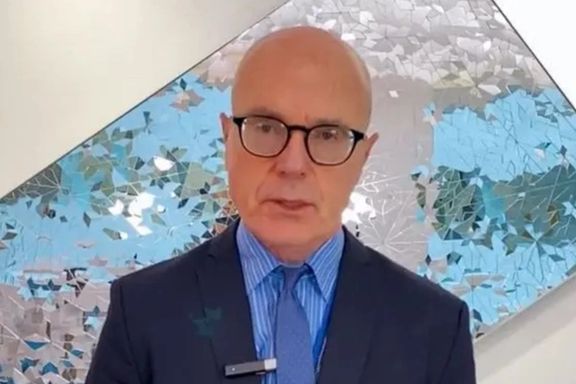
David Sproule, Canada’s Special Representative for Afghanistan has announced that the country supports the political stance of Afghanistan’s National Resistance Front (NRF).

Sproule clarified, however, that Canada cannot encourage military action against the Taliban and urged for a reduction in the restrictions currently imposed on Afghan citizens.

Sproule, who served as Canada’s Ambassador to Afghanistan from 2005 to 2007, noted that every time he believes the situation in Afghanistan has reached a crisis point, new decrees from the Taliban further aggravate conditions.

He also predicted that the Taliban will likely remain in power for the foreseeable future, requiring Afghanistan to contend with continued Taliban rule.

Sproule underscored the need for a stable political framework, facilitated through international agreements. He advocated for a structure that includes power-sharing and reduces the constraints imposed on Afghans, particularly women and girls.

The Canadian Special Representative further remarked that internal and external pressures on the Taliban are mounting.

According to media reports, Sproule condemned the Taliban’s actions against women as “oppressive,” stating that these policies have led to widespread frustration and public discontent.

He criticised the Taliban’s ban on allowing women’s voices to be heard in public and expressed doubt that the Taliban will lose power in the near future.

This statement followed a request by Richard Bennett, the United Nations Special Rapporteur on Human Rights, for Canada to support human rights in Afghanistan.

CBC News also interviewed Fariba Rezai, an Afghan activist living in Canada who leads an organisation focused on education and empowerment for Afghan women. Rezai suggested that Canada’s armed forces should consider returning to Afghanistan and that the Canadian government should provide military support to the resistance against the Taliban.

Several countries have previously declared that they do not support violent efforts to change the Taliban regime.

Although the Chairman of the U.S. House Foreign Affairs Committee expressed support for the NRF’s struggle against the Taliban, the U.S. Department of State reiterated that it does not endorse armed conflict in Afghanistan.

The United Kingdom similarly stated that pragmatic engagement with the Taliban administration remains the only viable option.

The National Resistance Front, a political and military movement formed following the Taliban’s return to power, has engaged in armed resistance against the group. Over the past three years, the NRF has waged attacks against Taliban forces across various regions of Afghanistan.

Most Viewed

Female Ismaili Entrepreneur Shot Dead In Badakhshan
1

Female Ismaili Entrepreneur Shot Dead In Badakhshan

2

Afghanistan May Not Remain Intact In Future, Says Pakistani Analyst

3

French Parliament Hosts Two-Day Meeting On Afghanistan

4

Pakistan Welcomes Local Ceasefire Agreement In Kunar & Nuristan Border Areas

5

Taliban Renews Call For China To Launch Aynak Copper Mine

•
•
•

More Stories

55-Year-Old Woman Allegedly Beaten by Taliban Police Commander in Takhar Dies

Nov 3, 2024, 11:56 GMT+0

Gul Bibi, a 55-year-old woman reportedly assaulted by a Taliban police commander in the Darqad district of Takhar province, has succumbed to her injuries in hospital.

Sources from Takhar indicate that two days ago, the Taliban police commander in Darqad allegedly subjected this woman, along with several other women, to a severe beating over a longstanding land dispute.

Local sources shared images and details of the incident with Afghanistan International on Sunday.

According to these sources, Gul Bibi and a group of other women in Darqad district had clashed with a local Taliban commander and his associates over their attempts to take over the women’s land and destroy their crops. In response to the women’s resistance, the Taliban officials, allegedly in collusion with “a local land-grabber and bully,” intervened to forcibly remove the women from the property.

This land dispute has reportedly been a contentious issue for many years.

Sources added that when the women prevented the destruction of their crops, Taliban officials, including the district deputy and the police commander, arrived at the scene in the evening to pressure the women to withdraw. According to reports, Abdul Khaliq, the Taliban police commander in Darqad, beat the women when they refused the Taliban’s demand to vacate the land.

Gul Bibi, who was reportedly beaten more severely than the others, was transported to hospital. Sources report that she was initially taken to Taloqan and later transferred to a hospital in Kunduz, where she remained in a coma for approximately 24 hours before passing away on Saturday night.

Her children and relatives brought her body back to Darqad district for burial on Sunday. Local sources provided Afghanistan International with images of the funeral and burial ceremonies, which show Gul Bibi lying on a hospital bed under an oxygen machine, with visible bruises from the assault. Medical records from the Kunduz Regional Hospital, detailing her injuries, have also been shared with Afghanistan International.

In one video, a woman standing beside Gul Bibi’s body identifies herself as a “witness” to the assault and accuses Abdul Khaliq, the Taliban police commander in Darqad, of being the “murderer” of Gul Bibi.

Following the incident and the woman’s death, residents of Darqad district staged protests, prompting the Taliban to deploy forces to suppress the demonstrations.

Taliban officials have yet to issue any statement regarding the incident.

Iranian Official Reports Daily Deportation of 3,000 Afghan Migrants

Nov 3, 2024, 10:38 GMT+0

Hossein Sharafati-Rad, Director General of Foreign Nationals and Immigrants Affairs in Iran’s Razavi Khorasan Province, announced that approximately 3,000 Afghan migrants are deported daily through the Dogharoun border after being detained.

Sharafati-Rad noted that the Dogharoon border crossing serves as the primary point of deportation for “undocumented Afghan nationals.”

During a visit on Saturday to a proposed site for a migrant camp in Taybad, Sharafati-Rad highlighted the need for a dedicated camp to manage “undocumented Afghan nationals,” emphasising that national officials must prioritise this initiative.

He explained, “A 20-hectare plot of land has been designated for this camp, and we require support and cooperation from relevant agencies at both national and provincial levels to bring this plan to fruition.”

Discussing the government’s programme to identify and deport undocumented migrants by year-end, Sharafati-Rad clarified that, under the migrant regulation plan, undocumented Afghan nationals detained in 11 provinces will be sent back to Afghanistan via the Dogharoun crossing.

Sharafati-Rad further reported a 40% increase this year in the number of Afghan migrants voluntarily returning from Razavi Khorasan Province compared to last year. He added that, following Tehran, Mashhad hosts the second-largest Afghan migrant population in Razavi Khorasan.

In recent months, the Iranian government has intensified its deportation efforts, further complicating living conditions for Afghan migrants within the country. In certain cities, employing Afghan migrants has been criminalised, and renting homes to them has been prohibited.

Taliban Bans Photography & Filming at Sheikh Zayed University in Khost

Nov 3, 2024, 09:56 GMT+0

Some students at the Journalism Faculty of Sheikh Zayed University in Khost province report that the Taliban has banned all forms of photography and filming at the faculty.

Photography and videography are essential parts of practical journalism education.

On Saturday, a number of students told Afghanistan International that university officials had informed them that photography and filming within the university grounds are now prohibited.

Some students also mentioned that there are disagreements among university professors on this matter. According to them, some professors continue to assign students projects involving photography and filming as part of their coursework.

Journalism students emphasised that completing practical projects in photography and video is crucial for their graduation.

So far, the administration of Sheikh Zayed University in Khost has not officially commented on this restriction.

Previously, during a visit to Khost, the Taliban’s Minister of Higher Education, in a meeting at Sheikh Zayed University, prohibited journalists from taking photos and videos. Taliban officials had told journalists that they were only allowed to record the voice of Nada Mohammad Nadim’s speech.

Under the new Taliban law of “Promotion of Virtue,” publishing images of living beings has been banned. This law has put visual media at risk, and several television stations in certain provinces of Afghanistan have halted their broadcasts.

The Taliban stated that the ban on broadcasting images of living beings would be implemented gradually and that they intend to convert television stations into radio stations.

National Dialogue Process Emphasises Need for Intra-Afghan Talks During Türkiye Meet

Nov 3, 2024, 08:41 GMT+0

The National Dialogue Process has announced that a two-day meeting held in Istanbul, Türkiye, convened with the participation of 70 representatives from diverse ethnic and political backgrounds in Afghanistan.

According to organisers, the majority of attendees highlighted the urgent need to initiate a transparent process of intra-Afghan dialogue.

The meeting took place behind closed doors in Istanbul. Sources informed Afghanistan International that it was hosted by Hekmat Khalil Karzai, Mustafa Mastoor, and Idris Zaman.

Certain sources revealed that the organisers extended invitations to various groups, including the Taliban; however, the Taliban, along with other political figures and groups, opted not to attend.

One of the organisers informed Afghanistan International that two representatives from the assembly had travelled to Kabul, seeking collaboration from the Taliban, former President Hamid Karzai, and Abdullah Abdullah. According to the source, none of these parties committed to cooperate or sent delegates to the meeting.

Following reports indicating that Hamid Karzai and Abdullah Abdullah may have been involved in organising the event, Karim Khurram and Abdolali Mohammadi, close associates of Hamid Karzai, clarified that while the former president supports political dialogue and engagement among Afghans, he did not participate in organising the meeting, nor did he send any representatives.

A source disclosed that invitations were also extended to members of the National Resistance Front and the National Resistance Council for the Salvation of Afghanistan, both of whom declined to attend.

On Saturday, the National Dialogue Assembly released its inaugural statement, asserting that it “seeks to bring together all stakeholders involved in Afghanistan’s issues and, through a national dialogue process, provide effective and lasting solutions for peace and lasting stability in the country.”

The statement outlined the primary aim of the National Dialogue Process as the creation of a constructive space for dialogue among Afghan citizens, both within Afghanistan and abroad, aiming to bolster national trust and address political, social, economic, and cultural challenges.

The National Dialogue Process noted that its activities commenced in 2022, spearheaded by the initiative and collective ownership of political, social, and economic figures within Afghanistan. Operating with a council structure and a rotating presidency, the current head of the group is reportedly Babar Farahmand, former deputy of the High Peace Council in the previous government.

Active members of the group include Hekmat Khalil Karzai, a close associate of Karzai; Mustafa Mastoor, affiliated with Abdullah Abdullah; and Idris Zaman, former deputy of Afghanistan’s Ministry of Foreign Affairs, who maintains close ties with the Taliban.
US Embassy Calls For Protection Of Afghan Journalists From Threats, Violence

Nov 2, 2024, 15:24 GMT+0

On the occasion of the International Day to End Impunity for Crimes against Journalists, the US Embassy in Afghanistan said that Afghan journalists face threats, violence and intimidation.

The embassy called for the security and protection of journalists from the violence.

November 2 marks the International Day to End Impunity for Crimes against Journalists. Earlier, the Afghanistan Journalists Centre announced that the Taliban had arrested at least 220 journalists since August 2021. The centre also added that it recorded 447 incidents of violations of the rights of journalists and media workers during this period.

The US embassy wrote on its social media network X page on Saturday that it stands in solidarity with Afghan journalists who continue to face threats, violence and intimidation in their search for the truth.

The embassy called a free press the cornerstone of a just society, adding, "We must protect those who risk their lives to expose the truth."

The Taliban has extensively violated the rights of the media and journalists since they came to power. Threats, arbitrary arrests, torture of Afghan journalists, and in some cases their mysterious murders are among the cases that have increased significantly in the three years of the Taliban's rule.

In addition, the Taliban recently banned the publication of images of "living beings" within the framework of the Law on the Promotion of Virtue and stopped broadcasting public and private television programmes in more than 10 provinces.