Taliban Publicly Flogs Two Men In Paktika

The Taliban's Supreme Court announced that it had flogged two men in the Khoshamand district of Paktika province on charges of having same-sex relations.

The Taliban's Supreme Court announced that it had flogged two men in the Khoshamand district of Paktika province on charges of having same-sex relations.
The court said on Tuesday that it had sentenced the men with 36 lashes in public.
The Taliban's Supreme Court announced in a statement that the flogging sentences were carried out on Monday, November 4, by the group's primary court in Khoshamand district of Paktika province.
The Taliban have sentenced them to one year and eight months in prison.
Earlier, this court had announced the execution of a flogging sentence against a man in Maidan Wardak on charges of having sexual relations with another man.
The United Nations recently reported that the Taliban have flogged 95 women and 16 men across Afghanistan in the past three months on various charges.
Corporal punishment carried out by the Taliban in Afghanistan is not limited to flogging. Recently, the Taliban's Supreme Court announced that five people have been executed in the country since August 2021.
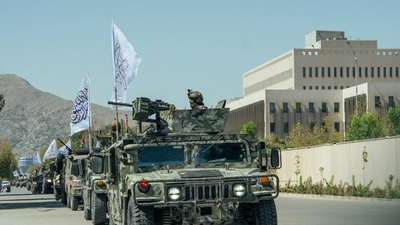

The Taliban's Supreme Court announced that the group's primary court in Sayed Abad district of Maidan Wardak has punished a man for allegedly having sexual relations with another man.
The court said in a statement that the individual had been sentenced to 39 lashes.
On Tuesday, November 5, the Taliban's Supreme Court wrote that the defendant was sentenced by the Sayed Abad Primary Court in the presence of officials of government institutions and the general public.
Earlier, on Monday, the Taliban's Supreme Court had announced the execution of 39 lashes on a woman and a man in Farkhar district of Takhar province. The court said in a statement that they had been convicted of extramarital affairs.
The Taliban has continued to carry out public punishment despite calls from international human rights organisations to stop corporal punishment and torture of defendants. According to the group's Supreme Court statements, the Taliban punish the accused in public every day across Afghanistan.

A number of female health workers in Kandahar told Afghanistan International that the Taliban's morality authorities have warned them not to go to work without a male relative.
According to them, the Taliban has sent their group members to health centres to follow up on this issue.
Taliban members visited all health facilities in the province and warned that female employees should not be allowed to enter the workplace without a male relative, local sources told Afghanistan International on Monday.
In the past three days, they have visited health centres in Mirbazar, the 6th, 9th and 2nd districts, and Kundapur in Kandahar city.
Female health workers said that sometimes the men of the family are not at home, and the Taliban do not accept their younger brothers as mahrams.
Some female health workers said that the ombudsman had asked them to carry a special card for the health centre with their details and that of their mahram, or else they would have to leave their jobs.
These employees complained about the Taliban's harsh behaviour and asked them to consider their family problems and restrictions.
The Taliban's Office for the Promotion of Virtue in Kandahar on Monday explained the new law for the promotion of virtue for employees, and emphasised on the implementation of this law.
Recently, it has been reported that there are no female health workers in many districts of Kandahar and many women are being transferred to Kandahar Central Hospital.
Earlier in September, the Taliban's office of Public Health Advocacy and Guidance in Kandahar announced new restrictions for female health workers in a letter.
According to this letter, female employees must wear a special hijab and be accompanied by a mahram when they go to work.
The Office for the Promotion of Virtue in Kandahar has instructed all female health workers to have a permit from their office when going to districts, in addition to having a mahram.
Previously, only a public health directorate card was enough for female employees to travel.

Taliban leader Hibatullah Akhundzada recalled his cabinet members from Kabul to Kandahar on Sunday, sources told Afghanistan International.
These sources said that stricter implementation of the Law on the Promotion of Virtue and Prevention of Virtue is on the agenda of the meeting between the Taliban leader and the cabinet.
Taliban sources told Afghanistan International that members of the Taliban's cabinet arrived in Kandahar on Monday, November 4.
According to these sources, one of the main topics of the meeting between Hibatullah Akhundzada and his cabinet members will be the implementation of the law on the promotion of virtue throughout the country, and Akhundzada will issue instructions to the ministers.
Sources among the Taliban said that Hibatullah Akhundzada has banned Taliban members from taking photos and videos at the meeting.
‘Serious Warning About Law On Promotion of Virtue’
Sources close to the Taliban in Kandahar told Afghanistan International that Hibatullah Akhundzada is very serious about implementing the new law on the promotion of virtue and has warned some cabinet members who oppose these decrees.
These sources said that some members of the Taliban cabinet are opposed to the law on the promotion of virtue, but they are "hiding" their opposition from the Taliban leader.
According to the provisions of the Law on the Promotion of Virtue, there is currently an increase in the strictures in about 10 provinces of Afghanistan to prevent the dissemination of images of living beings. For example, Taliban officials in Kandahar are not allowed to post their photos and videos on social media.
‘Signs of Discontent’
Members of the Taliban's Haqqani Network on Sunday (November 3) posted videos on social media of Taliban’s Interior Minister Sirajuddin Haqqani visiting a madrassa in Paktika Province. On the same day, pictures of Haqqani during his visit to Ghazni were also circulated on social media.
Some social media users reposted the images and said that Sirajuddin Haqqani was refusing Hibatullah Akhundzada's orders and the Law for the Promotion of Virtue by circulating these videos and photos.
On October 25, The New York Times published a report calling Sirajuddin Haqqani, the Taliban's interior minister, "the only voice of dissent" among the Taliban.
Some Afghan politicians said that The New York Times interview was an attempt to heroize Sirajuddin Haqqani, who is known to be responsible for the killing of civilians in Afghanistan.
Others, however, said the article was another sign that Sirajuddin Haqqani wanted to replace Taliban leader Hibatullah Akhundzada.
About 10 days after the publication of this interview, sources within the Taliban said that the interview of Sirajuddin Haqqani, the Taliban's interior minister, has also become controversial among the group members.
Some sources among the Taliban said that Hibatullah Akhundzada is dissatisfied with this interview and Sirajuddin Haqqani's statements, and believes that this interview has fueled the Taliban's internal disputes.

A Taliban military court in Kabul has sentenced Abdul Karim Abbasi, the former head of the Panjshir provincial council, to 12 years in prison.
Sources said that the Taliban had accused Abbasi of "cooperating with the National Resistance Front" even though he was doing business after the fall of the previous government.
Sources told Afghanistan International that the Taliban first arrested Abbasi in April 2023 on unknown charges and released him on bail after two months. The group arrested Abbasi again in February of the same year and was given a military trial after months of imprisonment.
According to sources, Abdul Karim Abbasi is currently in Taliban custody at the Bagram Prison.
According to sources, after the fall of the previous Afghan government, Abbasi did not leave the country, trusting the Taliban's announcement of a "general amnesty," despite the existing pressures.
Sources said that Abbasi owned a lapis lazuli stone shop in Kabul's Share Naw area and was "busy with personal business".
Afghanistan International has seen a copy of the verdict of the Taliban's military intelligence court in Kabul, in which Abbasi was accused of joining "evil and corruption”. The text states that Abbasi was invited by a person named Nasser to commit to "evil and corruption," and he accepted this invitation two years ago. The verdict was issued at the end of June this year.
The text of the decree states that Abbasi paid 35,000 Afghanis to another person named Abdul Qahar to organise an attack on a Taliban outpost in the Baharistan area of Kabul.
In this ruling, the Taliban judge claimed that Abdul Karim Abbasi had "confessed" to these charges.
However, sources said that Abbasi's trial took place without access to his lawyer.
Human rights organisations claim that the Taliban's judicial system does not meet legal standards, and that defendants often lack access to a lawyer and other legal procedures.
In the past three years, the Taliban has arrested, tortured, and in some cases killed many people, mainly residents of Panjshir, on charges of "cooperating with the National Resistance Front”.
The Taliban has not yet officially commented on the arrest and trial of the former head of the Panjshir Provincial Council.

An Iranian Foreign Ministry spokesman said that Tehran was "surprised and upset" that "some Taliban officials" took the news of the shooting of Afghan migrants by Iranian border guards seriously.
Esmail Baghaei once again called the shooting of Afghans on the Iranian border as "baseless news".
During a press conference on Monday, November 4, the official of the Ministry of Foreign Affairs of the Islamic Republic of Iran announced, "The Afghan authorities issued a statement on this matter. "We are surprised and unhappy that there was an absence of news and that some Afghan officials have taken this baseless news seriously."
Haalvsh, a human rights organisation that reports on Sistan and Baluchestan region, first reported the shooting of Afghan migrants on Sunday evening, October 13, in the Kalgan-Saravan area. The news sparked global reactions.
According to the organisation, Iranian border forces in Saravan opened fire on a group of 300 Afghan migrants who were trying to enter Iran, killing and wounding dozens.
Two weeks after the publication of these reports, the Taliban confirmed the incident, announcing that two dead bodies and 34 injured in the deadly shooting and explosion of mines on the Iranian border had been transferred to Afghanistan.
The Taliban also noted that a number of other victims of the incident are in Iran and Pakistan, and that the group is trying to transfer them to Afghanistan.