• العربية
  • پښتو
  • فارسی
Brand
  • Afghanistan
  • Sport
  • Markets
  • Afghanistan
  • Sport
  • Markets
  • Theme
  • Language
    • العربية
    • پښتو
    • فارسی
  • Afghanistan
  • Sport
  • Markets
All rights reserved for Volant Media UK Limited
volant media logo

Khyber Pakhtunkhwa Governor Calls For Reopening Of 7 Border Crossings With Afghanistan
Nov 7, 2024, 14:26 GMT+0

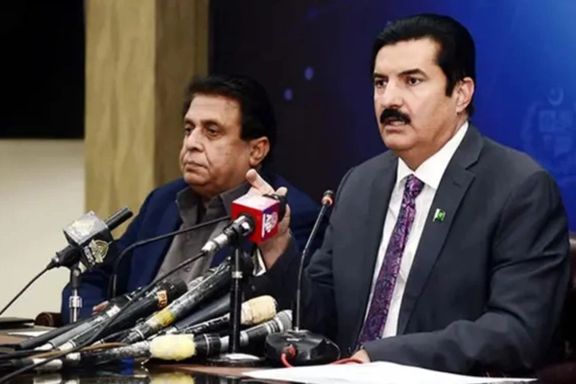
Governor Khyber Pakhtunkhwa Faisal Karim Kundi called for the opening of seven joint border crossings between Afghanistan and Pakistan.

Kundi said that the reopening of these crossings will enhance trade and regional connectivity.

The governor of Khyber Pakhtunkhwa province said on Wednesday, November 7, at a meeting in the city of Peshawar that the opening of these crossings will boost trade between Pakistan, Afghanistan and Central Asian countries.

Dawn newspaper quoted Kundi as saying, "The opening of all border crossings with Afghanistan will not only expand trade, but also create economic activities in the region."

He also emphasised that the process of issuing visas for Afghans should be facilitated and common border markets between Afghanistan, Iran and Pakistan should be established.

Afghanistan and Pakistan share more than 2,000 kilometres of border, along which there are at least eight border crossings. Among these crossings, the movement of passengers and commercial goods is mostly through the two crossings of Torkham and Spin Boldak.

The governor of Khyber Pakhtunkhwa province did not specify which border crossings should be opened.

Other border crossings such as Angur Ada border crossing between Barmal district of Paktika and South Waziristan of Pakistan's Khyber Pakhtunkhwa; Kharlachi border crossing between Kurram tribal district of Khyber Pakhtunkhwa and Patan district of Paktia province; Ghulam Khan border crossing between Miranshah region of Khyber Pakhtunkhwa and Khost; Arandu border crossing between Swat region of Khyber Pakhtunkhwa and Barkunar district of Kunar province; Bodi border crossing between Qala Saifullah area of Balochistan and Zabul province, and Tari Mangal border crossing between Parachinar and Aryob in Zazi district.

Most Viewed

Taliban Order Cut To Residential Fibre-Optic Internet In Kabul, Say Sources
1

Taliban Order Cut To Residential Fibre-Optic Internet In Kabul, Say Sources

2

Taliban Leader Adviser Arrested In Kandahar Over Alleged Bribery

3

Taliban Besieged TOLOnews Offices After Journalist Detentions, Say Sources

4

Taliban Urges Turkmenistan To Implement 24-Hour Operations At Torghundi Port

5

Exiled Media Watchdog Urges UN, EU To Seek Release Of Journalists Held By Taliban

•
•
•

More Stories

EU To Provide $100 Million In Aid To Afghanistan, Says Taliban’s Ministry of Economy

Nov 7, 2024, 11:52 GMT+0

The Taliban announced that the representative of the European Union during a meeting with the group's minister of economy promised to provide another $100 million in aid to Afghanistan.

The aid will be allocated to support development projects, especially in the agriculture sector, the statement said.

The Taliban's Ministry of Economy wrote in a statement that Veronika Boskovic Pohar, the representative of the European Union, said that the organisation will soon hold a conference on small businesses in Afghanistan.

In a statement issued by the ministry on Thursday, November 7, the ministry said that during the meeting, the Taliban's Minister of Economy, Din Mohammad Hanif, appreciated the EU's humanitarian aid to Afghanistan and called for the continuation of the EU's development cooperation in various sectors.

The European Union has not yet commented on the meeting and the promise of $100 million in aid to Taliban-controlled Afghanistan.

Humanitarian aid from the international community is usually distributed through United Nations-owned agencies in Afghanistan. The process of distributing these aids has been the subject of much criticism over the past three years. A number of critics claim that there is no transparent monitoring body to prove that this aid actually reaches the needy and that the Taliban does not benefit from it.

According to the United Nations, more than 20 million people in Taliban-controlled Afghanistan are in need of humanitarian assistance.

RSF Demands Immediate Reopening Of Local Radio Station In Khost

Nov 7, 2024, 10:21 GMT+0

The Reporters Without Borders (RSF) organisation has called for the immediate reopening of a local radio "Zhman" in Khost province of Afghanistan.

In a note on social media platform X, this organisation once again condemned the Taliban's attacks on press freedom.

The Afghan Journalists Centre had reported on Wednesday that the Taliban in Khost province closed the office of the local radio "Zhman" for playing music in the background of a programme.

This centre said that the Taliban has stopped the broadcast of two local radio stations in this province since the past two weeks.

In the past three years, the Taliban has closed a large number of media outlets under various pretexts.

The group has also imposed strict restrictions on journalists and the media. The actions of the Taliban against the media and the narrowing of the space have caused a large number of these institutions and journalists to stop working.

We Expect Our Relations With India To Develop, Says Taliban’s Foreign Minister

Nov 7, 2024, 09:15 GMT+0

During a meeting with JP Singh, an official of the Indian Foreign Ministry, Taliban’s Foreign Minister Amir Khan Muttaqi said that the group expects its relations with Delhi to develop.

In this meeting, Muttaqi also called for facilitating the issuance of Indian visas to Afghans, especially businessmen.

Zia Ahmad, the Taliban's deputy foreign ministry spokesman, said in a statement on the social media platform X on Thursday, November 7, that Muttaqi and Singh discussed political and economic relations between Afghanistan and India.

The statement quoted Amir Khan Muttaqi as saying that the Taliban expect the group's relations with India to expand in various sectors.
JP Singh is in charge of the Afghanistan, Pakistan and Iran section of the Indian Ministry of External Affairs.

In its statement, the Taliban's Foreign Ministry quoted the Indian official as saying that in addition to humanitarian aid, Delhi has also started its development assistance to Afghanistan and is in technical talks in this regard with relevant institutions in Afghanistan.

The Taliban statement also quoted JP Singh as saying that in the near future, talks on Chabahar port will be held between technical delegations of the countries of the region, Afghanistan and India.

The Indian diplomat also met with Yaqoob Mujahid, the Taliban's defence minister. In this meeting, Taliban and Indian officials emphasised on the expansion of bilateral relations.

The Taliban said that the Indian official promised to facilitate the issuance of visas to Afghans.

After the Taliban takeover, India closed its embassy in Kabul. New Delhi also cancelled all visas issued to Afghans and stopped issuing new visas. More than three years after the Taliban rule, India is still not responding to Afghans' visa applications. Thousands of Afghan students in India, who went to Afghanistan on vacation after the Taliban came to power, are stranded there.

India sent a delegation to Kabul for the first time since the fall of the Islamic Republic of Afghanistan in 2022. Although the visit was aimed at providing humanitarian aid, Taliban officials, including Mullah Yaqoob, Amir Khan Muttaqi, and Abbas Stanikzai, spoke to Indian media afterwards and expressed their desire to expand ties with Delhi.

The Taliban and India are discussing expanding relations at a time when relations between the Taliban and Pakistan are tense. Pakistan accuses the Taliban and India of supporting the country's armed opposition. An accusation that the Taliban and India have denied.

Rise In Industrial Drug Production In Afghanistan Threat To World Security, Says Iran

Nov 7, 2024, 08:19 GMT+0

Eskandar Momeni, the Iranian Interior Minister, said that the production of traditional drugs in Afghanistan has decreased, but the production of industrial drugs such as methamphetamine has increased.

Momeni called the rise in the production of industrial drugs in Afghanistan dangerous for the security of the region and the world.

Iran's interior minister made the remarks on Wednesday, November 6, on the sidelines of an Iranian cabinet meeting.

Momeni had previously called the Islamic Republic one of the victims of Afghanistan's increased drug production.

The United Nations Office on Drugs and Crime (UNODC) had also announced on Wednesday that poppy cultivation in Afghanistan has increased by 19% in 2024 as compared to the previous year.

The United Nations cited the Taliban's failure to combat poppy cultivation this year, adding that the area of poppy cultivation has increased from 10,800 hectares last year to 12,800 hectares this year.

The Taliban, however, rejected the UN report, calling it "baseless and far from the truth”.

In response to the latest UN report, a spokesman for the Taliban's Interior Ministry said that the assessment may have been made before police campaigns to eradicate poppy cultivation earlier this year.

Since then, all poppy fields have been wiped out by Taliban forces and drug cultivation has "significantly reduced", he claimed.

Taliban Hopes Trump's Victory Will Improve Group's Relations With US

Nov 6, 2024, 15:55 GMT+0

In response to Donald Trump's victory in the US presidential elections, the Taliban's foreign ministry expressed hope that the future US government would take "realistic steps" to improve the country's relations with the Taliban.

Recalling the history of Trump's relations with the Taliban, this ministry requested more interaction between the two sides.

The Ministry of Foreign Affairs of the Taliban emphasised in a note on the social media platform X that in the opinion of this group, the opening of a new chapter in the relations between the two sides can be accompanied by mutual interactions in various fields.

This comes even as during the presidency of Donald Trump, the United States and the Taliban reached the historic Doha agreement. In the framework of this agreement, which was signed in February 2020, the United States committed to the gradual withdrawal of its forces from Afghanistan, and the Taliban also made commitments to reduce violence and start intra-Afghan dialogue.

This agreement was signed after a phone call between President Trump and Mullah Abdul Ghani Baradar, the current deputy Prime Minister of the Taliban’s economic affairs, in order to end the 20-year war in Afghanistan and led to the withdrawal of American forces from the country.

The fall of the previous government of Afghanistan was one of the consequences of signing this agreement.

The Ministry of Foreign Affairs of the Taliban added in its announcement that this agreement should be the basis of the future relations between this group and the United States, and with the continuation of constructive interactions, the ground for the reconstruction of bilateral relations will be provided.

The Taliban's foreign ministry has also expressed hope that Trump will play a constructive role in ending regional crises and wars, especially in Gaza and Lebanon.