• العربية
  • پښتو
  • فارسی
Brand
  • Afghanistan
  • Sport
  • Markets
  • Afghanistan
  • Sport
  • Markets
  • Theme
  • Language
    • العربية
    • پښتو
    • فارسی
  • Afghanistan
  • Sport
  • Markets
All rights reserved for Volant Media UK Limited
volant media logo

Taliban Denies Torture Inside Its Prisons In Response To Afghanistan International Report

Dec 9, 2024, 10:09 GMT+0Updated: 12:12 GMT+0

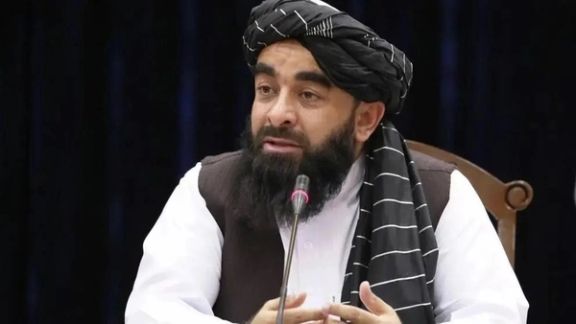
In response to Afghanistan International's investigative report, the Taliban spokesman Zabihullah Mujahid claimed that there is no torture in the group's prisons.

Mujahid said that the group takes care of prisoners and Taliban agents are not allowed to torture prisoners.

"There is no problem in prisons, prisoners are only supported and treated, they are not tortured, and no one is allowed to do so," a Taliban spokesman told the British newspaper The Independent.

"The media can come and see the prisons and interview the prisoners and then see what the situation is here," Mujahid added.

Based on interviews with 38 people who were arrested by the Taliban's intelligence agency, Afghanistan International revealed that more than 30 types of torture are inflicted on prisoners in Taliban detention centres.

According to the report, most of the prisoners were arrested without legal basis and subjected to severe physical and psychological torture.

Former prisoners said that Taliban agents tortured them in various ways, such as beating them with sticks, immersing their heads and bodies in cold water, electric shocks, suffocating them, removing their nails, and other painful methods.

In addition, in August, sources told Afghanistan International that at least 87 people were killed as a result of torture in Taliban’s intelligence agency prisons.

Sources said that the cause of death was electric shock, respiratory arrest, drowning in water, and torture of the sexual organs.

The Taliban rejected Afghanistan International's investigative report, while the World Organisation Against Torture (OMCT) also published a report on the existence of torture and ill-treatment in Taliban prisons in November.
Most Viewed

Taliban, Iran Working On Surveillance App For Afghan Users, Say Sources
1

Taliban, Iran Working On Surveillance App For Afghan Users, Say Sources

2

Ties Will Not Normalise While Taliban Shelter Militants, Says Pakistan

3

One Killed In Taliban Clash With Residents Over Poppy Fields In Badakhshan

4

Nearly 500 Afghans Released From Prisons in Pakistan

5

Former Pakistani FM Links Deadly Attacks To Terror Groups In Afghanistan

•
•
•

More Stories

Qatar, US Donate $50 Million Towards Education In Afghanistan

Dec 9, 2024, 09:26 GMT+0

The US Agency for International Development (USAID) and the Qatar foundation Education Above All (EAA) on Sunday signed an agreement to educate out-of-school children and youth in Afghanistan.

The two organisations emphasised on their support for Afghanistan's education. The two institutions have allocated $50 million equally to enrol more than 100,000 out-of-school children and award nearly 2,000 scholarships to youth.

Mohammed al-Kubaisi, interim CEO of the Education Above All Foundation, said, "Working with USAID is an important step towards achieving inclusive and equitable education. This joint effort can remove barriers, empower communities, and contribute to a brighter future."

"This partnership ensures that Afghan women and girls have access to quality education and a more prosperous future for Afghans," added Joel Sandford, USAID director for Afghanistan.

The two sides reaffirmed their shared commitment to education as a fundamental right for all, especially for disadvantaged and at-risk communities.

Taliban Policies Worsen Gender Inequality in Afghanistan, Says UN

Dec 8, 2024, 16:22 GMT+0

The United Nations High Commissioner for Refugees (UNHCR) has stated that widespread gaps in educational infrastructure, coupled with the Taliban’s restrictive policies against girls, are further deepening gender inequality in Afghanistan’s education system.

In a statement released on Sunday, 8 December, the UNHCR identified infrastructural deficiencies, restrictive policies targeting girls, and a shortage of qualified teachers as key challenges to education in the country.

“The 2024 Humanitarian Needs and Response Plan (HNRP) for Afghanistan estimates that eight million people will require educational assistance within the same year,” the statement noted.

The organisation outlined its commitment under the Education Strategy for Afghanistan 2024–2027, developed in collaboration with its partners, to address these gaps. The strategy includes constructing schools, training teachers, and expanding online learning platforms to ensure equitable access to education.

The UNHCR emphasised its advocacy efforts aimed at lifting the bans on education for women and girls, describing them as critical to achieving safe and equitable access to learning opportunities. It highlighted ongoing collaboration with key partners, including UNICEF, UNESCO, and Save the Children, to improve access to education in Afghanistan.

The statement also detailed the UNHCR’s integration of education-focused initiatives with broader programmes, such as conducting gender-based violence awareness sessions for teachers and providing psychological support for students and educators.

The UN’s concerns over worsening gender inequality in Afghanistan come as the Taliban continues to enforce restrictions barring girls from education beyond grade six in schools and universities. Most recently, the Taliban also banned women from attending medical training institutions, sparking further international condemnation.

The UNHCR reiterated its commitment to addressing the educational crisis in Afghanistan, focusing on empowering marginalised groups and tackling the systemic barriers preventing access to education.

Over 900,000 Afghans Return to Afghanistan This Year, Says Taliban

Dec 8, 2024, 13:36 GMT+0

The Taliban’s Ministry of Refugees and Repatriation has reported that more than 900,000 Afghans have returned to Afghanistan from Iran, Pakistan, and Turkiye during the first eight months of the current Solar Hijri year.

The ministry noted that the majority of returnees entered the country from Iran.

Abdul Mutalib Haqqani, spokesperson for the Taliban’s Ministry of Refugees, stated on Sunday that over this period, approximately 15,000 individuals returned from Türkiye, while more than 88,000 migrants returned from Pakistan. Meanwhile, over 790,000 Afghans reportedly returned from Iran.

Radio Television Afghanistan, operating under Taliban control, highlighted that the forced deportation of Afghan migrants from these countries is ongoing.

Following the Taliban’s return to power, hundreds of thousands of Afghans fled to neighbouring countries, particularly Iran and Pakistan, seeking safety and stability. However, over the past three years, these countries have expelled hundreds of thousands of Afghan migrants.

Earlier reports from Pakistani media indicated that 32,200 Afghans returned from Pakistan between 21 July and 16 August. Iranian officials have also announced plans to deport nearly two million Afghan migrants by the end of this year, further intensifying the pressure on displaced Afghan populations.

Taliban Eliminates One of the Few Opportunities for Women, Says Australian FM

Dec 8, 2024, 12:04 GMT+0

Australian Foreign Minister Penny Wong has condemned the Taliban’s recent decision to close medical training institutions for women in Afghanistan, stating that it has destroyed one of the few remaining pathways for women’s education and employment.

In a statement posted on the social media platform X on Saturday, Wong criticised the Taliban’s ban on women studying nursing and midwifery, warning that this decision “puts lives at risk.” She stressed that the move highlights the need to hold the Taliban accountable under the Convention on the Elimination of All Forms of Discrimination Against Women (CEDAW).

“The Taliban’s actions underline the urgency of Australia’s efforts to seek accountability for their treatment of women under international law,” Wong remarked.

Australia, alongside Germany, the Netherlands, and Canada, was among the first nations to announce plans to file a formal complaint against the Taliban at the International Court of Justice (ICJ). Over 20 countries have now expressed their support for prosecuting the Taliban for gender-based violations.

The International Criminal Court (ICC) recently announced an ongoing investigation into gender-based persecution of women in Afghanistan, with findings expected to be released soon. ICC Chief Prosecutor Karim Khan recently met with several women activists and assured them that “good news” is forthcoming.

The Taliban’s leader ordered the closure of medical training institutions for women and girls last week, triggering widespread international condemnation. However, Taliban officials in Kabul have yet to comment on the decision.

Taliban Regime Marginalising the People, Says Former Afghan Official

Dec 8, 2024, 11:03 GMT+0

Zia-ul-Haq Amarkhil, the former governor of Nangarhar, has accused the Taliban regime of marginalising the Afghan people and ignoring their voices. Amarkhil asserted that neglecting public demands has created a significant divide between the populace and the ruling authorities.

Amarkhil, who served as the last governor of Nangarhar under the previous government, handed over the provincial administration to the Taliban without confrontation just days before the fall of Kabul. A close ally of former President Ashraf Ghani, Amarkhil continues to reside in Afghanistan.

In a statement posted on the social media platform X on Saturday, Amarkhil noted that over the past three years, Taliban officials have prioritised fostering good relations with the international community. While acknowledging the importance of international relations, he criticised the regime for sidelining domestic concerns.

“The first step to gaining global legitimacy is achieving domestic legitimacy,” Amarkhil emphasised.

He further argued that the credibility of any government relies on the trust and confidence of its people, adding, “This trust cannot be earned through force and fear but by addressing the people’s demands and paying attention to them.”