Mine Collapse in Samangan Traps Over 30 Coal Miners

Local sources have confirmed that approximately 35 workers remain trapped under rubble following a mine collapse in the Dara-i Sufi Payin district of Samangan province, Afghanistan.

Local sources have confirmed that approximately 35 workers remain trapped under rubble following a mine collapse in the Dara-i Sufi Payin district of Samangan province, Afghanistan.
The incident occurred on the evening of Saturday in the Safid Khak area. Rescue teams have been dispatched to the site, but no updates on their progress have been provided so far.
Domestic media outlets have shared images of ongoing rescue efforts, highlighting the challenges faced by emergency responders.
The Taliban-controlled Bakhtar News Agency also confirmed the incident, citing local officials. According to their reports, the mine collapsed while workers were still inside.
Conflicting accounts have emerged regarding the number of individuals trapped, with some sources reporting 35 miners, while others estimate the figure to exceed 40.
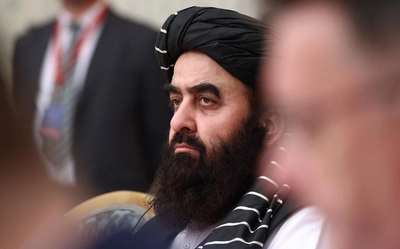
The Taliban-controlled Bakhtar News Agency has reported that the Herat-Torghundi Highway in western Afghanistan has been closed to traffic due to heavy snowfall.
Local Taliban officials have advised residents in certain districts to avoid travelling to Herat. According to their statement, the highway was blocked on Sunday, 15 December, in the Baqarchar area and remains closed to transportation.
Taliban authorities in Herat have announced that efforts are underway to clear the highway and restore traffic flow. Meanwhile, the Taliban’s police command in Herat issued a notice urging residents of the Ghorian, Khushki Kuhna, Rabat Sangi, and Torghundi districts to refrain from travelling towards Herat until further notice.
Heavy snowfall during winter frequently results in road closures and, in some cases, fatalities across the region.

The Taliban’s Ministry of Commerce and Industry has announced a significant increase in coal exports, revealing that approximately 654,000 tonnes of coal were exported over the past eight months to Pakistan, China, Iran, India, and Türkiye.
The total value of these exports reportedly exceeds $605 million.
In November 2023, the Taliban administration stated that 1,000 tonnes of coal are extracted daily in northern Afghanistan and sold to traders.
However, critics have denounced the unregulated and excessive extraction of coal, along with its low-cost export, as a form of “plundering” Afghanistan’s valuable underground resources.

Mehdi Bakhshi, the Prosecutor General of Kerman, Iran, has announced that 1,788 undocumented Afghan migrants have been arrested and deported from the province over the past three days.
Bakhshi underscored that employing undocumented Afghans in Kerman is deemed a “crime.” The deportations were carried out as part of a plan titled “Enhancing Social Security,” which aims to bolster public safety, according to a report by the IRNA news agency on Sunday.
The judicial official reiterated that residency in Iran must be obtained through legal means, warning that violators would face punitive action and deportation.
While Iran receives international assistance, particularly from the United Nations, for hosting Afghan migrants, Iranian officials assert that the aid is insufficient. They have called for increased foreign funding to address the growing burden.
In recent months, Iran has intensified the deportation of Afghan migrants, with reports suggesting that thousands of Afghans are expelled from the country every week. According to Afghanistan International, some Afghans with valid visas and residency permits have also been detained and deported by Iranian authorities.
Iran has announced plans to deport two million Afghan migrants by the end of the current year, marking a significant escalation in its immigration enforcement efforts.

Hamdullah Fitrat, deputy spokesperson of the Taliban, has called for the lifting of international sanctions against the group. He stated that the continuation of sanctions against the Taliban “violates the rights of Afghans.”
On the previous day, members of the United Nations Security Council unanimously voted to extend the mission of the committee overseeing sanctions on the Taliban for another 14 months.
According to the Bakhtar News Agency, under Taliban control, Hamdullah Fitrat said on Saturday that the continuation of sanctions against the Taliban is “contrary to the principles of human rights.” He added that the Taliban seeks positive engagement with the United Nations.
On Friday, the Security Council, with the unanimous agreement of its 15 members, passed a resolution to extend the 1988 sanctions against the Taliban. As a result, the Taliban will remain subject to UN sanctions for over another year.
In Friday’s session of the Security Council, the sanctions against the Taliban—including the freezing of assets, travel bans, and targeted arms embargoes—were reaffirmed.

Reliable sources in Kabul have informed Afghanistan International that the Taliban’s intelligence agency has arrested two employees of the Ministry of Refugees on charges of involvement in the assassination of Khalil-ur-Rahman Haqqani, the Taliban’s Minister of Refugees.
No further details regarding the identities of the arrested individuals have been disclosed.
It remains unclear what roles the detainees held within the ministry and whether they were employees from Afghanistan’s previous government or recruited by the Taliban.
Sources revealed on Saturday, December 14, that the attacker waited for hours within the Ministry of Refugees compound, targeting Khalil Haqqani before detonating the explosives he was carrying.
According to these sources, Haqqani often met visitors to the ministry in person. The suicide bomber reportedly detonated the explosives upon approaching Haqqani at close range.
The attack, which occurred on Wednesday, December 11, claimed the lives of Khalil-ur-Rahman Haqqani and at least six others.
The Taliban is yet to provide any information about the arrests or clarify whether additional individuals beyond the two ministry employees have been detained in connection with the incident.
ISIS has claimed responsibility for the assassination. Taliban officials reported that the attacker had hidden the explosives in a plastered arm.
