Civil & social Activist Hamid Qarluq Released From Taliban Custody
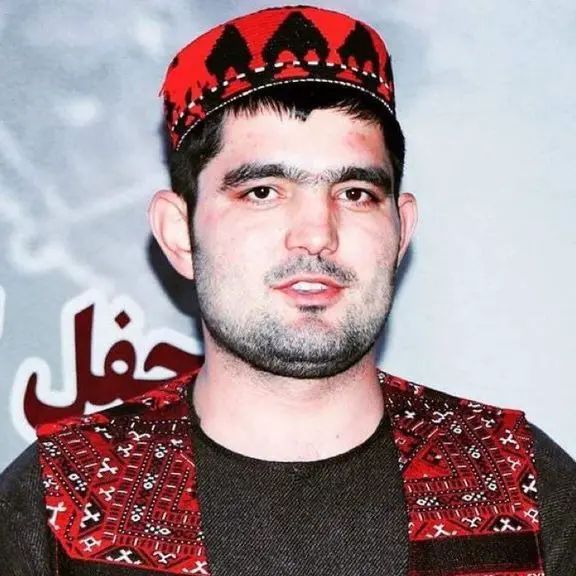
A group of civil society activists has announced the release of Hamid Qarluq, an Uzbek civil and social activist, from the Taliban's custody.
A group of civil society activists has announced the release of Hamid Qarluq, an Uzbek civil and social activist, from the Taliban's custody.
This group, called "Hamid Qarluq's Justice Team", wrote in a statement that the health and mental condition of this social activist is not good due to torture meted out to him inside the Taliban's prison.
The group called on human rights organisations and the international community not to be indifferent to the human rights situation in Afghanistan and to defend the freedom and rights of civil and social activists.
Hamid Qarluq was arrested by the Taliban's intelligence agency in Takhar province without any specific charges.
Earlier, the Women's Solidarity Network said in a statement that the civil society activist was collecting donations from people to rebuild schools, parks and help those in need.

The Taliban's Ministry of Public Health announced in a press conference that 72% of the people in Afghanistan's villages do not have access to primary and secondary health services.
The ministry said on Wednesday that of a total of 400 districts, only 93 districts of the country have hospitals.
The press conference of the Taliban's Ministry of Public Health was held in Kabul on Wednesday, December 25, in the presence of a number of officials of the ministry.
Officials of the Taliban's Ministry of Health said at the meeting that health services in remote areas of Afghanistan have not been properly developed in recent decades.
The Taliban's Ministry of Health said that due to the lack of hospitals in the villages, patients are referred to health centres in the provincial capital for treatment of minor problems.
Emphasising on the expansion of services in remote areas of the country, the ministry announced that a budget has been allocated by Taliban leader Hibatullah Akhundzada for the construction of 318 hospitals in the districts, and the construction process of these hospitals will begin after the completion of the legal and administrative procedures.
According to information provided by the Taliban's Ministry of Health, there are currently 13,000 beds in the country, and with the construction of new hospitals, another 10,000 beds will be added.
The ministry also added that 27,000 professional and administrative staff are expected to be employed in the new hospitals.
In response to Pakistan's attack on Paktika, Afghanistan's permanent representative to the United Nations in Geneva Nasir Andisha said that Islamabad has resorted to "coercive diplomacy" towards the Taliban.
Nasir Ahmad Andisha added that the Taliban government does not have the ability or authority to take direct revenge against Pakistan.
On Tuesday evening, December 24, the Pakistani army attacked the “centres of the Tehreek-e-Taliban Pakistan (TTP) in Barmal District, Paktika Province”. The Taliban confirmed the incident and said that it would respond to the attack.
Media close to the Pakistani military reported that a number of militants were killed and four of their operational centres were destroyed in the targeted attacks.
In a sharp reaction to the overnight attack by Pakistani warplanes on Barmal Paktika, the Taliban's Ministry of Defence said that it "will not leave the attack unanswered, and considers it its inalienable right to defend its territory".
Afghanistan's permanent representative to the United Nations in Geneva wrote in a note on social media platform X that when Pakistan follows the first visit of a newly appointed special envoy to Kabul with an airstrike, it is called "coercive diplomacy”.
Nasir Ahmad Andisha added that the attack may have sent a message to Kandahar after the assassination of Khalil Haqqani, the Taliban's minister of refugees.
In a sharp reaction to overnight attack by Pakistani warplanes on Barmal in Paktika province, Taliban's Ministry of Defence said that it "will not leave the attack unanswered, and considers defence of its territory as its inalienable right".
The ministry said that "Waziristani refugees" were targeted in the attack.
Security sources close to the Pakistani military told reporters that the airstrikes targeted Pakistani Taliban border hideouts.
The Pakistani Taliban have stepped up their attacks on Pakistani security forces. Pakistani officials have said that the Afghan Taliban is not cooperating with the country to curb attacks by Pakistani militants.
Inayatullah Khwarizmi, a spokesman for the Taliban's Ministry of Defence, rejected the claim of Pakistani security sources and wrote on his account on social media platform X that "civilians, most of whom are Waziristani refugees", were killed in the attack.
He did not give a figure on casualties, but said that "a number of children and other civilians were martyred and wounded”.
According to the Taliban, Waziristani refugees are ordinary people in the tribal areas who have been displaced following the Pakistani army's operations. However, the Pakistani government says that dozens of TTP commanders and fighters have fled to Afghanistan and have been resettled under the protection of the Afghan Taliban in the provinces bordering Pakistan.
Asif Durrani, Pakistan's former special envoy for Afghanistan, told an Iranian media outlet on Tuesday that there are 12 key commanders of the Pakistani Taliban in Afghanistan and that the Afghan Taliban is not cooperating to disarm them.
In a warning tone about the Pakistani airstrike, the Taliban's Ministry of Defence said that "the Pakistani side should know that such arbitrary actions are not the solution to any problem”. "The Islamic Emirate will not leave this cowardly act unanswered, and considers it its inalienable right to defend its territory and privacy," the ministry added.
The Afghan Taliban has called on the Pakistani government to resolve the issue of militants through dialogue with the Tehreek-e-Taliban Pakistan (TTP). However, Islamabad has refused to talk to the group, insisting on its complete elimination as a terrorist group.
Zabihullah Mujahid, the spokesperson for the Taliban, has confirmed that at least 46 individuals have lost their lives following airstrikes conducted by Pakistan in Paktika province.
According to Mujahid, Pakistan targeted four locations in the Barmal district, with the majority of the casualties being women and children.
Speaking to Agence France-Presse (AFP) on Wednesday, 25th December, Mujahid stated: “Last night, 46 people were killed in airstrikes carried out by Pakistan.”
The Pakistani military launched these strikes on Tuesday evening, 24th December, targeting what it described as “Tehrik-e-Taliban Pakistan (TTP) centres” in the Barmal district of Paktika. The Taliban, however, has vowed to retaliate against the assault.
Pakistani military-aligned media outlets reported that the strikes successfully eliminated several militants and destroyed four operational centres belonging to TTP. Conversely, the Taliban’s Ministry of Defence claimed the airstrikes targeted “Waziristani refugees” residing in the area.
This is not the first instance of such actions; the Pakistani military has previously conducted operations against TTP strongholds in the Afghan provinces of Khost, Paktia, and Kunar. Pakistan has consistently accused the Afghan Taliban of supporting TTP by providing them with sanctuary and weaponry. These allegations have been categorically denied by the Taliban.
The airstrikes coincided with a visit to Kabul by Muhammad Sadiq, Pakistan’s special representative for Afghanistan.
Hamid Karzai, the former President of Afghanistan, strongly condemned the airstrikes, labelling them as a “blatant act of aggression and a violation of Afghanistan’s sovereignty.” Karzai described the attacks as an “open act of invasion.”
Nasir Ahmad Andisha, Afghanistan’s representative to the United Nations in Geneva, also reacted to the strikes, accusing Pakistan of employing coercive diplomacy towards the Taliban. Andisha further remarked that the Taliban lacks the capability to respond to Pakistan militarily.
Meanwhile, some former Afghan officials have criticised the Taliban, alleging that their actions and policies have facilitated Pakistan’s ability to conduct such operations within Afghanistan.
Rahmatullah Jaber, the Taliban's education chief in Herat, announced in a letter that girls' education above the sixth grade in private education centres is prohibited.
The Taliban official said that girls' education above the sixth grade is prohibited by Mullah Hibatullah's decree until "further notice”.
The Taliban's education chief in Herat wrote in a letter to the Herat Education Department on Tuesday, December 24, that according to the order of the leader of this group, the education of girls above the sixth grade in public and private schools and educational centres will be "closed" until further notice.
Rahmatullah Jaber has asked the Herat Education Department to act in accordance with the ban. The letter was sent to the department for teacher training, district education offices in Injil and Guzara, the Taliban’s intelligence directorate, and the union of private educational centres in Herat.
With the closure of girls' schools above the sixth grade, girls in a number of provinces, including Herat, went to private educational centres to continue their studies. In the letter, the Taliban's education chief said that the teaching of girls above the sixth grade in public and private schools and educational centres is prohibited.
In the past few months, the Taliban had closed a number of educational centres for girls' education in Herat.