EU Allocates €36 Million To Support Afghan IDPs & Migrants

The European Union announced that it has allocated 36 million euros to support displaced people and Afghan refugees.

The European Union announced that it has allocated 36 million euros to support displaced people and Afghan refugees.
The EU said that hundreds of thousands of Afghan refugees, returnees and internally displaced persons (IDPs) will benefit from basic protection services, livelihood opportunities and other basic services.
The European Union in Afghanistan, published on Saturday, January 18, said that the EU has signed a new agreement with the United Nations High Commissioner for Refugees (UNHCR).
The agreement aims to support displaced Afghans and their host communities in Afghanistan, Iran, Pakistan and Central Asian countries.
The European Union in Afghanistan has said that the support programme will start in January 2025 and will continue until December 2027.
The European Union in Afghanistan says that Afghans make up one of the world's largest refugee populations, with about 2.2 million of them in Iran and Pakistan alone.
It is said that about 3.2 million people have been displaced inside Afghanistan.
"Although active conflict is no longer the main cause of displacement, Afghanistan faces a humanitarian crisis with severe protection issues, including gender-based violence, child labour, and restrictions on freedom of movement and other basic rights for women and girls," the statement said.
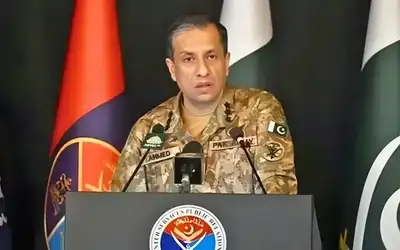

Randhir Jaiswal, spokesperson for India's Ministry of External Affairs, announced that the country intends to strengthen its relations with the "government of the people of Afghanistan" by emphasising on humanitarian aid and development cooperation.
The spokesperson of the ministry also announced India's willingness to expand trade, improve the health sector and support sports in Afghanistan.
India's Ministry of External Affairs (MEA) spokesperson announced on Friday, January 17, that India has agreed to expand trade with Afghanistan through the Chabahar port.
Referring to Indian Foreign Secretary Vikram Misri's recent meeting with Taliban’s Acting Foreign Minister, Amir Khan Muttaqi, Jaiswal noted that this was the "highest level of engagement" between the two nations.
"We have made it clear that we want to take further steps to provide humanitarian assistance and engage with the government of the Afghan people in the field of development cooperation," he said, referring to "the people of Afghanistan" in his speech, without referring to terms such as "Islamic Emirate" or "Taliban".
"We have a special mission in Kabul. We want to continue the work that we have there (Afghanistan) in order to strengthen the long-term relationship with the Afghan people," he added.
The spokesperson of the Indian Ministry of External Affairs emphasised that his country is trying to strengthen its long-standing relations with the people of Afghanistan. Jaiswal also announced the expansion of India's relations with Afghanistan in the field of sports, especially cricket.
India has so far provided numerous humanitarian aids to Afghanistan, including the delivery of wheat, medicine, and vaccines, and according to the country's Ministry of External Affairs, it intends to continue this support.
Also, expanding trade and development cooperation through Chabahar port is part of the country's plans to strengthen relations with Afghanistan.

Iranian President Masoud Pezeshkian said that he had discussed Afghanistan with Russian President Vladimir Putin.
In a joint press conference with Vladimir Putin, he said, "We discussed issues and areas of cooperation in the South Caucasus, Syria, the Middle East and Afghanistan.”
Pezeshkian added, "In this conversation, peace in Afghanistan was emphasised. He also said that raising the level of security cooperation and combating terrorism and organised violence was emphasised.
After a visit to Tajikistan, the head of state arrived in the Russian capital Moscow on Friday morning, January 17.
During this visit, Pezeshkian and Vladimir Putin signed a comprehensive strategic agreement between Iran and Russia.
After the talks between the leaders of the two countries, Pezeshkian said in a joint press conference with Vladimir Putin that the deepening of regional relations through cooperation in the Shanghai Cooperation Organisation and BRICS has a clear impact on regional integration and the achievement of common interests, and active participation in these mechanisms was emphasised.
The Iranian president added, "We believe that we should strengthen relations with our neighbours. Russia is one of the countries that has had an important and valuable place in our political relations. There was a need to review the structures in order to expand communications, which was reviewed during the signing of the strategic cooperation document."

A number of students who have received Russian scholarships say that the Taliban's Ministry of Higher Education has opposed their trip.
The Russian Cultural Centre (originally Soviet House of Science and Culture) in Kabul has told these students that the Taliban's Ministry of Higher Education has prevented them from travelling to study.
One of the students told Afghanistan International that officials of the Taliban's Ministry of Higher Education are opposed to students traveling to "non-Islamic" countries.
According to him, the Taliban believe that students lose their "religious beliefs" by travelling to these countries to study.
A number of students told Afghanistan International on Friday, January 17, that they had applied for scholarships for the year 2023 from the Russian government, and in mid-2024, the Russian Cultural Centre has recognised 500 of them as eligible for the scholarship.
Last year, the Taliban confiscated the passports of 500 male students and prevented them from travelling to Russia.
The students who received these scholarships told Afghanistan International that the Russian Cultural Centre, after several talks with officials of the Taliban's Ministry of Higher Education, announced to the students' representatives on Thursday, January 16, that the Taliban were opposed to their study trip.
One student said that each student spent between $100 and $200 to translate the required medical documents and examinations. Candidates have completed all the administrative procedures and documents required for these scholarships, he added.
The students say that the Russian Cultural Centre has met with 15 of their representatives several times during this period. According to these students, the centre made all its efforts to obtain the approval of the Taliban's Ministry of Higher Education.
The Taliban's Ministry of Higher Education has not officially commented on the matter.
According to the students, a number of candidates for the 2022 Russian scholarships have travelled to Iran in the middle of 2023 with the help of the centre. However, these students admit that the centre is not willing to provide visa facilities and study travel through Iran for this round of students.
One of the students said that the centre does not want to disrupt its relations with the Taliban because of the students.

Aleksandr Lukashenko, the Belarusian President, has said that Afghanistan and Syria want to have economic cooperation with the country, but the situation in both countries is complex and difficult.
Speaking at a meeting in Minsk on Friday, January 17, he said that dozens of countries want to have economic cooperation with Belarus, but it is hard to say that Belarus can meet their demands, Belarusian news agencies reported.
At the same time, Lukashenko added that Belarus's interests and priorities should be at the core of cooperation with other countries.
These statements come as Belarusian Deputy Foreign Minister Sergei Lukashevich visited Kabul last week and met with Taliban officials.
The Taliban's Foreign Ministry said in a statement on Sunday, January 12, that Sergei Lukashevich and Sher Mohammad Abbas Stanekzai, the Taliban's deputy foreign minister, met and discussed political and economic cooperation.
Sher Mohammad Abbas Stanekzai described the visit of the Belarusian official to Kabul as an important development in Belarusian-Afghan relations and the beginning of long-term cooperation.
The Taliban's deputy foreign ministry spokesman also announced that Sher Mohammad Abbas Stanekzai and Sergei Lukashevich agreed that the technical teams of both sides would hold their talks in Kabul and Minsk.

Human Rights Watch has called on the International Cricket Council (ICC) to prevent the Afghanistan national cricket team from participating in international games and to suspend the membership of the Afghanistan Cricket Board (ACB).
In a statement, the organisation emphasised that the Afghanistan national cricket team should remain sanctioned until women are allowed to access education and participate in sports. The organisation noted that the Afghanistan Cricket Board is under the control of the Taliban.
According to the BBC, Heather Barr, the head of the women's section of Human Rights Watch, said that according to the International Cricket Council's anti-discrimination policy, all people should be able to play cricket without discrimination and regardless of their gender, but the Taliban government has deprived Afghan women of this right.
In a statement issued by Human Rights Watch, it referred to various decrees of the Taliban government that include various women's rights, including "work, education, and sports," which the Taliban has deprived of women.
Countries that are members of the International Cricket Council (ICC), of which Afghanistan is one of them, are also required to have a women's cricket team, but even though Afghan women do not have the right to play sports and cricket, Afghanistan retains its membership in the ICC and participates in international competitions.