Taliban Publicly Flogs 10 People, Including Woman, In Khost
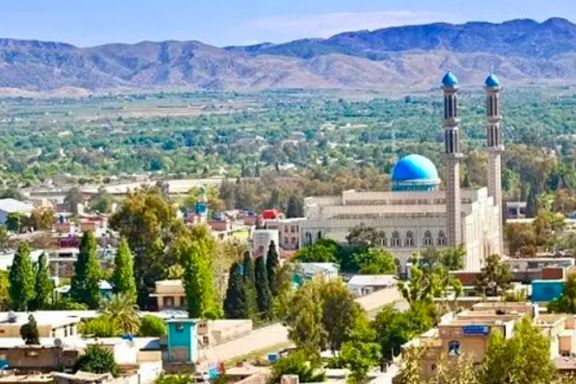
The Taliban's Supreme Court announced on Thursday that the group had flogged 10 people, including a woman, in front of the public in Khost province.
The Taliban's Supreme Court announced on Thursday that the group had flogged 10 people, including a woman, in front of the public in Khost province.
The Taliban have accused these individuals of extramarital affairs, same-sex relations, running away from home, threats and "illegitimate relationships".
In a statement on Thursday, January 23, the Taliban's Supreme Court wrote that in addition to flogging, these individuals were also sentenced to one to three years in prison.
According to a statement by the Taliban's Supreme Court, the Taliban's judicial authorities in Khost have sentenced six people to 39 lashes and two years in prison.
It is said that the other three defendants were also given 30 lashes and sentenced to three years in prison.
Another defendant was sentenced to 39 lashes and one year in prison, according to the statement.
The Taliban's Supreme Court announces the implementation of corporal punishment sentences against citizens almost every day.
The international community has repeatedly called on the Taliban to stop corporal punishment of the accused. The Taliban, however, says that they will sentence the defendants to corporal punishment based on "Islamic law".
Human rights organisations say that the Taliban's judicial system is not standardised and that defendants do not have access to the most basic due process, such as a defence lawyer.

Mao Ning, a spokesman for the Chinese Foreign Ministry, announced that the country has asked the Taliban to investigate the murder of a Chinese citizen in Takhar and identify and punish the perpetrators.
Mao said that China was shocked by the attack and strongly condemned it.
The Chinese Foreign Ministry spokesperson said at a press conference in Beijing on Wednesday that the Chinese embassy in Kabul will follow up on the issue. She stressed that the embassy will make every effort to protect the legitimate rights and interests of Chinese citizens and their security.
A Chinese citizen named "Li" was killed on Tuesday evening, January 21, in Khwaja Bahauddin district of Takhar. The Islamic State group has claimed responsibility for the murder of the Chinese citizen.
In a statement on Wednesday, ISIS' broadcasting outlet Amaq said that the group's fighters had targeted and killed the Chinese national.
Mohammad Akbar Haqqani, a spokesman for the Taliban's security command in Takhar province, said that the Chinese citizen "was planning to travel to an unknown destination with his interpreter without informing the Chinese office and security officials from the office, but unfortunately he was killed by unknown people on the way to Dasht-e-Qala in Takhar province".
The Taliban said that they had launched an investigation into the matter.
Sources previously told Afghanistan International that the Taliban intelligence agency has interrogated the Chinese citizen's driver and translator.
ISIS has already claimed responsibility for attacks on Chinese citizens in Afghanistan. On December 12, 2022, ISIS attackers attacked a Chinese guesthouse in Kabul, wounding five Chinese citizens. After the incident, China's Foreign Ministry urged its citizens to leave Afghanistan immediately.
The International Criminal Court’s chief prosecutor on Thursday said that he was seeking arrest warrants against senior Taliban leaders in Afghanistan over the persecution of women, a crime against humanity.
Karim Khan said that there were reasonable grounds to suspect that Taliban’s Supreme Leader Hibatullah Akhundzada and the group’s Supreme Court’s chief justice Abdul Hakim Haqqani “bear criminal responsibility for the crime against humanity of persecution on gender grounds”.
Khan said that Afghan women and girls, as well as the LGBTQ community, were facing “an unprecedented, unconscionable and ongoing persecution by the Taliban”.
“Our action signals that the status quo for women and girls in Afghanistan is not acceptable,” added Khan.
ICC judges will now consider Khan’s application before deciding whether to issue an arrest warrant — a process that could take weeks or even months.
These requests for warrants of arrest are based on diverse evidence, including expert and witness testimonies, official decrees, forensic reports, statements by the suspects themselves and other Taliban representatives, and audio-visual material, the prosecutor said.
Khan warned he would soon be seeking additional applications for other Taliban officials. The prosecutor noted other crimes against humanity were being committed as well as persecution.
“Perceived resistance or opposition to the Taliban was, and is, brutally repressed through the commission of crimes including murder, imprisonment, torture, rape and other forms of sexual violence, enforced disappearance, and other inhumane acts,” he said.
After sweeping back to power in August 2021, the Taliban authorities pledged a softer rule than their first stint in power from 1996-2001. However, they quickly imposed restrictions on women and girls that the United Nations has labelled “gender apartheid”. The hardline Islamist group has banned women from going to university, closed secondary schools and beauty salons, and stopped women from working at NGOs, including at the United Nations.
Khan added, “My Office further submits that the Taliban’s interpretation of Sharia should not, and may not be used to justify the deprivation of fundamental human rights or the related commission of Rome Statute crimes.”
The court, based in The Hague, was set up to rule on the world’s worst crimes such as war crimes and crimes against humanity. It has no police force of its own and relies on its 125 member states to carry out its arrest warrants — with mixed results.
In theory this means that anyone subject to an ICC arrest warrant cannot travel to a member state for fear of being detained.
Human Rights Watch (HRW) welcomed the arrest warrants on Thursday, calling them “a reminder that justice can prevail.”
Ali Amin Gandapur, the chief minister of Pakistan's Khyber Pakhtunkhwa province, has announced that he will soon send a delegation of "tribal elders" to Afghanistan for talks with the Taliban.
Gandapur said that the federal government's efforts to make peace with neighbouring countries have not borne fruit.
Pakistan's Express Tribune newspaper reported on Wednesday, January 21, that Gandapur said at a press conference in Dera Ismail Khan that the "Afghan issue" would only be resolved through dialogue.
"The delegation will go to Afghanistan within two weeks and hold talks (with the Taliban)," the chief minister said. We will find solutions to problems. I hope they will cooperate with our jirga (tribal leaders' board)."
After the Taliban came to power in Afghanistan, the Pakistani government and army have repeatedly held talks with Taliban officials about curbing the threat posed by the Tehreek-e-Taliban Pakistan (TTP). Earlier, Pakistani political and military officials hosted by Sirajuddin Haqqani in Kabul held talks with TTP leaders.
The talks ended inconclusively after several months and a short-lived ceasefire between the army and the Pakistani Taliban, and clashes resumed.
In recent months, the TTP has intensified its attacks on areas of Khyber Pakhtunkhwa, and the Pakistani army has recently stepped up clearance operations in various areas of Khyber Pakhtunkhwa.
The Pakistani army and government accuse the Afghan Taliban of not cooperating with the Tehreek-e-Taliban Pakistan (TTP) in curbing the threats, but the Pakistani Taliban are organising their operations from Afghan soil against targets on Pakistani soil.
The Pakistani army recently bombed the border areas of Afghanistan's southeastern provinces several times.
The Committee to Protect Journalists has called on Pakistani authorities to stop the deportation and harassment of Afghan journalists who have fled Afghanistan because of threats to their lives.
CPJ has listed proof of how Afghan journalists have been detained and deported forcefully.
A letter sent to CPJ on January 16, by the independent watchdog group, the Pak-Afghan International Forum of Journalists, stated that during the first week of January 2025, Pakistani security forces detained two Afghan journalists and their families before deporting them to Afghanistan. The letter did not disclose the names of the deported journalists, who are members of the forum.
“Pakistan’s security agencies must immediately halt the harassment and deportation of Afghan journalists,” said Beh Lih Yi, CPJ’s Asia programme coordinator. “These journalists fled Afghanistan due to the Taliban’s threats to their lives. The Pakistani government must protect them, not mistreat them.”
CPJ also stated that Afghan journalists Mujeeb Awrang and Ahmad Mosavi were detained by Pakistani authorities at their homes in the capital, Islamabad on January 3. Both the journalists were held in a vehicle for three hours, despite having presented valid Pakistani visas and Afghan passports, as per CPJ. The journalists claimed that they were threatened with imprisonment and deportation before being released without explanation.
The Pakistani government has instructed Afghan nationals, including journalists, to relocate from Islamabad and the nearby city of Rawalpindi to other cities by January 15.
Afghan journalists continue to face imprisonment and persecution by the Taliban, with Afghan News Agency reporter Mahdi Ansary, sentenced on January 1 to 18 months in prison on charges of disseminating anti-Taliban propaganda.
Pakistan’s federal information minister Attaullah Tarar did not respond to CPJ’s request for comments on the issue.
In letters provided to Afghanistan International, the Taliban's Ministry of Foreign Affairs announced the termination of the employment of six former government diplomats in the Afghan missions in Berlin and Bonn.
The German government has also accepted the Taliban's order to end the work of these diplomats.
The Taliban's Foreign Ministry letter states that the mission of these diplomats had already ended, but they continue their work.
According to the letters, which were written on December 18, 2024, the Afghan embassy in Berlin has been instructed not to allow the six diplomats to work again starting from the end of December 2024.
The letters mention Noor Ahmad Salangi, first secretary of the Afghan embassy in Berlin; Farid Khan, second secretary, and Mohammad Nasim Faqirzada, third secretary of the embassy, as well as Bijan Paya Taheri and Karamuddin Bayazidi as consuls and Mohammad Zahir Yaftali as attaché at the Afghan consulate in Bonn.
The Taliban's Foreign Ministry has asked the Afghan embassy in Berlin to share the matter with the host country and report to the ministry.
In a letter sent to the Afghan embassy in Berlin on December 20, two days after the letters were sent, the German Foreign Ministry said that it would officially announce the termination of the official mission of the six diplomats.
The ministry's letter, a copy of which was provided to Afghanistan International, emphasises that accepting the Taliban's request does not mean that the Taliban regime is officially recognised as the official government of Afghanistan, but is based on international law.
The German Foreign Ministry note states that "a reasonable deadline for the departure of diplomats and consular officers, as well as their family members, has been set at January 30, 2025," and that their diplomatic privileges and immunities will expire on the same date.
With the removal of the six diplomats, only two of them, Abdul Baqi Popal and Mohammad Asif Abdullah, who have "long-standing ties with the Taliban regime", will take control of the Afghan embassy and consulate in Berlin and Bonn, diplomatic sources told Afghanistan International.
On November 19, 2024, Afghanistan's ambassador to Germany, Yama Yari, announced that he had stepped down from his position at the request of the host country.
Diplomatic sources told Afghanistan International at the time that Abdul Baqi Popal had taken over as the head of the Afghan embassy in Germany instead of Yari.