Iran's Foreign Minister Says Country's Interests Are Linked To Afghanistan's Issues
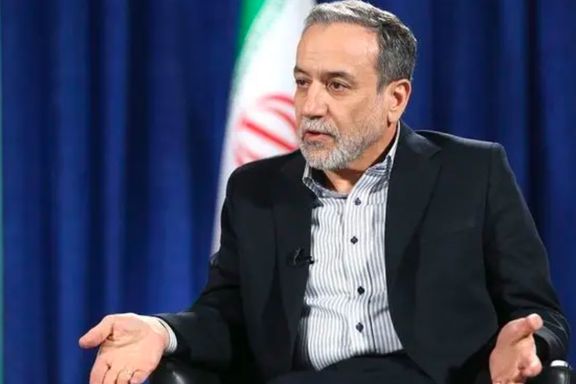
After his visit to Kabul, Iran’s Foreign Minister Abbas Araghchi said that Iran's national interests are tied to many Afghan issues.
After his visit to Kabul, Iran’s Foreign Minister Abbas Araghchi said that Iran's national interests are tied to many Afghan issues.
Araghchi added that given the challenges in Afghanistan, dialogue and interaction with the Taliban are necessary.
Abbas Araghchi had travelled to Kabul on Sunday morning, January 26, along with a political and economic delegation, and met with the Taliban's prime minister, foreign, and defence ministers.
This was the first visit of the Islamic Republic's foreign minister to Kabul since the Taliban's return to power in August 2021.
In a meeting with Taliban officials, Araghchi stressed that a new chapter in relations between the Islamic Republic and Afghanistan will begin.
After his visit to Kabul, Abbas Araghchi called the Persian speakers rights, border security, security inside Afghanistan, security of Shiites, security of merchants, narcotics, terrorist groups and ISIS "very important challenges".
The Islamic Republic's domestic media reported on Wednesday, January 29, that Abbas Araghchi told reporters on the sidelines of the cabinet meeting, "Our national interests are tied to these issues, and it is natural that we should have dialogue and interaction."
The Foreign Minister added that regardless of the level of Iran's relations with Afghanistan politically and whether the necessary identification has been made or not, resolving these issues through dialogue and diplomacy is a necessity.
The Jomhouri-e Eslami newspaper, however, criticised Araghchi's visit to Afghanistan, calling the Taliban a "backward" group. The newspaper referred to the Taliban as a "rebellious, violent, and backward" group that lacks domestic legitimacy and acceptance.
Amid the criticism, the Islamic Republic's ambassador to Afghanistan announced that Abbas Araghchi's visit to Kabul does not mean recognition of the Taliban government.

Sources confirmed to Afghanistan International that the Taliban's intelligence services have arrested two clerics who are critical of the group, Mahmood Hassan and Abdul Qadir Qant.
Earlier, in a meeting in Kabul, the two clerics strongly criticised the Taliban's monopoly of power, especially the Kandahar Taliban faction, and called for the formation of an inclusive government.
The Council for the Support of Jihadi and Islamic Values held a conference in Kabul on Monday, January 27. Mahmood Hassan, a member of the council and former head of the Hajj and Religious Affairs Department in Panjshir province, said at the meeting that the Taliban had monopolised power. He emphasised that in addition to Mullah Hibatullah Akhundzada, 12 Taliban cabinet ministers are from Kandahar province.
Sources said that the Taliban's intelligence agency arrested the two clerics on Tuesday, January 28.
In contact with his family, Mahmood Hassan confirmed that he is in Taliban custody.
Relatives of Qant also told Afghanistan International that the Taliban had arrested him.
Mahmood Hassan had strongly urged Taliban leaders not to confine power to Kandahar. He called on the Taliban to end the monopoly of power and include representatives of other provinces and ethnic groups in power.
The council member said, "We heard that 12 ministers, including Amir al-Momineen Mullah Hibatullah Akhundzada, are from Kandahar. This is not justice. This is not fairness and equality. Give power to the tribes and people of Afghanistan in the true sense of the word, whether it is a ministry, a directorate or an administration."
Abdul Qadir Qant, another member of the council, was also present at the ceremony. He is from Chal district of Takhar province, and was previously arrested by the Taliban.
Their criticism of the Taliban has been widely welcomed by users on social media.
Local sources told Afghanistan International that a number of TTP members have been relocated along with their families in different areas of Kandahar.
These areas include Karizgi, Kata Sang, Tanaucha, Qasim Kali, and Surkh Bid in Shah Wali Kot district, which are more than 100 kilometres from the Pakistani border.
Speaking to local sources, Afghanistan International has learned that the entry of ordinary people into these villages has been banned, but large vehicles are plying in these areas for construction. Local residents have confirmed that non-locals live in these areas with their families.
Locals claim that the behaviour, dressing style, and even language of these people is different from those of the indigenous people. A local elder in Shah Wali Kot told Afghanistan International, "These people have been here for a long time. They have nothing to do with ordinary people and do not talk to anyone. They have different faces, they all have long hair and speak different accents among themselves."
Drivers on the Kandahar-Uruzgan highway also said that sometimes these unidentified armed individuals appear on the side of the highway. "These unknown people block the road with chains every week or every two weeks and take money from people," said Azizullah, one of the drivers on the route. These fighters are monitoring vehicles and people, he added.
With the Taliban's return to power in August 2021, Pakistani militants have emerged in areas that have been the battlegrounds for the past twenty years. Afghan Taliban leaders and fighters, who took refuge in the tribal areas during the war with the Afghan government and NATO forces, have now returned to their areas, bringing with them their "former and current guests" of Pakistan.
Pakistani militants who fought alongside the Haqqani Network in Paktia consider Khost, Paktia and Paktika to be safe areas for their presence. However, those who took part in the major battles in Kandahar have settled in this province sporadically.
The militants are now clashing with Pakistani security forces and have carried out bloody attacks in the country.
Khalid Pashtoon, a former Kandahar MP in Afghanistan's parliament, told Afghanistan International that TTP militants and their commanders live with their families in Nish District in addition to Shah Wali Kot.
"These militants have been transferred to areas far beyond the Durand Line at the request and pressure of Pakistan," he added. This area is the best place to live and hide. "TTP members have been deployed in the area only to protect the safety of their families, while their young fighters continue to go to the Durand Line and participate in battles with the help, equipping and guidance of the Afghan Taliban," sources said.
In May 2022, Pakistan called on the Taliban to remove Pakistani militants from the border between the two countries. Then, Islamabad sent Chinese diplomats to Kandahar and tried to inform Mullah Hibatullah Akhundzada about the sensitivity of this issue. The Taliban also took note of this issue and offered two areas in Afghanistan to Pakistani fighters: one in the north and the other in the south.
Afghanistan International's findings show that the Haqqani group was trying to transfer Pakistani fighters and their families to northern Afghanistan, especially around the Qosh Tapa Canal, and to hand over the canal's land to them. However, the attempt failed due to opposition from local residents, and TTP fighters refused to go there.
‘Shah Wali Kot: A Strategic Point’
Ultimately, the Taliban accommodated the militants and their families in Shah Wali Kot in Kandahar, which is considered a hotspot due to its geographical location. In addition to access to other districts of Kandahar, this district also has access to Zabul, Uruzgan, Helmand, Daikundi, and Ghazni provinces.
These shelters were not a problem for Pakistan until some time ago. However, with the start of TTP's activities in Khyber Pakhtunkhwa and Balochistan and the acquisition of advanced weapons by Baloch militants, the country has now realised the sensitivity of this region as well.
In late December 2024, Pakistan's former special representative for Afghanistan implicitly confirmed in an interview that the TTP's hideouts are located in Kandahar.
‘Mir Ali's Agreement & Afghan Taliban's Commitment’
The deep religious beliefs, family ties and historical connections that developed during the Afghan war have created a deep bond between the Afghan and Pakistani Taliban. Sources among the Pakistani Taliban told Afghanistan International that Pakistani militants have an agreement with the Afghan Taliban called "Mir Ali", which was signed before the fall of Kabul in the Mir Ali area of North Waziristan.
In this agreement, the Afghan Taliban have pledged to cooperate with the Pakistani Taliban to establish an Islamic system in Pakistan after coming to power.
"The Afghan Taliban's assistance to the TTP is based on the mutual cooperation and commitments that have been made between them during the 20 years of war in Afghanistan," Khalid Pashtoon said about the link.
In recent months, the bodies of the Afghan Taliban have been transferred from Balochistan and Khyber Pakhtunkhwa to the southern provinces and even Farah and Badghis and handed over to their families, he added. The militants were killed in clashes with Pakistani forces.
Gen. Sami Sadat, a former army commander, told Afghanistan International, "The Afghan Taliban are helping the TTP with military and financial equipment. Some of them even join the TTP and are killed in battles."
‘Difficult Position’
The Afghan Taliban, who enjoyed broad support from Pakistan during their two decades of war against the previous government, are in a difficult position. The Taliban does not want to lose Pakistan's support, as many Afghan Taliban leaders and families are still based in Pakistan and can return to their sanctuaries in Pakistan in case of any crisis in Afghanistan.
Now, Pakistan has repeatedly called for a crackdown on and curbs on the activities of Pakistani militants in Afghanistan. However, if the Afghan Taliban contain the Pakistani Taliban, on the one hand, it will lose its most important allies, and on the other hand, there will be discord among the Afghan Taliban.
In addition to Pakistan's pressures, the Afghan Taliban is also facing international criticism and pressure. In the Doha agreement that the Taliban signed with the United States in 2020, the group pledged not to allow Afghan soil to be used as a base for militant attacks on other countries, including Pakistan. However, the Afghan Taliban's support for the TTP and similar groups has called into question this commitment and raised global concerns.
If the Taliban fail to strike a balance between their relations with the militants and the expectations of Pakistan and the international community, it could have dire consequences for the group, analysts say.
One concern is that Pakistan and other countries are helping to topple the Taliban government, which is suffering from discord, lack of resources and international isolation.
Pakistani officials have recently accused the Afghan Taliban of colluding with India. In the past, close ties between Kabul and Delhi have led Pakistan to support Afghan insurgents against the central government.
If insurgent attacks from Khyber Pakhtunkhwa province spread to other parts of Pakistan and cause widespread unrest in the country, it is not unlikely that Pakistan will take advantage of the old scenario to fend off the threat of the Afghan Taliban.
Distrust between the two longtime allies has grown. Now, the Afghan Taliban feel that Islamabad supports ISIS, and anti-Pakistan sentiment has intensified among Taliban officials.
The Taliban's deputy minister of economy has said that following the suspension of US aid to Afghanistan, the activities of 50 international aid organisations in 28 provinces of the country have been halted.
Abdul Latif Nazari called on the countries of the world to separate humanitarian aid from political issues.
Abdul Latif Nazari, the Taliban's deputy minister of economy, told Pajhwok Afghan News on Tuesday that the activities of 50 international groups and aid organisations in 28 provinces of the country had been suspended in recent days.
He said that the reason for the suspension of the work of these organisations was the suspension of aid from the United States of America.
Immediately after entering the White House, US President Donald Trump suspended all foreign aid, including sending money to Afghanistan, for three months. The suspension of US aid has disrupted Afghanistan's relative economic stability, leaving the Taliban confused in the face of financial challenges, including a sharp devaluation of the Afghani.
Earlier, following Trump's statements that the administration of Joe Biden had paid billions of dollars in aid to the Taliban, Nazari said that the Taliban government does not rely on foreign aid.
Referring to Trump's threat to cut off aid to Afghanistan, Nazari said that these threats have no impact on the decisions of the Taliban government. The Taliban's deputy minister of economy said, "The Islamic Emirate is a completely independent system in all aspects, especially in the economic sector, and has never relied on foreign aid. Therefore, these types of threats will not have any impact on the decision-making policies of the Islamic Emirate."
The Taliban spokesman also announced that they would not receive any help from Washington. "The claim of billions and millions of dollars in aid to the Islamic Emirate by the United States is false and we strongly condemn it," the Taliban spokesman said in a statement.
"The truth is that the United States not only did not give any money to the Islamic Emirate, but also usurped and froze billions of dollars of the people of Afghanistan," said Hamdullah Fitrat.
He stressed that the Taliban not only do not expect help from the United States, but they have never asked for it.
The suspension of US aid has caused volatility in Afghanistan's foreign exchange market. In one week, the value of the afghani against the dollar has fallen drastically. In response, the Taliban took control of the foreign exchange market and the group’s officials have beaten up some money changers and forced some to sell dollars.
The Taliban's central bank has repeatedly sold tens of millions of dollars over the past few days to maintain the value of the afghani. However, economic analysts believe that without continued US financial support, it will not be possible to preserve the value of the Afghani.
Earlier this week, the United States provided more than $40 million in aid to Afghanistan. Observers believe that this aid has played an important role in the circulation of the economic cycle of the Taliban government. According to statistics, the United States has provided more than $3 billion in aid to Taliban-controlled Afghanistan last year.
The United States has suspended educational, charitable and human rights programmes in Afghanistan.
These programmes have been halted following US President Donald Trump's order to suspend US foreign aid.
In a letter, a copy of which was obtained by Afghanistan International, a journalists' advocacy organisation informed its colleagues that a planned meeting with Afghan journalists has been postponed indefinitely due to the suspension of US foreign aid.
The letter cited the US State Department's order to suspend foreign aid funding as the reason for the cancellation of the meeting.
The announcement said that the new date of the meeting will be announced after receiving new information.
Shahrzad Akbar, the former head of the Afghanistan Human Rights Commission, also wrote on social media platform X that employees of charitable, human rights and media organisations have been harmed as a result of the suspension related to US financial aid.
The US State Department also recently suspended funding for organisations that help with housing, employment, and other refugee needs.
This action will also affect tens of thousands of Afghan refugees in the United States.
Tariq Noorzada, a former counselor at the Afghan embassy in Turkmenistan, wrote on his Facebook page that President Trump signed an executive order on January 24, 2025, suspending all services provided to refugees in the first 90 days of their arrival in the United States.
According to Noorzada, these services include paying rent, going through legal documents, finding a job, receiving government assistance, and dozens of other items that were provided by the resettlement offices.
Noorzada said that as a result of the signing of this executive order, the provision of services to tens of thousands of migrants who were receiving these services has been stopped.
Shahrzad Akbar also wrote, "Our compatriots who have just immigrated to the United States are now worried about their future." It is not clear when these programmes will resume.
Earlier, the US State Department announced that all foreign aid projects would be suspended, except for emergency food programmes and military aid to Israel and Egypt.
The decision was made to review the compatibility of these programmes with Donald Trump's policies, and the review could take up to 85 days.
More than three years after the United States withdrew from Afghanistan, the United States remains the largest donor of humanitarian aid to the country.
According to a SIGAR report released last October, the United States has allocated a total of $21.6 billion over the past three years to help Afghanistan and Afghan refugees.
According to SIGAR, $3.33 billion of this money has been sent to Afghanistan under the guise of humanitarian and development aid.
Critics of the Taliban say that the group is using US cash aid to bolster its government.
In one case, the US Special Inspector General for Afghanistan Reconstruction also acknowledged that the Taliban may have benefited from US financial assistance to Afghanistan.
During a meeting in Kabul, the Council for the Support of Jihadi Values strongly criticised the monopoly of power by the Taliban, especially the Kandahari Taliban faction, and called for the formation of an inclusive government.
A member of the council said that in addition to Mullah Hibatullah Akhundzada, 12 Taliban cabinet ministers are from Kandahar province.
Mahmood Hasan, the former head of Hajj and Religious Affairs in Panjshir province, warned the Taliban at the conference, held in Kabul on Monday, January 27, that the consequences of the current situation created by the Taliban are uncontrollable.
In a harsh tone, he called on Taliban leaders not to confine power to Kandahar. Mahmood Hasan told the Taliban to end the monopoly of power in Kandahar and include representatives of other provinces and ethnic groups in power.
The council member said, "We heard that 12 ministers, including Amir al-Momineen Mullah Hibatullah Akhundzada, are from Kandahar. This is not justice. This is not fairness and equality. Give power to the tribes and people of Afghanistan in the true sense of the word, whether it is a ministry, a directorate or administration."
The cleric called the Taliban's monopoly of power in Kandahar a form of bigotry and said that "bigotry has no place in religion".
He called for the return of power to the people and called on the Taliban to consider justice and include "all people and all ethnicities" in the government.
Addressing the Taliban, the cleric said, "Give the people their rights. The monopoly of power is not right in any respect. Establish an inclusive government that includes all the people of Afghanistan. This is the demand of the people of Afghanistan. Regardless of what foreigners say."
‘Invite Jihadi Leaders’
The member of the Council for the Support of Jihadi-Islamic Values said that before the Taliban, there were powerful jihadi figures in Afghanistan who he said were rooted among their people. He specifically mentioned Abdul Rab Rasul Sayyaf, Mawlwi Mohammad Nabi Mohammadi, Mawlwi Yunus Khalis, Mawlwi Jalaluddin Haqqani, Ahmad Shah Massoud, Burhanuddin Rabbani, Abdul Ali Mazari, Mohammad Mohaqiq and Ismail Khan, who, according to him, "were mujahideen and worked, and were also rooted among their people and nation".
Without providing an explanation, the cleric addressed the Taliban, saying, "Don't shake this foundation, they are rooted in their people, ask for them."
The member of the Jihadi Council in Kabul added, "When the Mujahideen were fighting, the Islamic Emirate was not born. How can you not take these people into account?"
He called on the Taliban to bring reforms and "get the Afghan people out of this situation," calling for the formation of a government in Afghanistan in which all Afghans can see themselves.
The cleric pointed to a specific case and said that when a Taliban officer "sees the Tazkira, he behaves very rudely. Reforms should come. We say that the monopoly of power in Kandahar should be broken, this is its philosophy. Otherwise, there will be no reforms."
The member of the Jihadi Council warned that if the Taliban do not bring reforms, it will be difficult for the Taliban to reap the consequences.