Pakistan Engages In Talks With US On Resumption Of Afghan Refugee Transfers
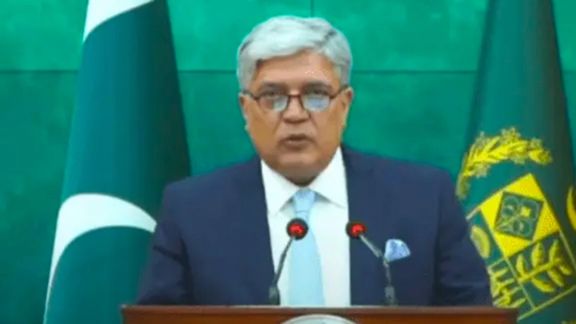
Pakistan's Ministry of Foreign Affairs has expressed optimism regarding the resumption of the transfer process for eligible Afghan refugees to the United States.
Pakistan's Ministry of Foreign Affairs has expressed optimism regarding the resumption of the transfer process for eligible Afghan refugees to the United States.
Pakistan Ministry of Foreign Affairs spokesperson Shafqat Ali Khan confirmed on Thursday that discussions on the matter are ongoing between Islamabad and Washington.
However, the spokesperson did not provide further details on the nature or progress of the discussions with American officials.
The refugee transfer programme was suspended following the election of Donald Trump as US President and the subsequent executive order halting the country's refugee admissions. As a result, thousands of eligible Afghan refugees remain in limbo in third countries such as Pakistan, Qatar, and Albania.
Many of these refugees have expressed concerns regarding their safety, citing their past cooperation with US institutions in Afghanistan over the past two decades. They fear retribution from the Taliban and have been awaiting relocation under the US refugee programme.
According to reports, approximately 15,000 eligible Afghan refugees are currently in Pakistan, 3,000 in Qatar, and another 500 in Albania, awaiting their transfer to the United States.
Pakistan’s Ministry of Foreign Affairs previously announced that, under an agreement between Washington and Islamabad, the transfer of these refugees was expected to be completed by September 2025. Despite the suspension of the programme by the Trump administration, the ministry maintains that the agreement remains in effect.

Republican US Senator Shelley Moore Capito introduced a bill to prevent the Taliban and terrorist organisations from accessing US financial aid through the United Nations.
The proposed bill, titled the "Stop Funding Global Terrorists Act," would make US aid through the United Nations conditional on the US State Department guaranteeing that Washington's cash assistance would not be sent to Afghanistan in UN humanitarian shipments.
Under the second provision of the bill, the State Department must also ensure that no "terrorist organisation" benefits from this US assistance.
"The American people do not support their tax dollars being used to fund terrorism," Senator Capito wrote in a statement.
She said that her proposed bill would ensure that US aid would not enter Afghanistan in UN cash shipments for the benefit of the Taliban group, which has oppressed women and girls.
"If the UN cannot properly maintain the account of US funds that are provided to Afghanistan, it should not be trusted," Capito said.
The West Virginia senator said that a number of other senators are backing the bill, including Tom Cotton of Arkansas, Katie Britt of Alabama, Bill Cassidy of Louisiana, Rick Scott of Florida, Ted Cruz of Texas, Marsha Blackburn of Tennessee, Thom Tillis of North Carolina and Tim Scott of South Carolina.
Senator Capito added in her statement that according to SIGAR's report, at least $10.9 million of US taxpayer funds fell into the hands of the Taliban in May last year.
Andrei Serdyukov, chairman of the Joint Chiefs of Staff of the Collective Security Treaty Organisation (CSTO), called Afghanistan a threat to the member states of the organisation.
At a press conference on Thursday, January 30, he declared that Afghanistan is the main source of instability, the spread of radical ideology, terrorism and drug trafficking, TASS reported.
He emphasised that although Afghanistan has had positive changes, it is known as a threat to CSTO member states.
‘CSTO Military Exercise in 2025’
Serdyukov also announced that the organisation will hold military exercises in Tajikistan, Kyrgyzstan and Belarus in 2025.
Andrei Serdyukov said that the drills are planned for military readiness in crisis situations and to ensure the security of member states.
He said that one of the CSTO's priorities in 2025 is to equip security systems with a variety of modern weapons.
Russia, Armenia, Belarus, Kazakhstan, Kyrgyzstan and Tajikistan are permanent members of the CSTO.
Andrei Serdyukov announced that the CSTO military exercises will be held in Belarus in September, in Kyrgyzstan in the first half of October, and in Tajikistan in the second half of October 2025.
The CSTO exercise in Tajikistan has been dubbed "Indestructible Brotherhood" and is said to have an "anti-terrorist" aspect.
Andrei Serdyukov emphasised, "I am sure that in 2025 we will be able to achieve all our goals.
The secretary-general of the Collective Security Treaty Organisation (CSTO) announced in July this year that there is a possibility of further expansion of terrorism and drug trafficking from Afghanistan to Central Asia. Imangali Tasmagambetov said that Afghanistan remains the main source of instability in Central Asia.
Taliban leaders are widely deliberating on the implications of US President Donald Trump's return to power.
Efforts are underway to persuade Hibatullah Akhundzada, the Taliban leader in Kandahar and his entourage, to open a new channel of dialogue with the United States.
Hibatullah Akhundzada is worried that Taliban diplomats will reach an agreement with the United States on a decision that would tie his hands in Kandahar. He also has little confidence in the relationship between Deputy Prime Minister Abdul Ghani Baradar and the new US President Donald Trump.
The Taliban have long been in contact with representatives of the United States and the European Union through their office in Qatar.
Before coming to power, Donald Trump sent a representative to negotiate between Hamas and Israel, and his efforts led to a ceasefire in the Gaza Strip.
On the eve of Donald Trump's inauguration, the Taliban appointed Suhail Shaheen, a veteran diplomat with experience in negotiating with the international community, as their new ambassador to Doha.
In recent weeks, Hibatullah Akhundzada has repeatedly asked Taliban Prime Minister Mullah Hassan Akhund, Deputy Prime Minister for Economic Affairs Abdul Ghani Baradar, and Foreign Minister Amir Khan Muttaqi to go to Kandahar for consultations on the Taliban's readiness for the Trump administration to take office in the United States. Akhundzada also gave some advice to Taliban officials during these meetings.
Will the Taliban Accept Limited Intelligence Presence of the United States in Afghanistan?
Informed sources among the Taliban in Kandahar told Afghanistan International that the Americans intend to have a limited intelligence presence in Afghanistan to control al-Qaeda and ISIS, but Taliban leader Hibatullah Akhundzada is resisting this request.
Trump's national security adviser, Michael Waltz, has commented on the issue from time to time, but Washington is yet to formally make the request.
The Taliban is trying to send a message to Donald Trump's team that the group has no problem with the presence of the United States in Afghanistan, but this presence should not affect the Taliban's domestic and foreign policies.
The US presence in Afghanistan is unlikely to be without intelligence influence, as Washington has repeatedly stated that it needs "watchful eyes and ears" to help them monitor and manage the security situation in the region.
Khalid Pashtun, a former Kandahar MP, told Afghanistan International that the US is seeking an intelligence presence in Afghanistan, and some speculation suggests that "US intelligence groups are still present in Afghanistan". "I am sure that the United States is interested in the presence of intelligence in Afghanistan," Pashtun said.
A Taliban official said, "The Americans have repeatedly asked for the presence of intelligence in Afghanistan in bilateral meetings in Doha and have also identified some provinces."
It is said that during the Doha negotiations, the Americans wanted to have military bases in some parts of Afghanistan, control of Bagram Air Base, as well as the presence of some military personnel in their embassy, but the Taliban resisted these demands. The new US president has also mentioned his return to Bagram several times in his speeches.
‘Taliban Cooperate With US To Contain ISIS’
According to sources close to the Taliban, an important condition for Hibatullah Akhundzada is that there should be no interference by foreign countries, including the United States, in the face of the restrictions and decrees imposed by the Taliban over the past three and a half years.
The US intelligence presence in Afghanistan does not seem to be an easy decision. The Taliban are currently at war with ISIS-K and have told their advisers that without US intelligence assistance, it would be difficult for them to control ISIS-K.
However, the manner of this cooperation is the biggest question for Hibatullah Akhundzadeh. He seems to be opposed to this kind of cooperation, yet he has no problem with intelligence sharing and intelligence cooperation.
Afghan intelligence sources say that the Taliban will not be able to defeat ISIS-K without US intelligence assistance. The sources said that information is currently being exchanged directly between the Taliban and the United States to counter ISIS-K.
‘Direct Communication Channels’
In Kabul, Mullah Abdul Ghani Baradar, the Taliban's deputy prime minister; Mullah Yaqoob Mujahid, the defence minister, and Sirajuddin Haqqani, the interior minister, are all flexible about relations with the United States.
According to leaked information from the Kandahar meetings, members of the Taliban's cabinet have asked their leader, Mullah Hibatullah, to soften some of his decisions in order to establish good relations with the new Trump administration. The first step should be to resolve the issue of restrictions on girls' and women's education so that the demands of Afghans and Western countries are met positively.
Suhail Shaheen, the Taliban's ambassador to Qatar, also referred to Trump's victory in the election and said that the Taliban are interested in positive relations with the United States.
During Donald Trump's first term, Shaheen referred to the peace agreement in Doha, saying, "Trump seems to be a pragmatic person, and in my opinion, we have to be realistic in solving problems."
He had previously expressed hope that the Taliban government would be recognised during the Trump presidency. However, the United States needs clear steps to make progress in relations with the Taliban, many of which have been influenced by Mullah Hibatullah's orders.
Informed sources in Kabul say that during the visit of some Kabul-based Taliban officials to Qatar and the United Arab Emirates, US diplomats and intelligence officials have been asked to interact with the group and reopen the consular and development sections of their embassy in Kabul.
Taliban officials in Kabul hope that the new US President Donald Trump will lift the sanctions imposed on them and cooperate with them in the reconstruction of Afghanistan.
Abbas Stanekzai, the Taliban's deputy foreign minister, has called on the US president-elect to remove the names of Taliban leaders from the blacklist, lift banking sanctions, and release frozen assets to build better relations between the two sides.
Stanekzai recently said in a meeting that Donald Trump should change Joe Biden's policies and pave the way for friendship with the Taliban by formulating a new policy for Afghanistan.
"On behalf of the Islamic Emirate of Afghanistan, the field is open for the United States," he said. “If they want to be friends with us, we will give them a hand of friendship."
Stanekzai called on Trump to recognise the Taliban government and reopen the US embassy in Afghanistan. "We fought with the United States for 20 years, but now we want to establish relations, provided that the United States adheres to the Doha agreement," he added.
Political analysts see the Taliban's recent statements as a sign of their willingness to engage and be flexible. These statements cannot be considered merely Stanekzai's personal views, but appear to have been made after consultation with the Taliban leadership.
However, one of the important issues at the moment is the establishment of a direct and special channel of communication between the Taliban and the United States for negotiations.
Omar Daudzai, the former interior minister of Afghanistan, told Afghanistan International that the Taliban want direct contact, and in this regard, Mullah Hibatullah himself will enter the scene directly instead of Mullah Baradar.
Omar Daudzai believes that Hibatullah Akhundzada wants to introduce himself instead of Abdul Ghani Baradar to negotiate with the United States.
According to Daudzai, the Doha agreement with the United States was signed by Abdul Ghani Baradar and only Trump knows him, but Hibatullah does not accept this and wants to establish a direct channel of communication between Trump and Kandahar.
"The second issue is important for Hibatullah: Mullah Baradar was present in the negotiations with the United States, he signed the agreement, and Trump knows him," he told Afghanistan International.
Regarding the demands of both sides, Daudzai said, "The Taliban will tell the United States not to interfere in our internal affairs, and the United States will also ask them to support this country in regional issues and in many cases to be aligned with the United States."
Currently, the United States does not have an embassy in Kabul and conducts all its negotiations with the Taliban through Doha.
A day before his inauguration, Trump said that he would take back the remaining US weapons in Afghanistan in exchange for helping the Taliban.
According to Daudzai, these weapons are a matter of importance to the United States, and he has mentioned this issue several times in his election campaign.
Is Taliban Ready To Return These Weapons To The United States?
In an interview with Afghanistan International, Omar Daudzai said, "The situation is still unclear, but I think the important thing for Trump is to take back his weapons from the Taliban in the first stage, because he considers this an insult to the United States and wants his weapons back."
According to Daudzai, the Taliban may have already received a promise from the United States to receive aid in exchange for the surrender of weapons.
Daudzai compared this situation to the position of the United States and Mullah Mohammad Omar, the former leader of the Taliban, regarding the extradition of Osama bin Laden, saying, "The issue reaches the same point as it was during Mullah Omar's time, if the Taliban hand over weapons to the United States in exchange for aid, it will hurt their reputation, but if they do not hand over the weapons, it will be an excuse for Trump to take other steps."
Trump has suspended all US aid, including humanitarian aid, to Afghanistan for the next three months, but has not mentioned a complete halt in his remarks, suggesting that it could be resumed as a "deal".
Zakir Jalali, an adviser to the Taliban's Foreign Ministry, said after the exchange of a Taliban prisoner and an American prisoner, that with the start of the Trump administration, both sides are expected to make more progress. "This exchange is important not only because an Afghan has been freed and reunited with his family, but also because channels of communication have been opened between the Taliban and the United States and the two sides can have more fruitful negotiations," Jalali said.
"Mullah Hibatullah has sacrificed his son in this way and will not deviate from Islamic principles in any way, but he is interested in discussing security issues and bilateral cooperation," a local Taliban official told Afghanistan International about his willingness to negotiate.
Is It Possible To Resume Intra-Afghan Talks?
The Taliban has so far shown little interest in the US request to start intra-Afghan talks based on the Doha agreement.
Taliban leaders in Kandahar and Kabul are neither ready to share power with Afghan politicians nor are they ready to discuss the formation of a new inclusive government.
A number of politicians in Kabul, including former Afghan President Hamid Karzai; Abdullah Abdullah, former head of the High Council for National Reconciliation, and Gulbuddin Hekmatyar, the leader of Hizb-e-Islami, live under Taliban rule. US diplomats continue to be in contact with these politicians in a variety of ways.
Some sources close to politicians in Kabul have told Afghanistan International that on the eve of the formation of the new US administration led by Donald Trump, some Taliban officials have met with a number of former Afghan politicians.
Taliban leaders have asked some Kabul-based politicians to convey their message of readiness for new talks with the US government under certain conditions.
Other Afghan politicians are also waiting for the new US administration led by Trump and hope that he will fully implement the Doha agreement he signed with the Taliban.
Former Afghan President Hamid Karzai has repeatedly stressed in his meetings with international representatives that intra-Afghan talks should begin.
These talks are considered one of the essential and important parts of the Doha agreement, but the Taliban has not paid attention to them so far.
Some sources say that the Taliban has recently asked Karzai to cooperate with the group in repatriating Afghan politicians in exile and the national reconciliation process, but Karzai's office has not yet confirmed these reports.
Karzai has visited several countries in recent months, but stressed that without the reconciliation process and intra-Afghan negotiations, Afghan politicians who have left the country are not willing to return to Afghanistan under the current conditions of the Taliban.
Regarding the political agreement, Omar Daudzai said, "The start of political talks and the political process is important for the Taliban, because its consequences will lead to an improvement in the human rights situation. I think that such conditions will arise in the future."
Taliban leaders have so far not responded positively to Karzai's call for intra-Afghan talks, but many politicians believe that the new US administration led by Donald Trump will pressure the Taliban to start intra-Afghan talks based on the Doha agreement and pave the way for the formation of an inclusive government.
Donald Trump entered the White House for the second time as President of the United States on January 20, 2025.
After entering the White House, Trump immediately stopped US financial aid to the Taliban and warned that he would take back the remaining US weapons in Afghanistan from the Taliban.
However, all these developments take place while the Trump administration's policy towards Afghanistan has not yet been officially announced.
The Taliban dismissed concerns that the remaining American weapons in Afghanistan could fall into the hands of insurgents as baseless.
Hamdullah Fitrat, the Taliban's deputy spokesman, said that weapons in Afghanistan are being strictly monitored and maintained.
The Taliban's deputy spokesman said in an audio recording on Thursday, January 30, that weapons and equipment in Afghanistan are being stored in government warehouses.
Before entering the White House, US President Donald Trump announced his intention to withdraw remaining military equipment from the Taliban in Afghanistan. Trump claims that more than $80 billion worth of US military equipment remains in Afghanistan.
Pakistan's Foreign Ministry on Wednesday responded to Donald Trump's remarks that the remaining US weapons in Afghanistan pose a serious threat to Pakistan's security. Pakistan said that the weapons were falling into the hands of Pakistani militants.
“The presence of advanced US weapons in Afghanistan, which remained after the withdrawal of US forces in August 2021, has been a matter of great concern for the security and safety of Pakistan and its citizens,” said Shafqat Ali Khan, a spokesman for the Pakistani Foreign Ministry, in a statement on Wednesday.
A spokesman for the Pakistani Foreign Ministry said, "We have repeatedly asked Taliban officials to take necessary steps to ensure that these weapons do not fall into the hands of terrorists."
This is despite reports that the Taliban were selling and smuggling American weapons and equipment after the collapse of the government and the Taliban's takeover of Afghanistan. However, the Taliban has denied these claims and said that they have control over the weapons.
Munir Akram, Pakistan's UN envoy announced that he had held talks with UN Secretary-General Antonio Guterres and representatives of the 10 elected members of the Security Council on peace and the situation in Afghanistan.
Akram did not provide details of the talks, but described them as constructive.
Munir Akram wrote on social media platform X on Thursday, January 30, "We had a constructive discussion on various issues, including the future of peacekeeping and the situation in Afghanistan."
The Pakistani diplomat's discussion with the UN Secretary-General and representatives of Security Council members about Afghanistan took place at a time when Islamabad has repeatedly announced that Tehreek-e-Taliban Pakistan (TTP) fighters have a safe haven in Afghanistan.
Pakistan has consistently accused the Afghan Taliban of supporting, harbouring, and arming the Tehreek-e-Taliban Pakistan (TTP). However, the Taliban has denied any support for the TTP.
Following an increase in attacks in Pakistan, the country's army attacked "Tehreek-e-Taliban Pakistan" centres in Barmal district of Paktika province on Tuesday evening, December 24. Taliban spokesman Zabihullah Mujahid later announced that at least 46 people had been killed in the attacks.
Earlier, local sources told Afghanistan International that a number of Tehreek-e-Taliban Pakistan (TTP) members along with their families have been relocated to different areas of Kandahar. These areas include Karizgi, Kata Sang, Tanawcha, Qasim Kali and Surkh Bid in Shawali Kot district, which are more than 100 kilometres from the Pakistani border.