• العربية
  • پښتو
  • فارسی
Brand
  • Afghanistan
  • Sport
  • Markets
  • Afghanistan
  • Sport
  • Markets
  • Theme
  • Language
    • العربية
    • پښتو
    • فارسی
  • Afghanistan
  • Sport
  • Markets
All rights reserved for Volant Media UK Limited
volant media logo

Taliban Reviews Fighter Clearance Amid Rising ISIS Threat
Feb 26, 2025, 10:47 GMT+0

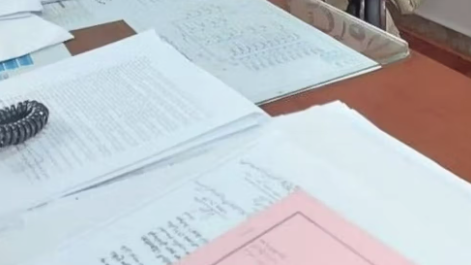
The Taliban’s commission to purge “people of bad character” from their ranks has launched a reassessment of clearance forms for its fighters in southeastern Afghanistan.

The region is considered a stronghold of the Haqqani network. This review follows a surge in ISIS attacks in Kabul and other provinces.

Sources told Afghanistan International that this process, overseen by the deputy governors of Khost, Paktia, Paktika, Logar, and Ghazni provinces, began last week.

According to informed sources, “All those who filled out clearance forms but did not participate in combat will be dismissed from their positions. Additionally, individuals recruited through family connections will be removed.”

The commission to purge “people of bad character” from the Taliban ranks has compiled a list of all Taliban fighters in these provinces and is requiring commanders to identify those who were recruited through personal connections.

A source in Khost province stated that the commission, led by the deputy governor, is holding interviews and assessments to validate the fighters’ credentials.

Sources added that in Khost, former governor and senior Haqqani network member Mohammad Nabi Omari had issued clearance forms based on tribal and ethnic affiliations for many senior fighters. These forms are now being reassessed for validity.

According to one source, “It is likely that many Taliban clearance forms in Paktia will be revoked.”

Since taking power, the Taliban has sought to appoint its fighters and commanders to government positions, leading to an administration dominated by its members.

The Taliban’s purge Commission was established by order of the group’s Prime Minister and consists of members from the ministries of defence, intelligence, and interior. It is centrally overseen by the Defence Minister, while at the provincial level, deputy governors are responsible for its implementation.

At the provincial level, the commission includes the deputy governor, police chief, military corps commander, a mufti or representative from the military court, and the head of the religious scholars’ council. These officials are tasked with evaluating clearance forms and deciding whether to approve or revoke them.

The purge commission has restarted its internal vetting process in an area considered the primary stronghold of Sirajuddin Haqqani, the Taliban’s Interior Minister.

Haqqani recently left Afghanistan due to ongoing disputes with the Taliban’s supreme leader, Mullah Hibatullah Akhundzada, and is currently residing in Dubai.

Most Viewed

Taliban Order Cut To Residential Fibre-Optic Internet In Kabul, Say Sources
1

Taliban Order Cut To Residential Fibre-Optic Internet In Kabul, Say Sources

2

Taliban Leader Adviser Arrested In Kandahar Over Alleged Bribery

3

Taliban Besieged TOLOnews Offices After Journalist Detentions, Say Sources

4

Taliban Urges Turkmenistan To Implement 24-Hour Operations At Torghundi Port

5

Exiled Media Watchdog Urges UN, EU To Seek Release Of Journalists Held By Taliban

•
•
•

More Stories

Pakistan To Launch Second Phase Of Afghan Refugee Deportations

Feb 26, 2025, 10:16 GMT+0

Pakistani media report that the government is set to initiate the second phase of deporting undocumented Afghan refugees, placing at least 800,000 people at risk of expulsion.

According to official documents, Pakistan’s Interior Ministry has set a deadline of 31 March 2025 for their departure. Currently, approximately 800,000 Afghan refugees holding temporary residency cards, known as Afghan Citizen Cards (ACCs), reside in Pakistan.

Reports indicate that Afghans awaiting resettlement in a third country have been granted an extension until 30 June 2025. However, those who fail to secure a visa by September 2025 will be classified as illegal immigrants and face deportation.

Additionally, Afghan refugees waiting for visas beyond 31 March will no longer be allowed to stay in Islamabad and will be relocated to other cities before being sent back to Afghanistan.

To ensure enforcement, the Pakistani Prime Minister’s Office has directed security agencies to submit reports every 15 days.

Despite international appeals, Pakistan remains firm on its deportation policy. Relations with the Taliban have deteriorated, and Islamabad previously launched a large-scale repatriation programme, citing security concerns and the rising number of undocumented migrants.

The United Nations and several Western nations have urged Pakistan to halt the deportations, with analysts suggesting that Islamabad is using the issue to pressure the Taliban.

Thousands of Afghan refugees remain stranded, awaiting resettlement in third countries. However, global crises—including the war in Ukraine and tensions in the Middle East—have shifted international attention away from their plight.

Afghan Jihadi Leader Abdul Rab Rasul Sayyaf Visits Iran For High-Level Talks

Feb 25, 2025, 17:30 GMT+0

Multiple sources have confirmed to Afghanistan International that Abdul Rab Rasul Sayyaf, a prominent jihadi leader, has travelled to Iran for discussions with Iranian officials on the situation in Afghanistan. He is also holding meetings with Afghan factions based in Iran.

A former Afghan government official, speaking to Afghanistan International, stated that Sayyaf’s visit was made at the invitation of the Iranian government. Sayyaf’s son, Habib-ur-Rahman Sayyaf, also confirmed that his father travelled from India to Iran.

Sayyaf, a key member of the National Resistance Council for the Salvation of Afghanistan, has been residing in Turkiye since the fall of the previous Afghan government. His visit to Iran follows recent meetings between commanders of Iran’s Islamic Revolutionary Guard Corps (IRGC) and Iranian diplomats with members of the National Resistance Council in Turkiye.

Three credible sources told Afghanistan International that during these meetings, Iranian officials, including Seyed Hossein Mousavi, Nasser Ghazalipour, and Mohammad Ebrahim Taherian, advised Afghan opposition leaders—such as Abdul Rashid Dostum, Mohammad Mohaqiq, and Taj Mohammad Jahid—to avoid aligning with Pakistan.

Before these discussions, a high-level delegation from Pakistan’s intelligence agency (ISI) had also met with members of the National Resistance Council and jihadi figures in Istanbul. Sources confirmed that Salahuddin Rabbani, Abdul Rashid Dostum, Abdul Rab Rasul Sayyaf, Mohammad Mohaqiq, and Karim Khalili were among those who participated in the meetings.

According to sources, Iranian officials urged Taliban opposition leaders to distance themselves from Pakistan.

Malnourished Afghan Children Lack Access To Life-Saving Treatment

Feb 25, 2025, 16:19 GMT+0

The United Nations Children’s Fund (UNICEF) has reported that in 2024, more than 600,000 children in Afghanistan received emergency nutritional support. However, the organisation warned that many malnourished children in the country still lack access to life-saving care.

On Tuesday, UNICEF stated on the social media platform X that malnutrition is both preventable and treatable, yet a significant number of Afghan children remain deprived of essential treatment.

The agency also highlighted its collaboration with the European Union last year, which enabled the provision of nutritional services to hundreds of thousands of Afghan children.

Malnutrition remains a severe crisis in Afghanistan, particularly among children. Widespread poverty, coupled with limited access to healthcare and adequate nutrition, continues to hinder both treatment and prevention efforts.

The United Nations Office for the Coordination of Humanitarian Affairs (OCHA) has predicted that the number of malnourished children in Afghanistan will rise to 3.5 million by 2025. UN reports indicate that over the past five years, approximately three million children under the age of five have suffered from malnutrition in the country.

U.S. Continues Weekly Fund Transfers To Afghanistan, Says Former SIGAR Chief

Feb 25, 2025, 13:58 GMT+0

John Sopko, the former U.S. Special Inspector General for Afghanistan Reconstruction (SIGAR), stated that the United States has spent over $21 billion on Afghanistan since the Taliban’s return to power.

Despite the suspension of U.S. foreign aid, Sopko revealed that the U.S. continues to send money to Afghanistan on a weekly basis. According to a SIGAR report from August 2024, Washington has provided approximately $21 billion in aid to Afghanistan since 2021, primarily for humanitarian assistance, refugee relocation and resettlement, and the repayment of Afghanistan’s foreign assets.

Speaking at the Herat Security Dialogue conference, Sopko noted that around $3.7 billion has been allocated to humanitarian matters in Afghanistan. He warned that if the Taliban does not alter its stance on women’s rights, education, and human rights, the U.S. may halt these funds entirely and divert $4 billion from Afghanistan’s trust fund in Switzerland to compensate victims of the September 11, 2001 attacks.

In 2024, SIGAR reported that out of the $20.71 billion disbursed since August 2021, $2.97 billion was allocated for humanitarian and development assistance. This included humanitarian aid ($2.029 billion), development projects ($458 million), agency operations ($316 million), and security funding ($100 million). However, SIGAR did not clarify the specifics of the “agency operations” and “security” expenditures in Afghanistan.

According to SIGAR’s findings, these funds have been channelled through U.S. international cooperation initiatives and United Nations agencies from October 2021 to June 2024.

Sopko has previously stated that a significant portion of U.S. financial aid has ended up in Taliban hands. In an interview with Fox Business on 6 February, he expressed concerns over the lack of oversight regarding U.S. financial assistance transferred through organisations such as the United Nations and the World Food Programme.

Additionally, Sopko has recommended that Congress terminate SIGAR operations after 30 September 2025 due to the reduction of U.S. aid to Afghanistan.

At the Herat Security Dialogue Conference, Sopko criticised the misrepresentation of Afghanistan’s situation by U.S. military and diplomatic officials, claiming that many had deliberately misled the public to secure promotions and increased funding.

He asserted that corruption within the former Afghan government, coupled with a lack of motivation in the fight against the Taliban, contributed to the collapse of the republic order in Afghanistan. However, he also highlighted that U.S. policies and decisions played a crucial role in Afghanistan’s downfall.

According to Sopko, American generals, diplomats, and contractors had been distorting the truth about their performance and the actual conditions in Afghanistan, prioritising their own career advancement over transparency.

Sopko warned that Afghanistan must prepare for a future with significantly reduced international aid. He emphasised that the new U.S. administration does not consider Afghanistan a strategic priority, leading to a decline in financial assistance—a trend he expects to continue.

Torkham Border Closed For Fourth Day As Taliban-Pakistan Talks Fail

Feb 25, 2025, 12:37 GMT+0

The Torkham border crossing has remained closed for the fourth consecutive day, with negotiations between Taliban border officials and Pakistan failing to yield any results.

Sources at Torkham confirmed to Afghanistan International on Monday that discussions between senior officials from both sides regarding the reopening of the vital crossing ended without resolution.

Meanwhile, the Afghanistan-Pakistan Joint Chamber of Commerce and Industry issued a statement on Monday, warning that the prolonged closure has left thousands of passengers and approximately 5,000 cargo trucks stranded on both sides of the border.

Zia-ul-Haq Sarhadi, deputy of the chamber, stated that many of the stranded trucks are carrying perishable goods such as meat, poultry, vegetables, and fresh fruits, which risk spoilage if the border is not reopened immediately. Officials from the chamber have urged both Pakistan and the Taliban to resolve the issue swiftly.

Pakistan closed the Torkham border crossing late on Friday night. Pakistani media, citing a government official at Torkham, reported that tensions escalated after Pakistan’s border forces installed a signboard at the crossing, known as “Pakistan Gate.” In response, Taliban border forces constructed a security post, leading to clashes between the two sides and the subsequent closure of the border.

Torkham is the most critical border crossing between Afghanistan and Pakistan, facilitating the majority of trade between the two nations. Since the Taliban’s return to power, the crossing has been closed multiple times due to border clashes, severely impacting traders—particularly Afghan exporters of fresh produce to Pakistan—who suffer significant financial losses with each closure.