140 Afghan Migrants Stranded In Rawalpindi As Torkham Border Remains Closed
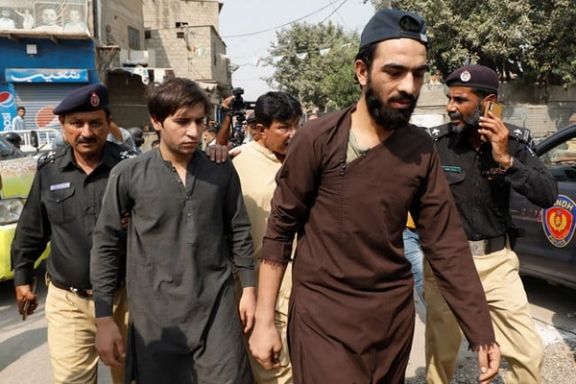
The Pakistani newspaper Dawn reported on Friday that police in Rawalpindi have arrested around 820 Afghan migrants over the past week.

The Pakistani newspaper Dawn reported on Friday that police in Rawalpindi have arrested around 820 Afghan migrants over the past week.
According to the report, 114 have been deported, while 140 remain detained at the Haji Camp due to the ongoing closure of the Torkham border crossing.
The newspaper noted that deportations have been halted in recent days as the border remains closed. The Torkham crossing was shut down 21 days ago following border tensions between Pakistan and the Taliban.
Meanwhile, Pakistan’s Ministry of Interior has tightened security at Haji Camp, where Afghan migrants are held. The increased security comes as only 16 days remain before the forced expulsion of undocumented Afghan migrants begins.
According to an official statement from the Pakistani government, the deportation of undocumented Afghan migrants, including those with Afghan Citizen Cards (ACC), will begin on 1 April 2025. Pakistan has also ordered Afghan migrants with active immigration cases for Western countries and those holding Proof of Registration (POR) cards to leave Islamabad and Rawalpindi and relocate to other cities.
On Thursday, Pakistan’s Foreign Ministry spokesperson, Shafqat Ali Khan, once again blamed the Taliban for the border closure. He stated that, despite Pakistan’s warnings, the Taliban attempted to build a checkpoint within Pakistani territory.

On Thursday, Sayara Dashty, head of the Fahim Dashty Foundation, received the King Charles III Coronation Medal from the Canadian Parliament.
The medal was presented by Ali Ehsassi, the Canadian Parliament’s Chairman of the Standing Committee on Foreign Affairs and International Development, in a special ceremony.
Ehsassi shared on X: “Honoured to have presented the King Charles III Coronation Medal to outstanding individuals of distinction who have impacted our community, country, and beyond.” Sayara Dashty told Afghanistan International that the Canadian Parliament awarded this medal to 25 individuals.
The Canadian government has announced that a total of 30,000 people will receive the medal to mark King Charles III’s coronation. Designed by the Canadian government, the medal was introduced three days before the coronation ceremony on 6 May 2023. According to the Governor General of Canada’s official website, it will be awarded to “deserving individuals” whose achievements have brought honour and recognition to Canada, both nationally and internationally.
On Friday, the Fahim Dashty Foundation confirmed that Sayara Dashty received the medal for her contributions to the media sector, her advocacy for press freedom, and her work in defending women’s rights in Afghanistan.
Fahim Dashty, Sayara’s husband, was a well-known Afghan journalist who was killed in Panjshir after the Taliban took over Afghanistan in September 2021. After the fall of Kabul, he joined the National Resistance Front led by Ahmad Massoud as its spokesperson. Following his death, Sayara Dashty established the Fahim Dashty Foundation to support Afghan media and journalists.

The Taliban’s Security and Clearance Commission, led by Defence Minister Mullah Yaqub, held a meeting in Kandahar. According to the commission, the discussions focused on security measures, drug trafficking, and border security. However, no specific decisions were disclosed.
Key attendees included Ibrahim Sadr, Deputy Minister of Interior, Nazir Ahmad Nasir, a representative from the Taliban leader’s office, and Mullah Shirin Akhund, the Taliban governor of Kandahar. Despite the presence of senior officials, Interior Minister Sirajuddin Haqqani was notably absent. Instead, Ibrahim Sadr represented the Interior Ministry.
Sadr, a close ally of Taliban leader Hibatullah Akhundzada, is known for his secrecy and influence. He has rarely appeared in public and has previously stressed absolute obedience to Akhundzada, calling it a “blessing” for the group’s rule.
More than a week ago, Taliban spokesperson Zabihullah Mujahid told Ariana News that Haqqani had returned to Kabul after medical treatment and was resting. However, conflicting reports suggest he has not re-entered Afghanistan.
On January 21, the Taliban announced that Haqqani and Abdul Haq Wasiq, the group’s intelligence chief, had travelled to the UAE. Haqqani later visited Saudi Arabia for Hajj pilgrims but did not return to Kabul.
On March 3, some sources claimed Haqqani travelled from Dubai to Khost and was avoiding Kabul. Others suggested he remained in Dubai. Two senior Taliban sources had earlier stated that Haqqani was unhappy with Akhundzada’s unilateral decisions.
The Taliban’s security meeting took place as tensions with Pakistan escalated. Recent border clashes led to the closure of the Torkham crossing.
Fighting between Taliban border forces and Pakistani troops began on Sunday night, March 2, and continued until Monday morning. After a brief pause, clashes resumed later that night.
The Taliban’s Interior Ministry confirmed that one of its members was killed and two others were wounded at the Torkham crossing. Independent sources reported at least three Taliban fatalities.

Pakistan’s Prime Minister Shehbaz Sharif has blamed the country’s ongoing security challenges on past alignment and support by some Pakistani officials for the Afghan Taliban.
He made these remarks three days after the hostage crisis on the Jaffar Express train, during a meeting with officials in Balochistan.
According to Pakistani news network Aaj News, Sharif criticised those seeking to maintain ties with the Taliban, stating that their actions had contributed to the country’s security crisis. He said, “We are facing these challenges today because some people aligned themselves with the Taliban.”
Without naming individuals, he accused them of releasing thousands of militants from prison. Sharif also warned of “enemies disguised as friends” who, he claimed, are working against Pakistan’s interests.
He indirectly accused India, Pakistan’s eastern neighbour, of leading a negative propaganda campaign against the country. “The nation gave 80,000 lives to defeat terrorism. Our forces had crushed this menace. So why is it rising again?” he questioned.
During the meeting, held on Thursday in Quetta, political leaders, military officials, and representatives of Pakistani parties discussed the security situation.
On Tuesday, dozens of Baloch separatist militants bombed a railway track, halting the Jaffar Express train carrying over 400 passengers. The attack occurred in a remote mountainous region near the Afghanistan-Iran border. The militants took dozens of passengers hostage.
On Wednesday, the Pakistan Army announced that its snipers had eliminated suicide bombers among the attackers. Military officials reported that 33 Baloch militants were killed in the operation and that no hostages were harmed. However, the army confirmed that 21 passengers had been executed by the militants before security forces intervened.
Earlier reports from Afghanistan International, based on Pakistani security sources, indicated that intercepted communications between the attackers and their commanders suggested links to networks in Afghanistan, India, and Europe.
Ahmed Sharif Chaudhry, spokesperson for the Pakistan Army, claimed that the attack was planned and coordinated by Baloch separatists based in Afghanistan. He alleged that the attackers used satellite phones to communicate with their commanders during the incident.
Three days after the attack, the Taliban’s Foreign Ministry denied any ties to the Baloch Liberation Army. In a statement, the ministry dismissed Pakistan’s claims as “baseless” and insisted that no Baloch separatists operate from Afghan territory.
The Taliban urged Pakistan to focus on addressing its internal security issues rather than making “irresponsible” allegations.

As Iran continues efforts to secure its water rights from the Taliban, the Group’s Ministry of Energy and Water has announced that Tehran is cooperating with the Taliban on water infrastructure projects.
According to the ministry’s statement, Mullah Abdul Latif Mansour, the Taliban’s Minister of Energy and Water, met with Alireza Bikdeli, Iran’s acting ambassador in Kabul, to discuss water management and cooperation.
During the meeting, the Iranian envoy stated that his country is determined to assist Afghanistan in water and energy development projects. The Taliban ministry also emphasised that both sides reaffirmed their commitment to advancing water and energy projects in Afghanistan.
Mansour welcomed increased cooperation with neighbouring countries, particularly in economic and development initiatives. The officials also discussed drought and water shortages, which remain pressing concerns in the region.
Since the Taliban regained control of Afghanistan, Iran has repeatedly urged them to restore the flow of the Helmand River to Iran. The Taliban, however, insist that the reduction in water flow is due to natural drought conditions rather than any deliberate obstruction.
In January, Iran’s Foreign Ministry urged the Taliban to ensure the continued flow of water and remove any obstacles. A spokesperson for the ministry said that Iran had conveyed strong objections to the Taliban regarding water restrictions and diversions.

The Taliban’s Ministry of Foreign Affairs has denied claims linking the group to the Baloch Liberation Army (BLA) attack on a passenger train in Balochistan, Pakistan.
In a statement, the Taliban rejected allegations made by the Pakistani Army spokesperson, calling them "baseless".
On Thursday, March 13, the Taliban responded to the attack on the Jaffar Express, where dozens of passengers were taken hostage. The group stated, "We categorically reject the baseless claim made by the Pakistani Army spokesperson" regarding the Taliban's connection to the attack on the passenger train in Balochistan.
The Taliban urged Pakistan to focus on its internal security issues rather than making "irresponsible" accusations. It also stressed that no members of the Baloch separatist militia were present in Afghanistan and denied any ties with the group. The statement expressed regret over the loss of innocent lives, saying, "Sacrificing civilians for political goals is unjustifiable."
Earlier, Pakistan’s Army spokesperson, Ahmed Sharif Choudhry, claimed that the attack was planned by Baloch separatists operating from Afghanistan. He alleged that the attackers used satellite phones to communicate with their commanders during the incident.
The attack took place on Tuesday, when Baloch separatist militants targeted the Jaffar Express, a passenger train carrying over 400 people. The militants detonated explosives to stop the train, which was travelling through a mountainous region near the Afghanistan-Iran border. They then took hostages.
On Wednesday, March 12, the Pakistan Army reported that security forces had eliminated the suicide bombers and killed 33 Baloch militants during a special forces operation. The Army claimed no hostages were harmed, but confirmed that 21 passengers had already been killed before the operation began.
Earlier reports by Afghanistan International, citing Pakistani security agencies, indicated that intercepted communications suggested links between the attackers and networks in Afghanistan, India, and Europe.
The attack on the railway and hostage-taking in Balochistan has been met with international condemnation. Many countries have condemned the targeting of civilians. The Baloch Liberation Army, one of several armed separatist groups in Balochistan, has been engaged in a long-running insurgency against the Pakistani government in the mineral-rich region bordering Afghanistan and Iran.
