Iran Transfers 149 Afghan Prisoners To Taliban For Sentence Completion
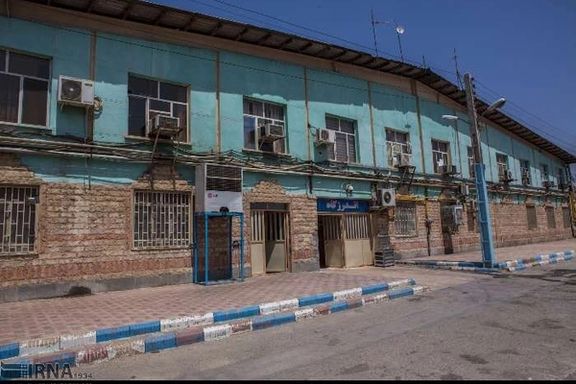
Askar Jalalian, Iran’s Deputy Minister of Justice for Human Rights and International Affairs, announced that 149 Afghan prisoners have been transferred from Iran to Afghanistan.

Askar Jalalian, Iran’s Deputy Minister of Justice for Human Rights and International Affairs, announced that 149 Afghan prisoners have been transferred from Iran to Afghanistan.
He stated on Wednesday, March 19, that these prisoners were handed over to the Taliban to serve the remainder of their sentences.
According to Iran’s IRNA news agency, the transferred prisoners had been incarcerated in the provinces of Sistan and Baluchestan, Semnan, Yazd, and Hormozgan. The report stated that the transfer was conducted in accordance with legal procedures and with the cooperation of Iran’s judiciary, prison authorities, provincial courts, and prosecution offices.
Jalalian noted that most of the transferred prisoners had been convicted of drug-related offences. He also announced that Iran’s Ministry of Justice is committed to continuing the transfer of convicted individuals, particularly citizens of Afghanistan, Malaysia, Pakistan, and Türkiye, in future phases.
Earlier, in February 2024, Iranian officials reported that over the past year, Iran had handed over 1,136 Afghan prisoners to the Taliban. In January 2025, the Taliban stated that Iran was preparing to transfer an additional 1,500 Afghan prisoners.
Previous transfers of Afghan prisoners to the Taliban have raised concerns that some individuals may be opposition members and could face human rights violations.


Human Rights Watch (HRW) has warned that Afghan refugees deported from Pakistan are at risk of harassment by the Taliban and face severe economic hardships.
The organisation described Afghanistan’s human rights situation as dire and urged Pakistan to stop expelling Afghan refugees.
In a statement on Wednesday, 19 March, HRW said that deported refugees returning to Afghanistan are struggling with unemployment, a failing healthcare system, and declining international aid. The organisation also called on the Taliban to stop mistreating returning refugees.
HRW stressed that no government should forcibly return refugees to places where they could face persecution. It accused Pakistani authorities of using “abusive tactics” and increasing pressure to expel Afghan refugees.
Elaine Pearson, HRW’s Asia director, called on Pakistani officials to “immediately stop coercing Afghans to return home” and allow those facing expulsion to seek protection. She urged Pakistan to grant refugees access to support and legal protection.
Pearson also urged the Taliban to avoid reprisals against returning Afghans and to reverse their restrictive policies against women and girls.
In late January, the Pakistani government announced that undocumented Afghan refugees must leave the country by the end of March. It also ordered refugees holding Proof of Registration (PoR) cards to vacate Islamabad and Rawalpindi by the end of June. Pakistan warned that failure to comply would lead to forced deportation.
HRW reported that since Pakistan intensified its deportation campaign in November 2024, 70 percent of returnees have been women and children. The organisation noted that returning girls have been deprived of education, while women face growing restrictions under Taliban rule.

Pakistani authorities have launched a screening process to verify security personnel employed in private housing schemes in Rawalpindi.
The initiative, led by the Divisional Intelligence Committee (DIC), aims to ensure that no Afghan nationals, criminals, or individuals with links to terrorism are working in security roles.
According to Express Tribune, Rawalpindi security officials initiated the operation in response to a rise in terrorist incidents. The report states that intelligence officials in Rawalpindi have met with the owners of 79 private housing complexes to discuss the issue.
Rawalpindi, located near Islamabad, is home to hundreds of thousands of Afghan refugees. Many have lived there for years and operate businesses in the city. Recently, Afghan refugees in Pakistan have faced increasing hardships, including arrests, police extortion, and forced deportations.
The Pakistani government has ordered Afghan refugees to leave Rawalpindi and Islamabad. Under the directive, refugees holding Proof of Registration (PoR) cards, Afghan Citizen Cards (ACC), UNHCR receipts, or documents from Western embassies must vacate these cities by 31 March.
Additionally, undocumented Afghan refugees and ACC cardholders have been instructed to leave Pakistan by the same deadline.

Abdul Jabbar Hikmat, the Taliban commissioner in Torkham, has confirmed that the border crossing will reopen on Wednesday, March 19, at 4:00 PM local time.
Earlier, sources told Afghanistan International that Taliban and Pakistani border officials had reached an agreement to resume movement.
Sources stated that both sides finalised the decision during a meeting on Wednesday. Security officials confirmed that Asim Kayani, the Pakistan Army commander in Khyber, led the Pakistani delegation, while Abdul Jabbar Hikmat headed the Taliban delegation.
The meeting followed two failed jirgas aimed at reopening the critical border crossing. Officials involved in the negotiations said the Taliban’s refusal to halt border post construction had been the main obstacle.
Pakistan initially shut the Torkham border on February 21 after a clash between Taliban and Pakistani border forces. The dispute was triggered by the Taliban’s construction of a border post and Pakistan’s installation of a road sign at the zero-point. In response, Pakistan sealed the crossing to both travelers and trade.
The closure has stranded thousands of passengers and caused significant financial losses to businesses. A Pakistani official told Express Tribune that the closure has cost Pakistan around $72 million. Meanwhile, the Afghanistan Chamber of Commerce reported that Afghan traders have suffered losses of approximately $66 million due to the prolonged shutdown.

Pakistan’s Defence Minister, Khawaja Asif, has warned that the country will take action against Pakistani militants operating inside Afghanistan. He stressed that Pakistan’s security and national interests would take precedence over diplomacy or alliances.
Speaking after a high-level security meeting, Asif stated that Pakistan would not hesitate to track and eliminate its enemies wherever necessary. He insisted that a lenient approach would compromise national security.
On Tuesday, senior security and political officials in Pakistan held an emergency meeting at Parliament House. They discussed growing security threats, particularly attacks by Tehreek-e-Taliban Pakistan (TTP) in Khyber Pakhtunkhwa and Baloch separatists in Balochistan. Following the meeting, Asif told Geo News that Pakistan was prepared to act against its enemies wherever they may be.
He accused the Afghan Taliban of failing to prevent TTP from using Afghan territory to launch attacks against Pakistan. He claimed that Taliban officials in Kabul and other centres of power were preoccupied with internal disputes, leaving Pakistan with no choice but to act independently.
Asif made it clear that Pakistan would not tolerate the presence of militant groups in Afghanistan. He stated that anyone arguing against pursuing these groups was acting against Pakistan’s national interests.
Former Prime Minister Imran Khan has repeatedly criticised the Pakistani government’s confrontational stance towards the Afghan Taliban. He recently argued that Afghanistan is not Pakistan’s enemy and should not be treated as such.
During Khan’s tenure, the Taliban regained power in Afghanistan, with his government playing a significant role in facilitating their return. However, tensions between Pakistan and the Taliban have since escalated, particularly over Islamabad’s accusations that Afghan soil is being used to shelter anti-Pakistan militants.

Afghan members of the Taliban-Pakistan Jirga have confirmed that the Taliban has not agreed to Pakistan’s demand to halt construction near the Torkham border. The crossing has now remained shut for over 25 days after two rounds of Jirga meetings failed to reach a resolution.
On Tuesday, Afghan Jirga members told Afghanistan International that the Taliban has not accepted Islamabad’s condition to stop building facilities near the border. Pakistani Jirga members had urged the Taliban to suspend construction to allow the reopening of the crossing. Afghan representatives stated that they had relayed Pakistan’s request to the Taliban, but no agreement has been reached.
One Afghan Jirga member said, “The Taliban governor only mentioned that he would consult with his leaders, but local Taliban officials do not agree on halting the construction.”
Meanwhile, Taliban-affiliated media outlets, including Hurriyat, reported that Pakistan’s main condition for reopening the border is stopping military facility construction on Afghan soil. Taliban officials have called this condition a violation of national and international principles, labelling it interference in Afghanistan’s internal affairs.
Syed Jawad Hussain Kazemi, head of Pakistan’s negotiating delegation, confirmed that discussions had taken place and they were now awaiting the Taliban’s response.
The Taliban has not officially commented on Pakistan’s demands. Islamabad closed the border due to the Taliban’s construction of checkpoints and other facilities. Since the closure, multiple clashes between Taliban forces and Pakistani border guards have been reported.