US Praises Qatar For Mediating American's Release From Taliban Custody
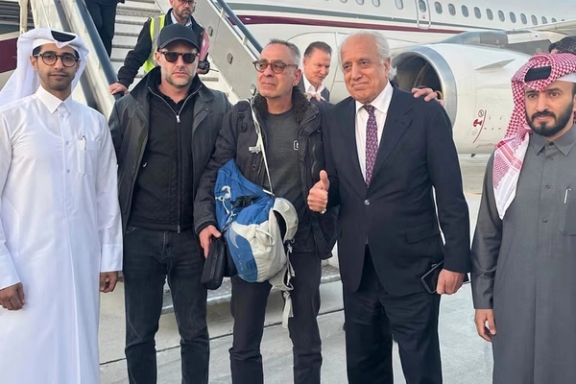
Qatar's Ministry of Foreign Affairs announced that US Secretary of State Marco Rubio thanked Qatar for facilitating the release of an American citizen held by the Taliban.

Qatar's Ministry of Foreign Affairs announced that US Secretary of State Marco Rubio thanked Qatar for facilitating the release of an American citizen held by the Taliban.
In a phone call with Qatar's Prime Minister and Foreign Minister, Sheikh Mohammed bin Abdulrahman bin Jassim Al Thani, Rubio praised Qatar's diplomatic efforts. The US State Department confirmed that George Glezmann was freed through Qatar's mediation.
On Monday, Taliban Foreign Minister Amir Khan Muttaqi also thanked Qatar for its role in improving relations between the Taliban and the United States. Muttaqi conveyed his gratitude during a meeting with Mirdef Al-Qashouti, Chargé d'Affaires of Qatar's embassy in Kabul.
The Taliban released George Glezmann last week after holding him captive for more than two years. His release followed a visit to Kabul by a US delegation led by Adam Boehler, Donald Trump's special envoy for hostage affairs, and Zalmay Khalilzad, former US envoy for Afghanistan peace talks. This was the first official US visit to Kabul since the Taliban returned to power in 2021.
Following Glezmann's release, the US State Department also removed Taliban Interior Minister Sirajuddin Haqqani and two other Haqqani network leaders from its rewards list.


Two Afghan LGBTQ+ activists have been detained by Taliban authorities at Kabul International Airport, according to human rights activist Nemat Sadat.
Sadat, executive director of Roshaniya, an organisation supporting the LGBTQ+ community, confirmed the detention in a statement on Tuesday. The activists were apprehended while attempting to board a flight to Tehran on Thursday, 20 March.
Maryam Ravish, an Afghan lesbian woman, and Abdul Ghafoor Sabery, a transgender Afghan, were stopped by Taliban intelligence officers as they prepared to board a Mahan Air flight. Parwen Hussaini, Ravish’s same-sex partner, was allowed to leave because she was accompanied by a male relative.
Sadat said the Taliban identified the activists by inspecting their mobile phones, subsequently preventing their departure. Another individual assisting the evacuation attempt was also detained.
Roshaniya stated it had spent more than $5,000 and several months planning to evacuate these three LGBTQ+ community members from Taliban-controlled Afghanistan.
Efforts by Roshaniya to secure the release of the detained activists through their families were unsuccessful, as their families refused to cooperate.
The organisation has received conflicting reports about Maryam Ravish’s condition. Some sources claim she remains in Taliban custody; neighbours report her release, and acquaintances say she has attempted suicide.
Neither the Taliban nor the activists’ families have publicly commented on the incident.

Following the US State Department’s removal of Sirajuddin Haqqani from its most-wanted list, the FBI has withdrawn the $10 million reward previously offered for his capture. However, Haqqani remains listed as a global terrorist on the FBI’s website.
Initially, the FBI offered a $5 million reward for information leading to Haqqani’s capture. After the Taliban retook Afghanistan in 2021, the reward increased to $10 million.
Sirajuddin Haqqani currently serves as the Taliban’s interior minister. He is widely regarded as the second-most powerful figure within the Taliban, after leader Hibatullah Akhundzada.
On Saturday, the US State Department removed Haqqani’s name from its Rewards for Justice programme. Despite this, the FBI had initially maintained the reward on its site before removing it entirely.
Haqqani is described by the FBI as a senior leader of the Haqqani Network with strong ties to al-Qaeda. He has been directly implicated in numerous terrorist attacks, including the deadly 2008 assault on a Kabul hotel that killed six people, including an American citizen.
The FBI also linked Haqqani to cross-border attacks on US and coalition forces, and the attempted assassination of former Afghan President Hamid Karzai in 2008.
The State Department confirmed to Afghanistan International on Monday that Haqqani and the Haqqani Network remain designated as terrorists. However, it stated that the reward for his capture has been withdrawn.

The US State Department confirmed to Afghanistan International on Monday that there is currently no bounty for the arrest of Taliban Interior Minister Sirajuddin Haqqani.
However, it clarified that Haqqani and the Haqqani Network remain designated as terrorists by the US government.
The removal includes Sirajuddin Haqqani and two other key Haqqani Network figures, Aziz Haqqani and Yahya Haqqani, from the US “Rewards for Justice” programme. Previously, this programme offered significant financial rewards for information leading to their capture.
Sources close to Haqqani earlier informed Afghanistan International about the removal of these bounties. Yet, Sirajuddin Haqqani continues to be listed as a “global terrorist” on the FBI and former State Department websites.
Despite this change, the State Department reaffirmed that Haqqani Network leaders remain on the Specially Designated Global Terrorists (SDGT) list. Additionally, the Haqqani Network itself continues to be classified as a Foreign Terrorist Organisation by the US.
The State Department explained that its policies and reward programmes are regularly reviewed and updated.
The Taliban recently responded positively to the decision. Last week, the group released a US citizen in what it called a “gesture of goodwill.”
Some analysts suggest the US decision represents a concession to the Haqqani faction, viewed by Western governments as a relatively pragmatic element within the Taliban.

Pakistan’s special envoy for Afghanistan, Mohammad Sadiq Khan, says Foreign Minister Ishaq Dar expressed satisfaction with his recent discussions in Kabul. Khan provided Dar with a detailed briefing after his three-day visit to Afghanistan, which began on Friday, 21 March.
During his visit, Khan met Taliban Foreign Minister Amir Khan Muttaqi, Trade Minister Nooruddin Azizi, and other senior officials. Khan reported discussing peace, security, economic cooperation, trade, and people-to-people ties with the Taliban.
The Pakistani envoy emphasised Islamabad’s commitment to ongoing engagement and mutually beneficial relations. He urged the Taliban to address security concerns to strengthen bilateral ties further.
Earlier, Pakistani newspaper Express Tribune reported that the primary issue during Khan’s talks was the activities of Tehreek-e-Taliban Pakistan (TTP). The Taliban reportedly admitted difficulty in controlling the TTP, particularly across border regions.
However, on Monday, Khan stated that both sides had agreed to increase high-level engagements to enhance bilateral cooperation. He added that discussions with the Taliban’s trade minister focused on improving economic exchanges, trade, and connectivity.
According to Khan, both sides agreed to maximise regional trade opportunities. Following the briefing, Foreign Minister Ishaq Dar instructed officials to consolidate relations further through increased high-level exchanges and greater trade and transit cooperation.

Unidentified armed men shot and killed Hasan Jabar Khel, a former Ministry of Interior officer, in the Shakardara district of Kabul, according to relatives who spoke to Afghanistan International.
The motive and identities of the perpetrators remain unclear, with his family asserting he had no known enemies.
Jabar Khel was abducted from his home in the Kululapushta area of Kabul on Saturday night by unknown individuals, his relatives said. His body, bearing bullet wounds to the chest, was discovered the following night in Shakardara district.
During the previous Afghan government, Jabar Khel held several roles within the Ministry of Interior, most recently serving as deputy commander of the security unit for the Kabul-Jalalabad highway. His father, General Asif Jabar Khel, a former senior official and commander of Kabul International Airport, now resides in Germany.
Originally from Qarghayi district in Laghman province, the 34-year-old officer had lived in Kabul for years. He was married with four children—two daughters and two sons, aged 13, 10, and 8. While his extended family fled Afghanistan, Jabar Khel chose to remain.
Since the Taliban’s takeover, former security personnel have faced escalating threats, with reports of killings and torture emerging across provinces like Paktika, Helmand, Nangarhar, Khost, Badakhshan, and Panjshir.
Despite Taliban leader Mullah Hibatullah’s proclamation of a general amnesty for ex-security forces, local commanders have reportedly defied the order, executing and torturing numerous former officers.
Taliban intelligence has also detained several ex-personnel, some of whom have died in custody from severe torture, sources say. Human rights organisations have voiced alarm over the worsening plight of former Afghan security members.
Tens of thousands of ex-security forces have fled to neighbouring countries like Iran and Pakistan, where many grapple with dire economic conditions. Others have undertaken perilous, illegal journeys to Europe and beyond, seeking refuge from Taliban persecution.
Reports suggest that former intelligence personnel, special forces, and other Republic-era security officials remain under tight Taliban surveillance. Taliban intelligence frequently summons ex-officers on various pretexts, subjecting them to pressure and conducting house searches, according to available information.