• العربية
  • پښتو
  • فارسی
Brand
  • Afghanistan
  • Sport
  • Markets
  • Afghanistan
  • Sport
  • Markets
  • Theme
  • Language
    • العربية
    • پښتو
    • فارسی
  • Afghanistan
  • Sport
  • Markets
All rights reserved for Volant Media UK Limited
volant media logo

Taliban Seeks Closer Diplomatic Ties With Qatar

Apr 30, 2025, 09:34 GMT+1

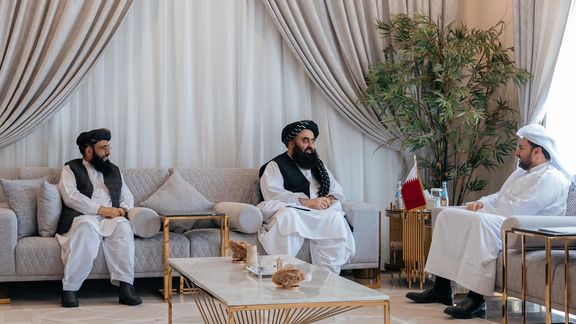
The Taliban’s acting Foreign Minister, Amir Khan Muttaqi, has called for strengthened diplomatic relations with Qatar during a meeting with the country’s Deputy Foreign Minister, Mohammed bin Abdulaziz Al-Khulaifi.

The meeting took place amid ongoing efforts by the Taliban to broaden international engagement, despite the group still lacking formal recognition from the majority of governments worldwide.

According to a statement issued on Tuesday by the Taliban’s Ministry of Foreign Affairs, the two officials discussed bilateral relations, regional developments, and the expansion of cooperation in areas such as culture, health, and sport.

The Taliban reported that Al-Khulaifi pledged greater cooperation and indicated that the Qatari government would help facilitate employment opportunities for Afghan workers in the Gulf state.

Muttaqi described the relationship between the Taliban and Qatar as “positive” and expressed hope for stronger diplomatic engagement in the near future. Al-Khulaifi likewise characterised the relationship as close, highlighting the need for broader collaboration across multiple sectors.

Both parties agreed to enhance institutional engagement and hold more frequent meetings to advance mutual cooperation, according to the statement.

Qatar has maintained close contact with the Taliban for years and played a pivotal role in their return to power in 2021. While Doha continues to operate its embassy in Kabul and hosts a Taliban political office in its capital, it has yet to formally recognise the Taliban government. Qatar’s support has remained limited to humanitarian aid.

The Taliban have repeatedly expressed interest in facilitating the deployment of Afghan workers to Gulf nations. However, countries in the region, which rely heavily on foreign labour, particularly from India and Pakistan have yet to respond favourably to these offers.

Most Viewed

Taliban Order Cut To Residential Fibre-Optic Internet In Kabul, Say Sources
1

Taliban Order Cut To Residential Fibre-Optic Internet In Kabul, Say Sources

2

Taliban Leader Adviser Arrested In Kandahar Over Alleged Bribery

3

Taliban Besieged TOLOnews Offices After Journalist Detentions, Say Sources

4

Taliban Urges Turkmenistan To Implement 24-Hour Operations At Torghundi Port

5

Exiled Media Watchdog Urges UN, EU To Seek Release Of Journalists Held By Taliban

•
•
•

More Stories

Afghans Face Worsening Rights Abuses Under Taliban Rule, Says Rights Group

Apr 29, 2025, 17:25 GMT+1

Afghanistan is experiencing a deepening human rights crisis under Taliban rule, according to Amnesty International’s annual report released on Tuesday.

The organisation warns that Afghan women and girls are enduring what it describes as crimes against humanity in the form of gender persecution.

The report highlights an alarming deterioration in civil liberties, noting that women and girls are being increasingly denied their rights to freedom of movement and expression. Access to healthcare has become more restricted, and education beyond grade six remains banned for girls.

Amnesty International also raised concerns about the continued targeting of the Shia Hazara community, primarily through attacks by the Islamic State (ISIS). The report accuses the Taliban administration of systematically excluding women and ethnic and religious minorities from political participation and from access to public and humanitarian services.

Criticising the United Nations and the wider international community, Amnesty said both have failed to address widespread impunity for past and ongoing crimes in Afghanistan.

Executions and Torture in Taliban Prisons

Amnesty’s report also details a worsening situation in Taliban-run prisons, where hundreds of Afghan detainees have reportedly been sentenced to death, often without fair trial guarantees.

Despite international concern over due process violations, the Taliban have resumed public executions, frequently carrying them out in stadiums and open spaces. Citing data from the United Nations Assistance Mission in Afghanistan (UNAMA), Amnesty noted the execution of three individuals in February and one in November last year, followed by four more executions across three provinces in April this year.

According to Amnesty, Taliban courts sentenced between 300 and 600 prisoners to death as of July last year. The report further warned that the group may resume stoning as a punishment for adultery, based on media reports from March.

The organisation estimates that approximately 20,000 people are currently held in Taliban prisons, including around 1,500 women many of whom are believed to be political prisoners. The report accuses the Taliban of subjecting detainees to torture, enforced disappearances, and other mistreatment.

Former government employees, human rights defenders, journalists, and critics are among those reportedly targeted. The report also condemns ongoing restrictions on the media, including arbitrary arrests of journalists and severe curbs on freedom of expression.

As of now, the Taliban administration has not issued a response to Amnesty International’s findings.
Taliban Flogs Four For Alleged Extramarital Affairs

Apr 29, 2025, 16:37 GMT+1

Taliban judicial authorities have reported that four individuals including two in Parwan province and two in Nangarhar province have been publicly flogged over allegations of extramarital relations.

According to Taliban officials, each of the men and women received 39 lashes in public. In separate statements issued on Tuesday, 29 April, the Taliban’s Supreme Court confirmed the corporal punishment and imprisonment sentences handed down to the accused.

The court stated that a man and a woman in the Sayed Khel district of Parwan were each sentenced to 39 lashes and two years’ imprisonment for what was described as “sexual relations outside of marriage.”

In a separate case, the group reported that local Taliban authorities in Deh Bala district of Nangarhar province administered a similar punishment to another man and woman, also accused of engaging in extramarital relations.

This follows a separate incident on Monday, when the Taliban sentenced a man and a woman in Gosfandi district of Sar-e Pol province to 25 and 29 lashes respectively, along with one to two years’ imprisonment on similar charges.

Despite widespread international condemnation, the Taliban has continued to enforce corporal punishment across Afghanistan since returning to power nearly four years ago. In a recent statement, the group’s Supreme Court also revealed that four individuals were executed in a single day across three different cities.

Taliban Temporarily Shuts Down Rah-e-Farda TV

Apr 29, 2025, 15:07 GMT+1

The Taliban’s Ministry of Information and Culture has announced the temporary closure of the Rah-e-Farda radio and television network, citing repeated complaints from staff and journalists over unpaid salaries.

The outlet is owned by Mohammad Mohaqiq, a prominent former jihadi leader and political figure.

According to the ministry, operations at Rah-e-Farda will remain suspended pending a final court decision. The ministry’s statement alleges that the network’s management failed to pay staff salaries and benefits, prompting multiple complaints to the Media Complaints and Violations Commission.

The commission reportedly summoned Rah-e-Farda’s leadership on several occasions, offering recommendations to resolve the wage dispute. However, the ministry claims the network’s officials ignored the complaints and, in some cases, allegedly threatened staff members.

As a result, the case has been referred to the judiciary. “In accordance with media laws and regulations, the network’s activities have been suspended until a court verdict is issued,” the ministry said in its statement.

Founded in 2007, Rah-e-Farda is among several private Afghan media outlets affiliated with former government officials and political factions. The network has historically covered activities related to the People's Islamic Unity Party of Afghanistan, as well as meetings and public appearances by Mohammad Mohaqiq. It has also been known for its critical reporting on the Taliban.

This is not the first time Rah-e-Farda has faced pressure under Taliban rule. In 2022, the network was reportedly shut down over unpaid frequency taxes and outstanding debts, though it later resumed broadcasting.

Since the Taliban’s return to power in August 2021, dozens of private media outlets across Afghanistan have been forced to shut down due to escalating restrictions, financial pressures, and threats against journalists. The crackdown has led many media professionals to flee the country, contributing to a sharp decline in press freedom.

Azerbaijan Security Chief Urges Stronger Global Support For Stability In Afghanistan

Apr 29, 2025, 13:14 GMT+1

Ali Naghiyev, Head of Azerbaijan’s State Security Service, has stated that Afghanistan is in urgent need of broad international support, and affirmed that Baku fully backs global efforts to ensure stability and security in the country.

Speaking at the international conference titled “Afghanistan: Regional Connectivity, Security, and Development” held in Baku, Naghiyev emphasised the necessity for the international community to intensify efforts to combat terrorism and drug trafficking in Afghanistan.

According to a statement released on Tuesday by the Azerbaijani State Security Service, the conference was hosted by the Service and brought together representatives from the intelligence and security agencies of 20 countries.

During his address, Naghiyev stressed that the global community must provide Afghanistan with comprehensive support to tackle transnational organised crime, including international terrorism, drug trafficking, and illegal migration.

Citing a report from AzerNews, Naghiyev also underlined Afghanistan's critical role within the international system and the pressing need to achieve lasting peace in the country. He expressed confidence that regional states would engage in coordinated and joint efforts towards this objective.

Representatives from other nations reportedly described the conference as a valuable platform to take concrete steps toward ensuring peace and security in Afghanistan.

It remains unclear whether any Taliban officials were present at the conference. As of now, the group has not issued an official statement regarding the event.

Afghan-India Trade Reached $890 Million In Past Year, Says Taliban

Apr 29, 2025, 11:38 GMT+1

The Taliban’s Ministry of Industry and Commerce has announced that the total trade volume between Afghanistan and India in the solar year 1403 (March 2024 – March 2025) reached $890 million.

According to Abdul Salam Jawad, spokesperson for the ministry, Afghanistan exported goods worth $627 million to India, while imports from India totalled $263 million. Jawad shared the figures in a video message published on the social media platform X on Tuesday.

Key Afghan exports to India included dried figs, saffron, raisins, cumin, and almonds, he said. Over the same period, Afghanistan imported sugar, raw materials for industrial companies, cotton textiles, vehicle parts, machinery, and various other goods from India.

Previously, Khan Jan Alokozay, a member of the Afghanistan Chamber of Commerce and Investment, had stated that Afghan exports to India were valued at $500 million last year, indicating a significant rise in trade activity.

According to India’s Ministry of Commerce, there have been notable shifts in trade patterns with Afghanistan since the Taliban’s return to power in August 2021. India’s imports from Afghanistan have increased, while its exports to the country have declined.

This development comes amid ongoing regional tensions that led to the closure of the Wagah-Attari border crossing—a key trade route between Afghanistan and India. The disruption of Afghan exports via Pakistan has reportedly caused the price of dried fruits in Indian markets to surge by up to 20 percent.