Taliban Flogs Man In Paktika Over Counterfeit Currency Charges
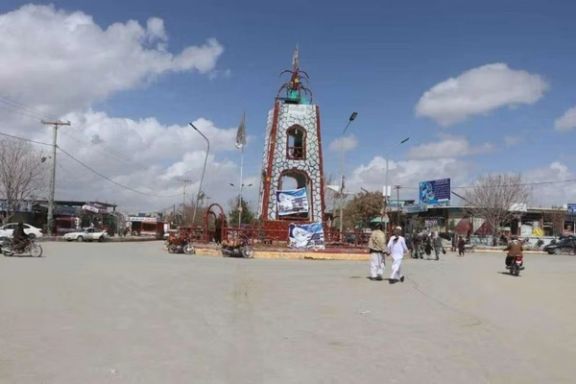
The Taliban’s Supreme Court announced on Tuesday that an individual in Paktika province has been flogged on charges of using counterfeit currency.
The Taliban’s Supreme Court announced on Tuesday that an individual in Paktika province has been flogged on charges of using counterfeit currency.
According to the statement, the group’s primary court in the Urgun district sentenced the man to 16 months in prison and 16 lashes. The sentence was reportedly carried out on Sunday, 4 May.
The Taliban’s Supreme Court regularly reports the use of corporal punishment, with such actions taking place on an almost daily basis.
International human rights organisations, including the United Nations, have repeatedly urged the Taliban to end the practice of corporal punishment, citing serious concerns over due process and the lack of access to fair legal representation.
Critics argue that the Taliban’s judicial system fails to meet international legal standards and often denies the accused basic rights, including access to a defence lawyer.

The Taliban’s Ministry of Refugees has reported that over 144000 Afghan migrants have returned to the country from Pakistan, Iran, and Türkiye since the beginning of April.
According to Abdul Mutalib Haqqani, spokesperson for the Ministry, more than 3000 of the returnees were prisoners released from various jails in Pakistan. These individuals re-entered Afghanistan through the Torkham and Spin Boldak border crossings.
Haqqani stated on the group’s state television that the Ministry has arranged essential support and transportation to assist returnees in reaching their original places of residence.
To accommodate the influx, the Ministry announced the allocation of over 60 residential settlements across the country for the returnees.
Afghan migrants residing in neighbouring countries including Iran, Pakistan, Türkiye, and Tajikistan are reportedly facing increasing pressure.
In Pakistan, authorities have intensified crackdowns on undocumented migrants and are resolute in their efforts to expel them. Conditions for asylum seekers who had previously fled Taliban rule have also deteriorated, with harsher living circumstances imposed by host countries.
The Taliban administration has imposed a ban on the publication and broadcast of images of living beings in local media across Panjshir province, in line with the group’s interpretation of Islamic law.
The Directorate of Information and Culture in Panjshir announced that the provincial governor, Mohammad Agha Hakim, has instructed all media and cultural institutions to fully enforce the Taliban’s “Propagation of Virtue and Prevention of Vice” regulations.
According to an official statement, Hakim made the directive during a session focused on interpreting the group’s virtue law and the decrees of its supreme leader. During the event, the formation of virtue enforcement committees in each district of Panjshir was also announced.
The Afghanistan Journalists Center (AFJC) has previously reported that similar bans on the broadcast of images of living beings have already been enforced in more than 15 provinces, including Kandahar, Takhar, Badghis, Helmand, Nangarhar, Nuristan, Farah, Nimruz, Badakhshan, Baghlan, Jowzjan, Zabul, Parwan, Kunduz, Bamiyan, and Daikundi.
Media watchdog groups have raised alarms over the impact of such restrictions, warning that these measures severely curtail journalistic freedom and the public’s right to access visual information.
The Taliban’s Ministry for the Propagation of Virtue and Prevention of Vice confirmed last year that its so-called virtue law had been formally ratified. Article 17 of the law specifically prohibits both the photographing and broadcast of images of living creatures. It grants enforcement officials the authority to monitor and prevent the dissemination of such images in the media.
The legislation has drawn widespread criticism both domestically and internationally for its impact on freedom of expression and access to information.
Since returning to power in 2021, the Taliban have imposed sweeping restrictions on the Afghan media, significantly limiting press freedom and instituting broad censorship policies throughout the country.
Trade between Iran and Afghanistan has grown significantly since the Taliban’s return to power, according to Mahmoud Siadat, head of the Iran-Afghanistan Joint Chamber of Commerce.
He attributes the increase to a notable decline in foreign interference in Afghanistan’s internal affairs.
Speaking to local media, Siadat stated that prior to the Taliban’s takeover in August 2021, foreign powers had hampered bilateral trade. However, with the group now in full control, he said many of those obstacles have dissipated.
“If the Taliban gain formal recognition from the international community, trade between the two countries could potentially reach $10 billion annually,” Siadat predicted.
He also cast doubt on recent claims by the Taliban’s Ministry of Commerce that bilateral trade has already reached $3 billion. Siadat called the figure inaccurate and inconsistent with data from Iranian customs authorities, which put the current trade volume at approximately $2.3 billion.
“There may be regulations in Afghanistan that affect the accuracy of the reported figures,” he said.
Siadat highlighted the role of the estimated three million Afghan migrants residing in Iran, noting that their presence has driven up domestic consumption of Iranian products. “Afghan migrants in Iran have developed a taste for Iranian goods, driving up demand,” he explained.
While he acknowledged that trade has generally improved under Taliban rule, Siadat also warned that Afghanistan’s move toward economic self-reliance, driven by the Taliban's focus on supporting domestic production, may eventually reduce the country’s reliance on Iranian imports.
Nevertheless, he acknowledged the severe economic challenges Afghanistan faces, particularly following the suspension of international aid after the Taliban takeover. He noted that many Afghan investors have fled the country due to social restrictions and the ban on girls’ education.
“Their departure has had a ripple effect on Iranian trade,” he said. “Many of these investors have transferred their capital to Iran and are now playing a key role in facilitating Iranian exports, not only to Afghanistan but also to markets in Australia, Africa, and Europe.”
The World Health Organization (WHO) has confirmed the second case of polio in Afghanistan in 2025, with the latest infection reported in the southern province of Helmand. The organisation did not release additional details about the case.
The first confirmed case this year occurred in Bala Murghab district of Badghis province, affecting a five-year-old child.
In addition to the confirmed cases, the WHO has reported 18 positive environmental samples of the poliovirus detected across Afghanistan in 2025. These include eight samples in Kandahar, six in Helmand, and one each in Kabul, Nangarhar, Laghman, and Zabul provinces.
Afghanistan and neighbouring Pakistan remain the only two countries in the world where polio remains endemic. Eradication efforts in both nations face persistent challenges, including ongoing security concerns and widespread misinformation surrounding vaccination programmes.
In 2024, Afghanistan recorded 25 confirmed cases of polio and 113 positive environmental samples. The majority of those cases occurred in the country’s southern regions, with 14 reported in Kandahar, seven in Helmand, two in Uruzgan, and one each in Kunar and Nuristan provinces.
Health experts have raised concerns that restrictions imposed by the Taliban on female health workers have negatively impacted the country’s polio vaccination campaign, hindering access to vulnerable populations, particularly in rural areas.
A Taliban delegation led by Abdul Haq Akhund, Deputy Interior Minister for Counter-Narcotics has travelled to Qatar to engage in discussions on counter-narcotics efforts and to explore avenues for expanded cooperation with Qatari officials.
The office of the Taliban’s Deputy Minister of Interior for Counter-Narcotics announced on Sunday that the visit took place at the official invitation of the Qatari government.
The statement noted that the agenda includes “joint efforts to control narcotics and expand cooperation” with the Qatari Ministry of Interior. However, it did not provide further details regarding the specific objectives or outcomes of the visit.
Qatar has long been considered one of the Taliban’s key international partners. The Gulf nation hosted the group’s political office in Doha prior to the collapse of the former Afghan government and played a pivotal role in facilitating 18 months of negotiations between the Taliban and the United States, which culminated in the signing of the Doha Agreement in 2020.
In a previous meeting, Taliban Foreign Minister Amir Khan Muttaqi met with Qatar’s Deputy Prime Minister, Mohammed bin Abdulaziz Al-Khulaifi, and called for strengthened diplomatic ties between Kabul and Doha. Muttaqi described the current relationship with Qatar as positive and expressed optimism about enhancing bilateral relations in the near future.