• العربية
  • پښتو
  • فارسی
Brand
  • Afghanistan
  • Sport
  • Markets
  • Afghanistan
  • Sport
  • Markets
  • Theme
  • Language
    • العربية
    • پښتو
    • فارسی
  • Afghanistan
  • Sport
  • Markets
All rights reserved for Volant Media UK Limited
volant media logo

Equating Pashtun Identity With Taliban Support Is Discriminatory, Says UN Rapporteur

May 7, 2025, 12:21 GMT+1Updated: 14:36 GMT+1

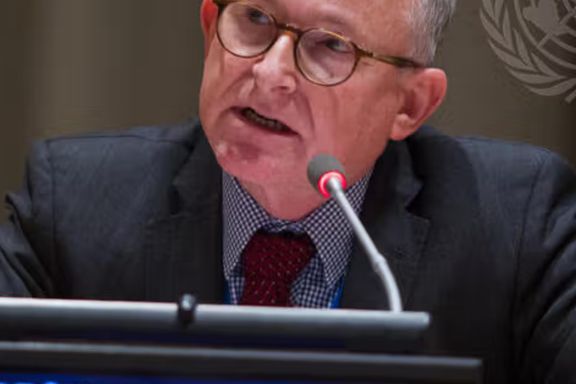
Richard Bennett, the United Nations Special Rapporteur on human rights in Afghanistan, has said that Swiss authorities have assured him that deportations of migrants based on ethnicity have never been under consideration.

In a post on the social media platform X, Bennett stressed the importance of the issue, warning that equating Pashtun identity with support for the Taliban or assuming safety under Taliban rule is “false, discriminatory, and harmful.”

His remarks come in response to a report by the Swiss newspaper Neue Zürcher Zeitung, which claimed that following a series of violent incidents involving Afghan nationals in Germany last year, Switzerland’s migration office had proposed a controversial plan to deport asylum seekers of Pashtun ethnicity to Afghanistan.

Reacting to the report, the Swiss State Secretariat for Migration told Afghanistan International that it does not make distinctions based on ethnicity when assessing deportation cases. The office confirmed that deportation based on ethnic background has never been part of its policy.

The issue has sparked renewed concern among rights advocates and refugee communities, who warn against the dangers of ethnic profiling in European migration policy.

Most Viewed

Taliban Order Cut To Residential Fibre-Optic Internet In Kabul, Say Sources
1

Taliban Order Cut To Residential Fibre-Optic Internet In Kabul, Say Sources

2

Taliban Leader Adviser Arrested In Kandahar Over Alleged Bribery

3

Taliban Besieged TOLOnews Offices After Journalist Detentions, Say Sources

4

Taliban Urges Turkmenistan To Implement 24-Hour Operations At Torghundi Port

5

Exiled Media Watchdog Urges UN, EU To Seek Release Of Journalists Held By Taliban

•
•
•

More Stories

UAE To Host Investor Conference In Kabul As Ties With Taliban Deepen

May 7, 2025, 11:14 GMT+1

The United Arab Emirates will organise an investor conference in Kabul, bringing together Emirati businessmen to explore economic opportunities in Afghanistan, according to Saif Mohammed Al Ketbi, the UAE’s Special envoy for Afghanistan.

The announcement was made during Al Ketbi’s meeting on Tuesday with Mullah Abdul Ghani Baradar, the Taliban’s Deputy Prime Minister for Economic Affairs. A statement from Baradar’s office noted that the two sides discussed strengthening bilateral relations, with a particular focus on economic cooperation.

According to the Taliban, Al Ketbi also expressed the UAE’s interest in developing infrastructure projects in Afghanistan, including railways and roads, a key priority for the Taliban regime as it seeks foreign investment to boost the country’s struggling economy.

The Taliban have frequently reported expressions of interest from regional countries in Afghanistan’s infrastructure and investment sectors. However, concrete details or timelines for the launch of such projects have yet to be disclosed.

Taliban Fighters Have Defected To ISIS, TTP, Says Pakistani Envoy

May 7, 2025, 09:50 GMT+1

Pakistan’s Special Representative for Afghanistan, Mohammad Sadiq, has acknowledged that some Taliban fighters have defected to extremist groups including ISIS and the Tehreek-e-Taliban Pakistan (TTP).

Speaking on Tuesday at the Institute of Regional Studies in Islamabad, Sadiq revealed that the Afghan Taliban are hesitant to confront the TTP due to fears that internal divisions could prompt further defections of their own fighters to ISIS. However, he confirmed that such defections have already occurred, with some Taliban members having joined ISIS, the TTP, and other militant groups.

This marks the first time a senior Pakistani diplomat has publicly admitted to defections within Taliban ranks to rival extremist groups. While Sadiq did not specify the motivations behind these defections, he highlighted the Taliban’s reluctance to act decisively against TTP elements operating from Afghan soil.

He criticised the Taliban for failing to address Pakistan’s persistent security concerns, despite diplomatic engagement including a recent visit to Kabul by Pakistani Foreign Minister Ishaq Dar. “It seems there are internal disagreements among the Taliban on this issue,” Sadiq said, alluding to reported tensions between the Kandahar-based Taliban leadership and the Haqqani network over how to manage the TTP.

Observers suggest that the Haqqani network, which holds significant influence in eastern Afghanistan, continues to provide shelter to TTP operatives, a major point of contention for Pakistan. Sadiq stressed that the TTP remains not only a direct threat to Pakistan’s security but also a serious obstacle to stable relations between the two neighbouring countries.

Reflecting on the past, Sadiq said there had been an opportunity to address the TTP issue following Pakistan’s military Operation Zarb-e-Azb in 2014, which drove many militants from North Waziristan into Afghanistan. Some remained behind as sleeper cells, complicating efforts to dismantle the group entirely.

He also lamented that the TTP issue was overlooked during the US-Taliban peace negotiations in Doha, which culminated in the Taliban’s return to power in 2021. Since then, militant violence has surged in Pakistan, with Islamabad claiming that groups such as the TTP operate freely from Afghan territory, an allegation consistently denied by the Taliban, who insist Afghanistan is not being used as a base for cross-border attacks.

According to Sadiq, the Taliban fear that cracking down on TTP may drive their fighters into the arms of ISIS-K, a rival extremist faction with whom they have a fraught relationship. “The Taliban control the cities, villages, and regions of Afghanistan, but they do not appear weary of war,” he said, pointing to ongoing instability and factional divisions within Afghan society.

Sadiq also disclosed that suicide bombers are sometimes trained in clandestine centres and then transferred or ‘sold’ to other extremist groups, further complicating the region’s security landscape. He noted that even under the previous Afghan government led by Ashraf Ghani, the TTP was recognised as a threat to Afghan national security, and several of its leaders were apprehended.

In closing, Sadiq reiterated that Pakistan’s future relations with the Taliban government would hinge on their commitment to curbing TTP activity and ensuring Afghan soil is not used to stage attacks against Pakistan.
Swiss Government Rejects Ethnic Bias Allegations In Afghan Asylum Deportation Policy

May 6, 2025, 17:35 GMT+1

The Swiss government has denied allegations that it is planning to deport Afghan asylum seekers based on their ethnicity, following media reports suggesting otherwise.

The State Secretariat for Migration (SEM) told Afghanistan International that it does not discriminate between individuals on the basis of ethnicity when repatriating Afghan nationals. The agency emphasised that deportations based on ethnicity have never been part of its official policy.

SEM stated that decisions on asylum or deportation are made through continuous assessment of the security and humanitarian conditions in countries of origin. According to the agency, this monitoring process is ongoing and adjustments are implemented when necessary.

The controversy stems from a report published on Sunday by Swiss newspaper Neue Zürcher Zeitung (NZZ), which claimed that the Swiss migration authorities had considered a proposal to deport Afghan asylum seekers belonging to the Pashtun ethnic group. The internal documents reportedly suggested that Pashtuns being ethnically aligned with the ruling Taliban are at lower risk of persecution compared to other Afghan minorities.

NZZ reported that senior SEM officials in Bern drafted a politically sensitive plan that would mark a significant shift in Switzerland’s asylum policy, as the country has never previously enacted deportations based on ethnic classification.

The newspaper further noted that the fall of the Afghan government on 15 August 2021 enabled the Taliban to assume control over the entire country, bringing a degree of stability that has increased pressure on European nations to repatriate Afghan nationals. In Switzerland, Afghan asylum seekers had long enjoyed basic residency rights, and deportations were previously rare. However, in the past year, the first deportations of Afghan nationals were carried out in response to criminal convictions.

Since April 2025, Swiss authorities have indicated that healthy, single Afghan men with family ties in Afghanistan may also face deportation. SEM clarified that this applies only to a small subset of individuals and reiterated that no ethnic distinctions are made in these cases.

Despite SEM’s assurances, internal documents obtained by NZZ last autumn reportedly reflect a shift in attitudes toward Afghan asylum seekers. Public sentiment, once largely sympathetic after the fall of Kabul, has shifted amid rising concerns about terrorism and criminality.

This change has been exacerbated by a series of high-profile Islamist attacks in Germany. In May last year, an Afghan supporter of ISIS fatally stabbed a police officer and injured five others in a public attack. In a separate incident in February, a 24-year-old Afghan man drove a vehicle into a crowd in Munich, killing a mother and her two-year-old child and injuring 54 others. Both perpetrators were asylum seekers residing in Germany.

Magdalena Rast, spokesperson for SEM, confirmed that Switzerland’s asylum and return policy for Afghan nationals was most recently revised in April 2025, and categorically denied any policy involving ethnic profiling.

Detainees In Ghor Say Taliban Denying Them Food, Water

May 6, 2025, 16:39 GMT+1

Local sources report that Noor Agha Haidar, the Taliban’s police chief in Ghor province, arrested and imprisoned at least 80 individuals during a recent visit to Pasaband district, allegedly on charges related to the cultivation of narcotic crops.

According to the detainees, many have been held without formal charges or legal proceedings for between 10 and 15 days. In a video obtained by Afghanistan International, the detainees allege that they are being held in inhumane conditions crammed into a small room and denied access to food and water.

The video reportedly shows all 80 detainees confined in a single room measuring approximately five metres long and three metres wide. Local sources say the space is so overcrowded that there is “no room even to pray.”

Some of those detained were reportedly travellers from Helmand province, while others had been collecting firewood or working in the area when they were arrested.

The Taliban’s police command in Ghor has not issued a statement regarding the mass detention. However, it has confirmed that Noor Agha Haidar oversaw the eradication of several poppy fields during his visit to the district.

Several sources have alleged that the Taliban used the poppy eradication campaign as a pretext to detain individuals critical of the group or opposed to its members.

UK Diplomat Warns Of ‘Terrible’ Impact Of Taliban Ban On Women’s Medical Education

May 6, 2025, 14:18 GMT+1

Robert Dickson, the United Kingdom’s chargé d’affaires to Afghanistan, has warned that the Taliban’s ongoing ban on women studying medicine is having a “Terrible” impact on the health of Afghan women and children.

Marking the International Day of the Midwife on 5 May, Dickson called on the Taliban to lift the restrictions on female medical education, stressing its vital role in safeguarding public health.

In a statement posted on the X social media platform, the British Embassy for Afghanistan highlighted that the country ranks seventh globally in maternal mortality. The Embassy described the reversal of the ban as a crucial step towards saving lives.

In December 2024, Taliban leader Hibatullah Akhundzada issued a decree prohibiting women from attending all higher and mid-level medical education institutions. The decision drew widespread condemnation both domestically and internationally and sparked grave concern about the future of healthcare provision in Afghanistan.

The United Nations and global health experts have repeatedly warned that barring women from medical training will critically undermine Afghanistan’s already fragile healthcare system.

Afghanistan continues to report some of the highest maternal and infant mortality rates in the world. According to the World Health Organization, an estimated 24 women and 167 children die each day from preventable complications related to pregnancy and childbirth.