Taliban Publicly Flogs 4 In Bamiyan For Adultery, Theft
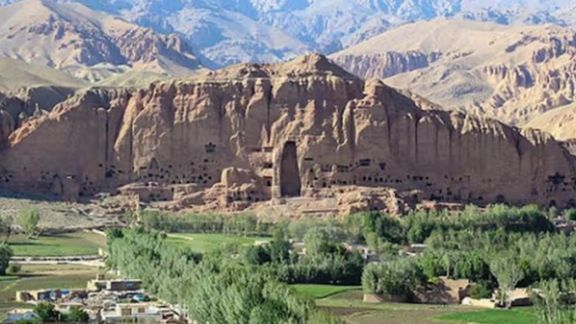
The Taliban’s Supreme Court has announced that four individuals were publicly flogged in Bamiyan province on charges of engaging in extramarital sexual relations and committing theft.

The Taliban’s Supreme Court has announced that four individuals were publicly flogged in Bamiyan province on charges of engaging in extramarital sexual relations and committing theft.
According to the statement, the sentences were issued by a Taliban court in Bamiyan and approved by the group’s Supreme Court. The individuals, whose identities were not disclosed, received between 35 and 39 lashes each and were also sentenced to prison terms ranging from two months to one year.
The floggings took place on Tuesday, in the courtyard of the Taliban’s primary court in the province, in the presence of local officials and residents.
This incident follows a similar announcement made on Wednesday by the Taliban, stating that two women and two men were publicly flogged in Mohammad Agha district of Logar province for alleged “illicit relationships.”
Despite international condemnation, the Taliban continues to enforce public corporal punishment, which it describes as the implementation of Islamic Sharia law. Human rights organisations have consistently denounced such practices as cruel, inhuman, and in violation of international legal standards.


Abdul Bari Omar, head of Taliban's national electricity company, Breshna, announced that he met with Daler Juma, Tajikistan’s Minister of Energy, during a visit to Dushanbe to attend a regional summit on the CASA-1000 energy project.
In a post shared on X (formerly Twitter), Omar published photos from the meeting and stated that both sides exchanged views on “important issues.” However, further details of the discussions have not yet been disclosed.
Omar and his delegation arrived in Dushanbe on Wednesday, to participate in high-level meetings on CASA-1000, a major electricity transmission project connecting Central and South Asia via Afghanistan. Representatives from Tajikistan, Kyrgyzstan, Pakistan, and Afghanistan, along with other stakeholders, are attending the summit.
According to Breshna, the summit’s agenda includes reviewing the current status of the project, addressing implementation challenges, and drafting a roadmap for future progress. The company reaffirmed its commitment to ensuring the project's timely completion and operational launch.
“The CASA-1000 project not only boosts economic cooperation among participating countries but also serves as a significant step toward strengthening political ties and advancing sustainable regional development,” Breshna stated.
The visit comes amid historically tense relations between Tajikistan and the Taliban. Tajikistan has provided refuge to members of the National Resistance Front and other anti-Taliban groups and remains one of the few Central Asian nations that has not formally recognised or maintained diplomatic ties with the Taliban government.
Tajik President Emomali Rahmon has previously raised concerns over Afghanistan’s security situation under Taliban control and called for the creation of a regional security buffer around the country.
Nonetheless, a recent Eurasianet report suggests that both sides are cautiously working to improve bilateral relations, with the CASA-1000 summit offering a rare opportunity for direct engagement.

A Taliban delegation led by Abdul Bari Omari, head of the group’s Breshna electricity company, has travelled to Tajikistan to participate in the regional CASA-1000 summit.
The summit brings together representatives from Kyrgyzstan, Tajikistan, Pakistan, the Taliban, the World Bank, the Islamic Development Bank, and several other organisations. The gathering aims to review the current status of the CASA-1000 electricity transmission project, address challenges, explore solutions, and plan the next phases of implementation.
According to a statement issued on Wednesday, 14 May, Breshna, the Taliban-controlled national electricity provider, confirmed that delegates will also visit the converter station located in the Sangtuda region of Tajikistan.
CASA-1000 is one of the largest regional electricity transmission initiatives, designed to export surplus power from Central Asia to South Asia through Afghanistan. Breshna stated that "this project not only enhances economic cooperation among member countries but also represents a significant step toward strengthening political ties and promoting sustainable regional development.”
Earlier this year, on 31 March, Tajik President Emomali Rahmon and Kyrgyz President Sadyr Japarov jointly inaugurated a cross-border power transmission line in Khujand, Sughd province of Tajikistan, as part of the CASA-1000 project.
In February 2024, the World Bank announced that construction of the CASA-1000 power line in Afghanistan would commence at the request of the participating countries, Kyrgyzstan, Uzbekistan, and Pakistan. The World Bank emphasised that all financial transactions related to the project in Afghanistan would be managed externally and remain separate from the Taliban's control.

The Taliban’s judiciary has announced that two women and two men were publicly flogged in Mohammad Agha district of Logar province after being convicted of “illicit relationships” by a local court.
According to a statement issued by the Taliban Supreme Court on Wednesday, 14 May, the individuals received between 20 and 39 lashes each in a public setting. The punishment was carried out in the presence of local officials, court personnel, residents, and both civilian and military representatives.
Rohullah Ghalib, head of the Taliban’s primary court in Mohammad Agha, stated: “We implement divine rulings under all circumstances.” He emphasised that the Taliban would not retreat from what it views as its “religious responsibilities.”
The group regards corporal punishment, including flogging, as the enforcement of “Islamic Sharia” and has continued such practices despite widespread international condemnation.
Human rights organisations and foreign governments have repeatedly denounced the Taliban’s use of corporal punishment, describing it as a form of torture and a violation of international human rights norms.
Just a day earlier, a man in Badakhshan province was also publicly flogged after being accused of engaging in sexual relations outside of marriage.
Since returning to power in August 2021, the Taliban has resumed public punishments, including floggings and executions, which were also a hallmark of its previous regime in the 1990s.

Hundreds of Afghan refugees staged protests on Wednesday, 14 May, in multiple Indonesian cities particularly in Jakarta gathering outside the offices of the United Nations High Commissioner for Refugees (UNHCR) and the Australian Embassy.
They demanded urgent action on their resettlement cases. The demonstrations took place ahead of the Australian Prime Minister’s official visit to Indonesia, with protesters calling on Australia and other resettlement countries to accelerate the processing of refugee claims.
Many of the protesters, including women, men, and children, held signs and chanted slogans urging the international community to address their plight. The refugees say they have been living in limbo for more than a decade, facing prolonged uncertainty and hardship.
“We have waited over ten years for resettlement. We are living without basic rights and with no future,” said one protestor.
The refugees expressed hope that their peaceful protest would attract the attention of Australian officials and lead to tangible progress in their cases.
Afghan refugees in Indonesia have previously staged similar demonstrations, criticising the UNHCR for what they describe as neglect and a lack of transparency in the resettlement process.
Indonesia, which is not a signatory to the 1951 Refugee Convention, hosts thousands of asylum seekers, many of them Afghans, who await third-country resettlement with limited rights and access to services.

Abdul Ghani Baradar, the Taliban’s Deputy Prime Minister for Economic Affairs, arrived in Tatarstan on Wednesday, 14 May, at the head of a high-level delegation to participate in the 16th Kazan Economic Forum.
According to a statement from Baradar’s office, the delegation is scheduled to attend various sessions of the forum and hold bilateral meetings on the sidelines of the event.
The forum, which commenced on Tuesday, will run through Sunday, in the city of Kazan, the capital of Russia’s Republic of Tatarstan.
Baradar’s participation comes shortly after Russia suspended its designation of the Taliban as a terrorist organisation, a move that signals a shift in Moscow’s engagement with the Taliban regime in Afghanistan.
Rustam Khabibullin, head of the Russian Business Centre in Afghanistan, noted that Baradar is the most senior Taliban official to visit Russia since the group took control of Afghanistan in 2021.
The official Kazan Forum website stated that Russian President Vladimir Putin expressed confidence in the forum’s continued role as a platform for constructive dialogue and enhanced cooperation among participating countries and peoples.
The Kazan Forum, a major international economic platform, focuses on strengthening economic relations between Russia and member states of the Organisation of Islamic Cooperation (OIC), with a growing emphasis on investment and development partnerships.