• العربية
  • پښتو
  • فارسی
Brand
  • Afghanistan
  • Sport
  • Markets
  • Afghanistan
  • Sport
  • Markets
  • Theme
  • Language
    • العربية
    • پښتو
    • فارسی
  • Afghanistan
  • Sport
  • Markets
All rights reserved for Volant Media UK Limited
volant media logo

Iran To Continue Deportation Of Afghan Child Labourers, Says Official

Jun 14, 2025, 09:18 GMT+1

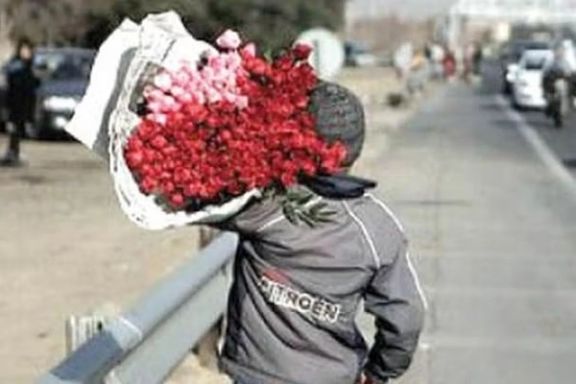
Nader Yarahmadi, head of the Bureau for Aliens and Foreign Immigrants Affairs of the Islamic Republic of Iran, said that from March 2024 to March 2025, a total of 1,579 foreign national children were deported from Iran along with their families.

According to Iranian state media, Yarahmadi confirmed that deportation efforts targeting child labourers, many of whom are Afghan, will persist. He also stated that among 937 immigrant children permitted to remain in Iran with their families, authorities have secured written pledges ensuring they will no longer be involved in street begging.

Iranian officials often refer to Afghan migrants as “foreign nationals,” though Afghans make up the overwhelming majority of the country’s immigrant child labour population. Last year, Ali Kazemi, secretary of Iran’s National Body on the Convention on the Rights of the Child, reported that 85 percent of child labourers in Tehran were Afghan.

The continued expulsion of Afghan child labourers comes amid a broader surge in deportations from both Iran and Pakistan, creating significant humanitarian and logistical challenges for Afghanistan. Despite these difficulties, the Taliban has maintained cooperation with the Iranian government on migrant repatriation.

Human rights groups have criticised the mass deportations, citing risks to children’s safety and well-being upon return to Afghanistan, where living conditions remain precarious due to ongoing conflict, economic collapse, and restricted access to education and services.

Most Viewed

Taliban Governors, Intelligence Chiefs Hold Security Meet In Northern Afghanistan
1

Taliban Governors, Intelligence Chiefs Hold Security Meet In Northern Afghanistan

2

Hazara Leader Accuses Taliban Of Escalating Pressure On Shia Community in Afghanistan

3

‘System Built On Oppression Cannot Survive’, Warns Taliban Chief Justice

4

Prominent Shia Cleric Calls On Taliban To End Detentions & ‘Humiliation Of Shias’

5

Taliban Minister Alleges Attempts to Undermine Ties With Russia

•
•
•

More Stories

Former US Envoy Criticises Taliban Leader’s Anti-Democracy Remarks

Jun 13, 2025, 13:35 GMT+1

Zalmay Khalilzad, the former US Special Envoy for Afghan Reconciliation, has criticised recent comments made by the Taliban’s leader in which he denounced democracy and defended the group’s treatment of women.

In a post on his X account (formerly Twitter) on Friday, 13 June, Khalilzad responded to a sermon delivered by Taliban leader Hibatullah Akhundzada during Eid prayers, in which Akhundzada rejected democratic governance and criticised Western nations.

“During the recent Eid sermon/prayer, the leader of the Taliban was very critical of democracy,” Khalilzad wrote. “And, of course, the Afghan people have the right to have their own form of government.”

Khalilzad, who played a key role in negotiating the US-Taliban agreement under the Trump administration, clarified that his remarks were not an endorsement of Afghanistan’s previous government. “This is not a defence of the lawlessness, corruption, and many other failures of the previous government,” he noted.

However, he added: “It is important to observe that many of the most successful, richest, and most powerful countries in the world are democracies.”

During his sermon, Akhundzada condemned the United States as an “oppressor” and accused both the US and Israel of committing human rights violations, particularly in relation to civilian casualties in Gaza. He further declared that no non-Muslim nation has suffered as much as Palestine.

In defence of the Taliban’s ongoing restrictions on women, including bans on education, employment, and freedom of movement, Akhundzada claimed the group had brought “modesty and honour” to Afghan women. His remarks drew swift criticism from international rights groups, who accuse the Taliban of severe gender-based repression.

Taliban Orders Ban On Women Driving In Herat

Jun 13, 2025, 12:39 GMT+1

The Taliban’s Directorate for the Propagation of Virtue and Prevention of Vice in Herat province has instructed the local traffic authority to ban women from driving, according to an official letter obtained by local media.

The letter, signed by Sheikh Azizurrahman Muhajir, head of the directorate, claims that “women are incapable of learning to drive and have scattered minds.” It argues that driving is “an important and highly responsible profession” and that even minor mistakes could result in the loss of lives.

As a result, the Taliban has requested Herat’s traffic management office to prohibit women from driving in the city and on public roads, effective immediately.

The directive marks another setback for women’s rights in Afghanistan, where female drivers are already rare and often face harassment. Despite this, women are legally allowed to drive in nearly every country, and numerous studies show they tend to be safer drivers than men.

According to a report by The New York Times, British researchers analysing data from over 14,000 traffic fatalities between 2005 and 2015 found that men were significantly more likely than women to be at fault in fatal crashes. Male truck drivers were nearly four times more likely than female drivers to cause deadly accidents, and male motorcyclists were almost 12 times more likely than female riders to be responsible for fatalities.

Afghanistan has one of the highest traffic accident rates in the region. On Thursday, the Taliban’s General Directorate of Traffic reported 117 traffic incidents nationwide during the Eid holidays, resulting in 43 deaths and 158 injuries. Among the dead were 31 men, two women and 10 children.

Taliban forces in Herat have frequently harassed female drivers. Setayesh, a woman in the city, told Deutsche Welle that she had been subjected to repeated violence by Taliban officials while driving. She said women used to drive out of necessity, but since the Taliban returned to power, they have been told that no woman may leave home without a male guardian.

The Ministry for the Propagation of Virtue and Prevention of Vice is the main body enforcing the Taliban’s increasingly restrictive policies on women. The ministry has previously banned women from accessing public parks, travelling without a male chaperone, and appearing in public without full-body coverings.

Over 10 Million Afghans Forcibly Displaced, Says UNHCR

Jun 13, 2025, 10:59 GMT+1

The United Nations High Commissioner for Refugees (UNHCR) reports that more than 10 million people in Afghanistan have been forcibly displaced due to ongoing conflict, persecution, and humanitarian crises, placing the country among the top three globally for displacement.

According to a report released Thursday, the global number of forcibly displaced people has risen to over 122 million as of April, a figure that has increased by 2 million since last year and has nearly doubled over the past decade.

One of the most notable developments is a more than 9 percent rise in the number of internally displaced persons (IDPs), now exceeding 73 million worldwide.

Sudan leads the list with over 14 million displaced individuals, followed by Syria with 13.5 million. Afghanistan ranks third, with 10.3 million people displaced, and Ukraine follows with approximately 8.8 million.

The report comes amid a surge in deportations of Afghan migrants from neighbouring Iran and Pakistan, where thousands are being forcibly returned each day. The UNHCR has raised concerns that many of these deportations are taking place under unstable political and security conditions, making return particularly dangerous for vulnerable groups.

Afghanistan has endured over four decades of conflict, including wars against a communist regime, infighting among mujahideen factions, and the more recent US-led intervention against the Taliban. These waves of violence have driven millions to seek refuge in Iran, Pakistan, and further abroad, including Europe.

In addition to cross-border displacement, Afghanistan faces persistent internal migration. Ongoing insecurity, economic collapse, and environmental disasters, including repeated droughts, have forced many Afghans to abandon rural areas in favour of major cities such as Kabul, Herat, Kandahar, and Mazar-e-Sharif.

Spain Seeks Arrest Warrant For Ex-Afghan Diplomat Accused Of Sexual Assault

Jun 13, 2025, 09:51 GMT+1

Spanish police have requested the issuance of an international arrest warrant for Rahim Peerzada, a former Afghan diplomat accused of sexual harassment and assault.

If approved by a Spanish court, the warrant could pave the way for Peerzada’s prosecution and potential extradition from the United States.

Peerzada, who served as the acting head of the Afghan embassy in Spain following the Taliban’s takeover of Kabul in 2021, reportedly began cooperating with the Taliban’s Ministry of Foreign Affairs soon after assuming the post.

According to the German newspaper Die Welt, which first reported the case on Wednesday, 11 June, a specialised unit of the Spanish police dedicated to combating violence against women has submitted its findings to a court in Madrid. The police informed at least one of the alleged victims via email that the case is now in the hands of a judge, who will determine whether an extradition order is issued.

Peerzada is currently in custody in the United States. He was arrested in late March 2025 at Washington Dulles International Airport under the alias “Mohammad Rahim Wahidi.” His detention is reportedly linked to a separate criminal investigation involving his brother-in-law, Farhad Shakeri, who is accused by the US Department of Justice of conspiring in a plot to assassinate Iranian-American journalist Masih Alinejad.

Allegations of Sexual Assault and Harassment

Multiple women, including an Afghan woman living in Germany under the pseudonym Anis, have accused Peerzada of sexual assault. Anis told Die Welt that in 2022, while in Madrid, Peerzada drugged and raped her. “My life will never be the same,” she said, “but now, at least, there’s a chance for justice.”

Until recently, legal proceedings in Spain were stalled due to Peerzada’s diplomatic immunity. The Madrid prosecutor’s office had previously ruled that prosecution was not possible while he retained diplomatic status. However, following public outcry and media scrutiny, Spain’s Ministry of Foreign Affairs issued a statement clarifying that Peerzada was no longer recognised as a diplomat in the country.

“This person does not represent any official delegation, is not accredited in Spain, and does not enjoy diplomatic immunity,” the ministry stated. His name has since been removed from Spain’s official diplomatic registry, allowing the case to move forward.

Peerzada has denied all allegations, attributing them to personal grudges and media distortion.

Background and Diplomatic Role

Peerzada took over the leadership of the Afghan embassy in Madrid in 2021 after his predecessor, Homayoun Rasa, resigned in protest against the Taliban’s return to power. In October 2023, the embassy announced it had begun coordinating with the Taliban’s Ministry of Foreign Affairs on consular matters and stated in a press release that it “represents its country and people.”

Afghanistan International reached out to Peerzada for comment on the Spanish police’s extradition request, but he has not responded at the time of publication.
Taliban Urges Iranian Authorities To Prosecute Suspect In Rezai Killing

Jun 12, 2025, 16:31 GMT+1

In response to the brutal killing of Kubra Rezai, a 26-year-old Afghan woman in Tehran, the Taliban’s embassy in Iran has condemned the incident and called it a “tragic event.”

The embassy confirmed it had raised the matter with the Iranian Foreign Ministry and urged the country's judicial authorities to pursue the case seriously.

In a statement, the Taliban embassy stressed that “the perpetrator of this unforgivable crime must be brought to justice, regardless of nationality or affiliation.”

The embassy also reaffirmed its commitment to defending the rights of all Afghan migrants in Iran, particularly Rezai’s family.

Rezai’s mutilated body was discovered last week in Tehran, sparking widespread outrage among human rights advocates and migrant rights activists. Several activists had criticised the Taliban’s initial silence regarding her mysterious death.

Amid the growing backlash, Taliban Deputy Prime Minister for Migration Affairs, Mullah Abdul Kabir, claimed that mistreatment of Afghan migrants abroad had significantly declined. Speaking on 12 June during a meeting with Bakht Jamal, an official at the Torkham border, Kabir said such abuses had dropped but did not name any specific countries.

Rezai, an Afghan migrant in Iran, disappeared nearly two months ago. Her dismembered body was recently discovered at the home of an Iranian man in Pakdasht, a suburb of Tehran.

Reports say the alleged killer dismembered her body and used acid to destroy it. Local sources added that parts of her remains were found among rubbish.

Iran’s judiciary has yet to release official details about the case, and journalists have reported pressure from security institutions to restrict reporting on the incident.