• العربية
  • پښتو
  • فارسی
Brand
  • Afghanistan
  • Sport
  • Markets
  • Afghanistan
  • Sport
  • Markets
  • Theme
  • Language
    • العربية
    • پښتو
    • فارسی
  • Afghanistan
  • Sport
  • Markets
All rights reserved for Volant Media UK Limited
volant media logo

Thousands of Afghan Migrants Crowd Islam Qala Crossing After Mass Expulsions From Iran

Jun 27, 2025, 16:52 GMT+1

Thousands of Afghan migrants are queueing at the Islam Qala border crossing as deportations from Iran surge, raising fears of a humanitarian crisis in western Afghanistan.

Taliban officials said more than 100000 Afghans have crossed through Islam Qala in recent days, including about 61000 on Wednesday and Thursday alone. Eyewitnesses told Afghanistan International on Friday that the line of returnees waiting to enter the country stretches for kilometres.

‘When the Iran-Israel war began, we were due to return to Afghanistan, but everything was delayed,’ said Mohammad Samim, one of the returnees. ‘Now, with our legal deadline expired, we have to leave Iran.’

Migrants complained of overcrowding, limited services and slow distribution of aid. Sayed Tariq, another returnee, said international organisations are providing only 2,000 Afghanis per person, money he described as insufficient for families arriving with no shelter or supplies.

The Taliban said medical teams, Red Crescent staff, and officials from the migration office have been deployed to register arrivals and distribute hot meals and cash grants. Aid groups, however, warn the border’s infrastructure is too limited to handle the current influx.

An Iranian diplomatic delegation including Ambassador Alireza Bikdeli, deputy ambassador Seyyed Hassan Mortazavi and Herat consul-general Alireza Marhamati visited Islam Qala on Friday. The trip came one day after Taliban foreign minister Amir Khan Muttaqi urged Tehran to slow the pace of deportations.

Iran began stepped-up crackdowns on undocumented migrants during its recent 12-day conflict with Israel, arresting Afghans in workplace and neighbourhood raids and confiscating their mobile phones on alleged national security grounds. Tehran has not publicly explained the phone seizures.

Aid agencies say many returnees arrive with little more than the clothes they are wearing. With summer temperatures soaring and local resources stretched, relief groups warn that shelter, water and sanitation are urgently needed to prevent a wider humanitarian emergency at the crossing.

Local Taliban officials in Herat have appealed for additional international assistance, warning that without a rapid scale-up of services, tens of thousands of returnees could be left stranded.

Most Viewed

Explosions & Aircraft Activity Reported Over Kabul
1

Explosions & Aircraft Activity Reported Over Kabul

2

Nearly 23,000 Militants Operating In Afghanistan, Says Russian Security Chief

3

Afghanistan Instability Is A Direct Regional Security Threat, Says Russia

4

EU Again Calls For Lifting Restrictions On Afghan Women & Girls

5

Taliban Issue New Family Law Rules On Marriage & Divorce

•
•
•

More Stories

Iranian Police Seize Afghan Migrants’ Phones Over Suspected Links To Israel

Jun 27, 2025, 15:20 GMT+1

Iranian authorities have stepped up pressure on Afghan migrants across the country, with reports of mass arrests, home and workplace raids, and the confiscation of mobile phones amid suspicions of links to Israel.

Sources from multiple Iranian cities told Afghanistan International that uniformed and plainclothes police have intensified inspections of Afghan migrants, particularly following the recent 12-day conflict between Iran and Israel. The heightened crackdown follows a nationwide security sweep in which 700 Iranian citizens were arrested on charges of espionage and collaboration with Israel.

At least five Afghan nationals have reportedly been detained on similar charges. Iranian state media have broadcast videos showing some of the detained Afghans confessing to alleged collaboration with Israel, although the conditions under which these confessions were obtained remain unclear.

In recent days, police have raided workplaces and homes of Afghan migrants, seizing both smartphones and basic mobile phones. Migrants reported that officers without providing official explanations issued slips instructing them to collect their phones from police stations at a later date, sometimes after several weeks.

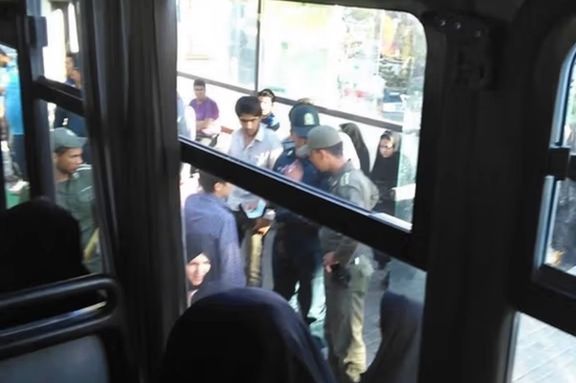
A migrant in Tehran said on Thursday, 26 June, that his phone and those of several other Afghans were confiscated at a metro station by law enforcement officers. Another source said security forces entered their workplace and seized phones regardless of whether the individuals held legal residency permits.

“Officers took all phones, both smart and basic, from Afghans regardless of their documentation status and told them they could retrieve the devices after one month,” the source said.

Public places such as metro stations have also become focal points for inspections, with migrants reporting increased scrutiny and questioning. So far, Iranian officials have not publicly commented on the reasons for confiscating migrants’ phones or the broader campaign targeting Afghan nationals.

In addition to phone seizures, arrests and deportations of Afghan migrants have surged. A source in Tehran told Afghanistan International on Friday, 27 June, that the number of police checkpoints has dramatically increased across the city. Afghan nationals, both documented and undocumented, are reportedly being detained at these checkpoints.

Mohammad Sadegh Motamedian, the governor of Tehran Province, recently acknowledged that the rate of arrest and deportation of Afghan migrants has tripled or quadrupled in recent weeks.

Local Taliban officials in Afghanistan have also reported a sharp increase in returns. Ahmadullah Muttaqi, head of the Taliban’s information and culture directorate in Herat, said that more than 30000 Afghan migrants crossed back into Herat from Iran on Wednesday, 25 June alone.

Observers say the current climate has left many Afghan migrants in Iran afraid to leave their homes, go to work, or even access basic services, as fears of arrest, deportation, or harassment continue to mount.
Prominent Iranian Sunni Cleric Visits Kabul Following Stops In Herat & Nimruz

Jun 27, 2025, 13:22 GMT+1

Molavi Abdolhamid Ismaeelzahi, a prominent Iranian Sunni cleric, has arrived in Kabul after visiting Afghanistan’s western provinces of Herat and Nimruz.

His visit has drawn attention on social media, where images showed him being received by a number of Afghan religious scholars upon his arrival in the capital.

It remains unclear whether Ismaeelzahi’s trip was made at the invitation of the Taliban government or organised independently by religious figures.

Ismaeelzahi, widely regarded as the most influential Sunni leader in Iran, has been a vocal critic of the Islamic Republic, especially on issues concerning religious freedom and the rights of Sunni Muslims and other minorities.

Following the Taliban’s return to power in August 2021, Ismaeelzahi initially welcomed the development, describing it as a “great and remarkable victory.” At the time, he expressed cautious optimism about the group's transformation over the past two decades, stating: “I assure the world that today’s Taliban are not the Taliban of 20 years ago; they have gained experience and their views have evolved. Even if there are shortcomings, they can be corrected.”

However, he later issued strong criticism of the Taliban’s policies, particularly the ban on girls’ education. In a Friday sermon, he questioned the religious justification behind such measures, asking: “By what religious authority have you banned girls from studying?”

He continued: “When I said the Taliban are not the same as they were 20 years ago and have changed, some objected to my view. I still believe they’ve changed, but no one should prevent women from getting an education. Universities must be open to women.”

Taliban Rejects US Lawmaker’s Claim Of Terrorist Presence In Afghanistan

Jun 27, 2025, 11:23 GMT+1

The Taliban has rejected recent remarks by US Congressman Bill Huizenga, who said that Afghanistan has once again become a haven for terrorist groups under Taliban rule.

Taliban spokesperson Zabihullah Mujahid issued a statement on Friday, 27 June, asserting that the Taliban-led government maintains full control over the country and will not permit any group to use Afghan soil to threaten other nations.

“We strongly reject the claim made by the US House of Representatives suggesting that foreign groups are present in Afghanistan or that any threat emanates from its territory,” Mujahid wrote on X, formerly known as Twitter. He described Afghanistan as having a “unified and strong government.”

The response follows comments made by Huizenga during a Thursday hearing of the US House Foreign Affairs Subcommittee on South and Central Asia, which he chairs. In his remarks, the Michigan Republican said that the Taliban’s return to power and the Biden administration’s rapid withdrawal of US forces have significantly increased the terrorism threat across the region.

“Afghanistan has once again become a hotbed for terrorists looking for safe harbour,” Huizenga said, criticising the Taliban for failing to uphold its counterterrorism commitments under the 2020 Doha Agreement.

He pointed specifically to the rising influence of ISIS-Khorasan (ISIS-K) and Tehreek-e-Taliban Pakistan (TTP), warning that the threat posed by these groups is now “higher than at any time in recorded history.”

While the Taliban maintains it has eradicated terrorist networks in the country, US and international officials have repeatedly expressed concerns over Afghanistan’s potential to harbour extremist groups, particularly amid reduced Western intelligence capabilities on the ground.

Mujahid insisted that no threat originates from Afghanistan and reaffirmed the Taliban’s position that it does not allow the use of Afghan territory for operations against other countries.

Taliban Officials in Herat Warn Of Migrant Crisis As Iran Deports Thousands

Jun 27, 2025, 10:27 GMT+1

Taliban officials in Herat province have warned of a looming humanitarian crisis following the mass deportation of more than 30000 Afghans from Iran in a single day.

Local authorities reported that the deportations, which occurred on Wednesday, 25 June, have overwhelmed the Islam Qala border crossing, a major entry point from Iran. The Taliban said additional government teams and NGOs have been deployed to manage the growing emergency.

The deportations coincide with increased regional tensions, as Iran engaged in a military conflict with Israel. The deteriorating security situation has prompted both Afghan migrants and some Iranian citizens to flee into Herat in search of safety.

Ahmadullah Muttaqi, director of information and culture for the Taliban in Herat, said around 600 passenger buses transported the migrants from Iran to the border. He confirmed that basic services including water, food and transport have been provided, though many returnees have complained about inadequate support.

On Thursday, local sources told Afghanistan International that Noor Ahmad Islamjar, the Taliban governor of Herat, visited the border and ordered immediate action to prevent a humanitarian crisis. The governor’s office confirmed the visit, stating that Islamjar instructed the acceleration of emergency aid and improvements to the migrant intake system.

Despite efforts on the ground, many returnees said they waited hours without assistance. Mohammad Rafi, who returned with his family, described “severe disorganisation” at the Islam Qala crossing.

The United Nations has warned that Afghanistan’s fragile situation worsened by drought, poverty, and strained infrastructure cannot support the mass influx. According to UN figures, more than 800000 Afghan migrants have been deported or returned voluntarily from Iran and Pakistan over the past six months.

“Every returnee deserves safety and dignity,” said Indrika Ratwatte, Deputy Special Representative of the UN Secretary-General for Afghanistan (UNAMA), in a statement Thursday. “But without urgent support, we risk seeing families slide deeper into poverty and despair.” Ratwatte added that the window to avert a full-scale humanitarian disaster is “rapidly closing.”

Some returnees cited fear for their personal safety during Iran’s 12-day military conflict as a key reason for leaving. Others had already planned to return but were delayed by the outbreak of violence.

Taliban Failing To Curb Terror Threats In Afghanistan, Says US Lawmaker

Jun 27, 2025, 09:17 GMT+1

The chairman of the US House Foreign Affairs Subcommittee on South and Central Asia warned on Thursday that Afghanistan remains a breeding ground for terrorism, despite Taliban commitments made under the Doha peace agreement.

Representative Bill Huizenga criticised the Biden administration’s withdrawal from Afghanistan, calling it rushed and stating that it had fundamentally altered the region’s terrorist threat landscape. Speaking during a subcommittee hearing, Huizenga said Afghanistan has once again become a safe haven for terrorist groups.

He identified ISIS-Khorasan (ISIS-K) and Tehreek-e-Taliban Pakistan (TTP) as the most significant threats in South and Central Asia, warning that these groups are expanding their operational capabilities to conduct attacks both regionally and globally.

“Groups like ISIS-K and TTP are now more prominent than ever,” Huizenga said, highlighting Pakistan as the country that has suffered the highest number of terrorist attacks in recent years.

While the Taliban claim to have defeated extremist threats, Huizenga pointed to their failure to contain ISIS-K. He noted that the group continues to launch attacks and actively radicalise and recruit individuals, including from migrant communities outside Central Asia.

The congressman cited ISIS-K’s deadly 2021 attack at Kabul airport, as well as its operations in Russia, Iran and its failed plot targeting the Paris Summer Olympics, as examples of its expanding reach.

Huizenga emphasised the continued leadership role of the United States in global counterterrorism efforts, saying Washington works with international partners through bilateral agreements and multilateral frameworks to combat terrorism.

“The United States remains committed to supporting our allies in the region as they confront these persistent threats,” he said.