Over 9000 Afghans Deported From Iran In Single Day, Says Taliban
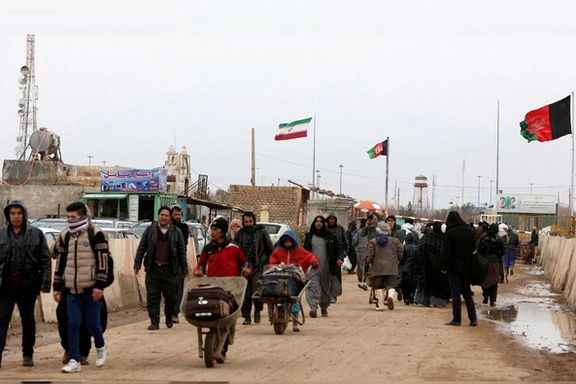
The Taliban’s High Commission for Addressing Migrant Issues announced that 9307 Afghan nationals were deported from Iran on Saturday.
The Taliban’s High Commission for Addressing Migrant Issues announced that 9307 Afghan nationals were deported from Iran on Saturday.
According to the commission, 5825 of the deportees entered Afghanistan via the Islam Qala border crossing in Herat province, while another 3482 returned through the Pul-e Abrisham crossing in Nimruz.
In a statement, the Taliban said nearly 1000 of the returnees were transferred to the northern provinces of Badakhshan, Takhar, Kunduz, Baghlan, Balkh and Sar-e Pul. It added that a total of 12,158,000 Afghanis in assistance was distributed among the deported migrants.
Independent sources previously told Afghanistan International that approximately 16000 Afghans were deported on Friday and around 13000 on Saturday. On 26 June alone, an estimated 36000 individuals were expelled.
Since the ceasefire between Iran and Israel, Iranian authorities have significantly increased deportations of Afghan migrants. Reports indicate that more than 110000 Afghans have been returned from Iran in recent weeks.
The Taliban has once again denied the presence of ISIS in Afghanistan, following renewed concerns raised by a senior Russian security official over the group’s alleged activities in the region.
Hamdullah Fitrat, deputy spokesperson for the Taliban, said in an interview with the state-run Radio Television Afghanistan (RTA) that ISIS has been “suppressed” and no longer operates within Afghan territory.
His remarks came in response to statements by Yury Kokov, deputy secretary of Russia’s Security Council, who said Moscow remains deeply concerned about ISIS’s intentions in Afghanistan. According to Kokov, the group aims to use Afghan territory to infiltrate Central Asian nations and Russia itself.
Despite Fitrat’s assurances, Kokov reiterated that Afghanistan continues to pose a source of instability and a threat to neighbouring countries.
While Russia maintains diplomatic and limited economic ties with the Taliban-led government, it remains wary of extremist groups and arms trafficking spilling over into Central Asia, a region viewed by Moscow as a strategic buffer zone.
The Afghanistan Freedom Front (AFF) has condemned Iran’s mass deportation of Afghan migrants, calling the expulsions, and the reported abuse that accompanies them, a violation of international law and basic human dignity.
In a statement issued Sunday, the anti-Taliban political-military group said Afghan asylum seekers in Iran face discrimination, arbitrary arrest and forced return even as the humanitarian situation in Afghanistan remains dire.
“The repression of ethnic groups, religious minorities and the absence of the rule of law under Taliban rule leave returnees with no guarantee of safety or dignity,” the statement said, adding that any deportations under current conditions constitute a breach of human rights.
The AFF noted that millions of Afghans have fled the country since the Taliban seized power in August 2021, driven by insecurity, political persecution and the loss of civil liberties.
Calling on Iran and other Muslim-majority neighbours to honour both their legal obligations and their religious duties to protect refugees, the group urged the United Nations and the wider international community to take “urgent, concrete and effective” steps to safeguard Afghan migrants.
The statement comes amid a sharp rise in expulsions: the International Organization for Migration reported that more than 88000 undocumented Afghans were returned from Iran during the week of 19–25 June, straining already limited aid resources at the border.
Iran has expelled more than 114000 Afghan nationals through the Islam Qala border crossing in just five days, following the ceasefire that ended its 12-day conflict with Israel, according to figures obtained by Afghanistan International.
On Tuesday, 24 June, the first day of the ceasefire, an estimated 18000 Afghans crossed into Afghanistan. The number rose to 31000 on Wednesday and surged to over 36000 on Thursday. While the pace slowed slightly, some 16000 returned on Friday, and by 4 PM local time on Saturday, another 13000 had entered through the same crossing.
Local sources say the deportations, taking place during the peak of summer heat, have severely strained resources at Islam Qala. Overcrowding, combined with limited transport, drinking water, and medical care, has fuelled fears of an escalating humanitarian crisis. International organisations are attempting to provide minimal assistance, but the scale of the returns is outpacing capacity.
According to the United Nations, the vast majority of those returning were forcibly deported, with only a small number returning voluntarily. Some migrants have claimed they were expelled despite holding valid passports and visas. Reports from Islam Qala suggest that Iranian police have disregarded legal documentation in many cases.
The crackdown comes as Iran intensifies efforts to control undocumented migration. The Iranian government has accelerated the construction of border walls, barred employers from hiring undocumented workers, and restricted Afghan movement in several provinces. Authorities have warned all foreign nationals without valid residency to leave the country.
Tensions escalated further during the recent conflict between Iran and Israel, when Iranian security services arrested approximately 700 Iranian citizens and at least five Afghan nationals on charges of espionage. Migrants say that since the ceasefire, security forces have treated them more harshly, with police in several cities reportedly confiscating phones and accusing individuals of collaborating with Israel.
In response to the mass deportations, a high-level Taliban delegation led by Deputy Prime Minister Abdul Salam Hanafi travelled to Herat on Saturday to assess the situation at the border. Taliban officials have formed a commission to address urgent needs, relying largely on support from local businesses and private organisations. Transport from the border to Herat city, along with food, water, and some cash assistance, is being provided by private companies operating in the region.
International aid agencies, including UNICEF, UNAMA, IOM, WHO, and local groups such as WADAN, are working on the ground to register and assist returnees. They are also coordinating transportation and providing healthcare and vaccinations. The polio vaccination campaign at the border has been reinforced in recent days, with expanded staffing and wider coverage.
Arafat Jamal, the UNHCR representative in Kabul, who recently visited the border area, described the returnees as “exhausted, hungry and deeply worried about an uncertain future.” He said many families are arriving with little more than the clothes they are wearing, and noted that women and girls are particularly anxious about restrictions on education, employment, and freedom of movement under Taliban rule.
The UNHCR has warned that without an immediate increase in international support, Afghanistan’s already fragile humanitarian situation could worsen significantly. As deportations from Iran continue at an unprecedented rate, aid organisations say urgent funding is needed to prevent the crisis from deepening further.
The Taliban have announced that Sediqullah Khalid, deputy governor of the group-controlled central bank, held a meeting in Kabul with Jeffrey Grieco, president of the Afghan-US Chamber of Commerce.
According to a statement released Saturday by the Taliban-run central bank, the two discussed strengthening trade ties, expanding banking relations, and supporting the private sector in Afghanistan.
The bank quoted Grieco as saying that a conference aimed at expanding international banking cooperation is scheduled for August. He reportedly invited a Taliban representative to attend and speak at the upcoming event, though the location of the planned conference was not disclosed. As of now, no information about the event appears on the AACC’s official website or social media platforms.
The AACC previously held a conference in Kabul on 6 September 2023, titled “Afghanistan Trade and Economic Relations,” which marked Grieco’s first visit to the country since the Taliban’s return to power. During that visit, he met with Taliban Deputy Prime Minister Mullah Abdul Ghani Baradar and representatives from the private sector.
In Saturday’s statement, the Taliban-controlled central bank claimed that Afghanistan’s banking sector has made “significant progress” in bilateral financial relations over the past three years. The bank also asserted that access to financing for Afghan citizens has increased by 71 percent.
Deputy Governor Khalid further claimed that total bank deposits reached approximately 8 billion Afghanis over the past three months.
The Taliban continue to seek greater international engagement, particularly in trade and finance, amid ongoing sanctions and restrictions on Afghanistan’s banking system following the collapse of the previous government in August 2021.
Iran’s Prosecutor General, Mohammad Movahedi-Azad, has issued a warning to undocumented foreign nationals particularly Afghan migrants urging them to leave the country “as soon as possible” or face judicial action.
According to a report by the official IRNA news agency on Saturday, 28 June, Movahedi-Azad made the remarks during a ceremony in the city of Hamedan. He specifically called on Afghan nationals without valid residency permits to depart Iran immediately, warning that those who fail to comply will face legal consequences.
“Foreign nationals, especially our Afghan brothers and sisters, whom we have hosted for years, should help ensure that unauthorised individuals leave Iran promptly,” he said. “Violators will face consequences.”
Movahedi-Azad also called on legally documented migrants to be vigilant and report any suspicious activity among their communities, particularly any suspected cooperation with Israel.
He added that those who come forward voluntarily to regularise their status may be eligible for “legal leniency.”
Afghans constitute the largest migrant population in Iran and are frequently referred to in official discourse and state media as “foreign nationals” or “unauthorised foreigners.”
Following the recent ceasefire between Iran and Israel, authorities have intensified the deportation of Afghan migrants. Thousands are reportedly being expelled from Iran each day under difficult and pressured conditions.
Taliban officials in Herat have said that approximately 30000 Afghan nationals are returning daily via the Islam Qala border crossing. Reports indicate that nearly 100000 Afghans were deported from Iran in the past week alone.
