• العربية
  • پښتو
  • فارسی
Brand
  • Afghanistan
  • Sport
  • Markets
  • Afghanistan
  • Sport
  • Markets
  • Theme
  • Language
    • العربية
    • پښتو
    • فارسی
  • Afghanistan
  • Sport
  • Markets
All rights reserved for Volant Media UK Limited
volant media logo

Forced Repatriation Of Afghan Migrants Could Trigger Greater Threats, Warns Karzai

Jul 15, 2025, 16:11 GMT+1

Former Afghan President Hamid Karzai warned that the forced repatriation of Afghan migrants under current conditions would not resolve the migration crisis but could instead lead to "more serious threats."

In a statement posted on his official X account, Karzai pointed to Afghanistan's long history of forced displacement over the past four decades, including during the Soviet invasion, and highlighted concerns about a new wave of displacement currently emerging. He cautioned that compelling migrants to return amid Afghanistan’s ongoing internal crises could have dangerous consequences and create further instability.

Acknowledging the pressures faced by countries hosting large numbers of Afghan migrants, Karzai said that Afghans recognise the challenges associated with large-scale migration and understand the difficulties faced by host countries. However, he stressed that the deteriorating situation in Afghanistan has eliminated the conditions necessary for a safe return.

Karzai urged host governments, without naming specific nations, to reconsider decisions on mass deportations, taking into account Afghanistan’s internal challenges, including the continued closure of schools and universities for girls and the nation's severe economic crisis.

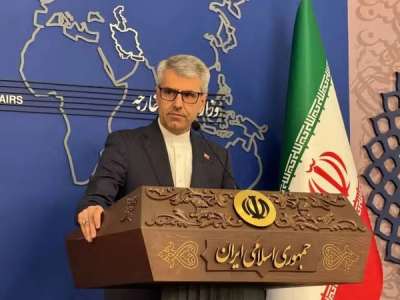
In recent months, neighbouring countries, particularly Iran and Pakistan, have increased the forced repatriation of Afghan migrants. Human rights organisations have simultaneously expressed growing concern over the legal, economic, and security risks facing returnees.

Most Viewed

Pakistan Hosts Regional Meet On Afghanistan Without Taliban
1

Pakistan Hosts Regional Meet On Afghanistan Without Taliban

2

Taliban Delegation Travels To Russia To Facilitate Medicine Imports

3

Taliban Ignore Afghanistan’s Interests By Backing Militants, Says Pakistan Army Chief

4

Germany’s Interior Minister Defends Deportations To Afghanistan

5

United Nations Delivers Education Kits To Four Million Afghan Children

•
•
•

More Stories

UN Envoy Warns Of Consequences Of Mass Afghan Returns, Urges Global Response

Jul 15, 2025, 14:07 GMT+1

Roza Otunbayeva, the UN Secretary-General’s Special Representative for Afghanistan, has warned of the severe consequences stemming from the mass return of Afghan migrants and called for immediate international action to support deported individuals.

Speaking during a visit to the Islam Qala border crossing, Otunbayeva said the situation unfolding at Afghanistan’s frontiers is a direct result of the international community’s failure to uphold its responsibilities.

Otunbayeva urged the launch of a regional dialogue with countries such as Iran, Pakistan and the Central Asian republics to prevent further uncoordinated deportations. She underscored the importance of adhering to the principle of “voluntary, dignified and safe” repatriation.

According to the United Nations, more than 1.3 million Afghans have returned since the start of 2024, placing overwhelming pressure on impoverished local communities. Women and children, among the most vulnerable, face limited access to essential services, alongside significant economic hardship.

Otunbayeva warned that humanitarian operations in Afghanistan are facing critical funding shortages, forcing aid agencies to make difficult decisions between offering food, shelter or safe return support.

She called on donor nations and international organisations to accept shared responsibility for the crisis. “What we are witnessing are the direct consequences of unmet global responsibilities,” she said. “We must act now—with resources, with coordination, and with resolve.”

Otunbayeva stressed that Afghanistan’s stability depends on the active engagement of the global community, warning that indifference is not an option. “The cost of inaction will be measured in lives lost and conflicts reignited,” she said.

Her remarks come as Iran resumes large-scale deportations of Afghan migrants, following a recent ceasefire with Israel. Border crossings in Afghanistan’s Herat and Nimruz provinces have seen a dramatic surge in returnees, intensifying humanitarian concerns.

Taliban FM Set To Visit Pakistan Following Diplomatic Invitation

Jul 15, 2025, 12:43 GMT+1

Amir Khan Muttaqi, the Taliban Foreign Minister, is expected to visit Pakistan within the next two weeks, according to sources in Kabul. The visit follows an official invitation extended by Pakistani Foreign Minister Ishaq Dar during his trip to Kabul in April.

The two ministers last met on 22 June during the 51st session of the Organisation of Islamic Cooperation (OIC) Council of Foreign Ministers in Istanbul.

The upcoming visit comes amid an apparent shift in regional diplomacy, with the Taliban recently upgrading its diplomatic representation in Pakistan from chargé d'affaires to ambassador. The appointment followed a trilateral meeting in Beijing between the foreign ministers of the Taliban, China, and Pakistan.

Despite these diplomatic engagements, tensions between Islamabad and the Taliban remain high. Over recent years, border forces from both sides have clashed multiple times at key crossings including Torkham, Dand-e-Patan, and Spin Boldak.

Pakistan has also launched two airstrikes on Afghan territory, sparking strong condemnation from the Taliban.

Islamabad has repeatedly accused the Taliban of providing safe haven to Tehreek-e-Taliban Pakistan (TTP) militants and Baloch separatists, allegedly with Indian support. The Taliban, meanwhile, has countered by accusing Pakistan of aiding Islamic State (ISIS) operatives active in the region.

Taliban Minister Tells Indonesian Diplomat Islamic Law Underpins Group’s Legislation

Jul 15, 2025, 11:28 GMT+1

The Taliban’s Minister of Justice, Abdul Hakim Sharie, has told Nanda Avalist, chargé d’affaires of the Indonesian Embassy in Kabul, that the Taliban’s legislative framework is rooted entirely in Islamic law.

In a meeting held on Monday, Sharie stated that the Taliban government has drafted dozens of laws based on “the Holy Quran and the traditions of the Prophet,” citing widely recognised sources of Islamic jurisprudence.

According to a statement issued by the Taliban’s Ministry of Justice, the meeting focused on strengthening bilateral ties between Afghanistan and Indonesia, enhancing cooperation, and discussing recent legal developments in the country.

The Justice Minister also emphasised the importance of unity among Muslim nations, stating that Islamic countries should maintain such close cooperation that “they act as though they are one nation.”

While Sharie underscored Islam as the foundation of the Taliban’s legal system, critics argue that the group’s implementation of Sharia has resulted in severe restrictions on civil liberties particularly for women and girls.

Despite Islamic teachings that encourage education for both sexes, the Taliban has continued to bar Afghan girls from secondary schools and universities since regaining power in 2021. The group has also imposed sweeping restrictions on women’s rights, including bans on employment in most sectors, limitations on movement, and exclusion from public life.

Indonesia, the world’s largest Muslim-majority country, has not formally recognised the Taliban administration but continues to engage in diplomatic dialogue.

Seven Afghan Asylum Seekers Stand For Election In France’s Exile Parliament

Jul 15, 2025, 10:42 GMT+1

Seven Afghan asylum seekers, three women and four men, have announced their candidacy for France’s Parliament of Exiled People, a civil initiative aimed at giving voice to individuals forced into exile.

The female candidates are Shakiba Dawod, Sayara Rahmani and Fatema Haidari. The male candidates include Rohullah Sidiqullah, Inamullah Samoon, Wasel Esaqzai and Mahdi Mawodi.

Shakiba Dawod, an artist living in Paris since 2009, has entered the race in alliance with Iranian journalist Sina Entesari. In an interview with Afghanistan International, Dawod said her candidacy is grounded in personal experience and civic activism. She said she aims to represent those often silenced, women, asylum seekers, exiles and marginalised minorities.

Dawod added that her objective is to serve as a bridge between the lived realities of refugees and the decision-making structures of French society.

Another candidate, Sayara Rahmani, who has lived in France since 2016, is running alongside Rohullah Sidiqullah, a migrants’ rights advocate. Rahmani told Afghanistan International she would prioritise language education, access to housing and mental health support, particularly for women and mothers.

She also pledged to support job-seeking migrants, improve access to the labour market for women, and advocate for the inclusion of the Uzbek language within France’s immigration system.

Currently, 25 candidates from countries including Iran, Syria, Russia, Palestine, Türkiye, Tunisia, Algeria and the Democratic Republic of the Congo are contesting seats in the Exile Parliament.

Only individuals with official asylum-seeker status in France are eligible to vote. Voting is conducted online via the Parliament’s official website. Each voter may cast one vote for a male candidate and one for a female candidate.

Voting will remain open until Friday, 18 July, with results expected the following day.

The Parliament of Exiled People (Le Parlement des Exilés) is a non-governmental civil body created to provide a platform for advocacy and participation by those who have fled their countries due to political, social or security threats. The institution seeks to bring the voices and demands of refugees, exiles and migrants into France’s national conversation and to the attention of policymakers.

UN Warns Support For Deported Afghan Migrants Becoming Increasingly Difficult

Jul 15, 2025, 09:22 GMT+1

Roza Otunbayeva, the UN Secretary-General’s Special Representative for Afghanistan, has raised alarm over the sharp rise in deportations of Afghan migrants, warning that continued expulsions will make it increasingly difficult to provide them with essential support.

In a meeting on Monday with Abdul Salam Hanafi, the Taliban’s Deputy Prime Minister for Administrative Affairs, Otunbayeva said the return of Afghan migrants from Iran had surged at an alarming rate. She called for urgent international cooperation to respond to the growing needs of returnees.

Despite limited funding for humanitarian relief, Otunbayeva reaffirmed the UN’s commitment to supporting the Afghan people, especially those forcibly returned from abroad. She noted that the UN had convened multiple meetings urging neighbouring countries to pause deportations and voiced hope for outcomes that benefit Afghan nationals.

Also attending the meeting was Arafat Jamal, head of the UNHCR office in Afghanistan, who commended the Afghan public’s willingness to welcome returnees despite ongoing economic hardship.

In response, Hanafi outlined new measures taken by the Taliban at the Islam Qala and Pul-e-Abrisham border crossings, including expanding personnel, providing food and clean water, improving coordination between assigned committees, and setting up additional shelters for deportees.

Over the past two weeks, Iran has expelled hundreds of thousands of Afghan migrants, a move widely criticised by international observers, who warn it is exacerbating a growing humanitarian crisis inside Afghanistan. Despite repeated calls from the international community to halt the deportations, Iran has continued with mass expulsions.