Taliban-Tajikistan Trade Rises Sharply In Early 2025
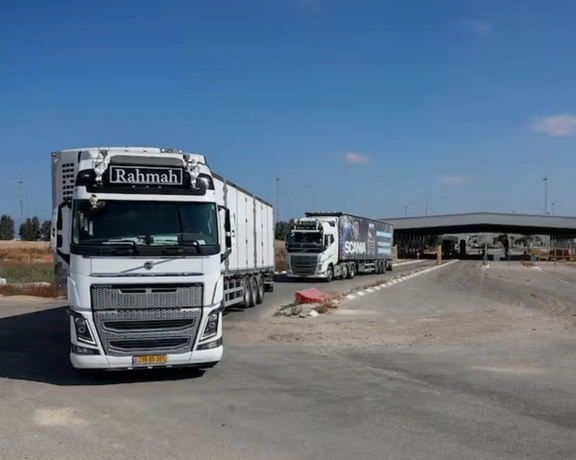
Tajikistan’s Statistics Agency has reported that trade turnover between the country and Afghanistan reached approximately USD 40 million during the first five months of the current Shamsi year.
Tajikistan’s Statistics Agency has reported that trade turnover between the country and Afghanistan reached approximately USD 40 million during the first five months of the current Shamsi year.
According to the report, this figure marks a 31.1 percent increase compared to the same period last year.
Tajik media, citing the agency, stated that nearly 80 percent of the total trade turnover, around USD 32 million, consisted of Tajikistan’s exports to Afghanistan.
The main exports from Tajikistan to Afghanistan include electricity, construction materials, cement, coal, mineral fertilisers, and food products.
Imports from Afghanistan were reported at approximately USD 8 million, consisting primarily of agricultural products such as figs, raisins, and cotton. Afghanistan also exports carpets, precious, and semi-precious stones to the Tajik market.
Iranian intelligence forces have arrested an Afghan student from the University of Tehran and transferred her to an undisclosed location, according to a report by the human rights organisation Hengaw.
The student, identified as Sara Gowhari, a sociology major, was reportedly detained on 6 July by agents of the Islamic Republic’s Ministry of Intelligence at the Taybad border crossing, where she had travelled to conduct independent research on migration issues.
Hengaw stated that Gowhari remains in custody without access to legal representation or contact with her family, ten days after her arrest. Her current condition and whereabouts are unknown, despite repeated inquiries by her relatives.
The rights group further alleged that Iranian authorities detained Gowhari without presenting a judicial warrant, raising concerns over due process and the treatment of foreign nationals involved in academic or civil society activities.
No official comment has been made by Iranian authorities regarding the arrest.
Iranian authorities have announced that Afghan migrants holding valid residency documents will be permitted to leave designated camps, as part of a wider plan to manage the country’s foreign national population.
Majid Ahmadi, Director General for Foreign Nationals and Immigrants Affairs in Fars Province, confirmed the development, stating that those in possession of legal documentation such as Amayesh cards or valid passports will be allowed to exit the camps.
Ahmadi described the initiative as part of the most comprehensive migrant management plan implemented to date. He reported that nearly 42,000 undocumented foreign nationals have so far been deported from Fars Province to border areas, with over 99 percent identified as Afghan citizens.
In addition, Iranian authorities are working on a new employment regulation framework known as the “Kafeel” (Sponsor) scheme. The programme aims to formalise the employment status of foreign nationals residing in the country.
Ahmadi warned that hiring undocumented migrants constitutes a legal offence. He stressed that employers who violate the law will face legal consequences as part of the government’s enforcement measures.
British Defence Secretary John Healey has apologised after the personal information of thousands of Afghan nationals was leaked, potentially placing them at risk of Taliban retaliation.
The breach, which occurred in 2022, compromised the data of nearly 19,000 Afghans who had applied to relocate to the United Kingdom following the Taliban’s return to power. The previous Conservative government was informed of the breach in August 2023, nearly a year later, when portions of the sensitive data were discovered circulating on Facebook.
In response, the UK government launched a confidential relocation programme aimed at transferring at-risk individuals to safety. The operation, which began nine months after the breach, has so far brought approximately 4,500 Afghans to the UK. The programme was kept secret to avoid further exposure of sensitive information.
Details of the data breach were made public on Monday after a High Court judge lifted a publication ban. The leaked material included names, contact information, and family details of individuals potentially vulnerable to reprisals from the Taliban.
The UK Prime Minister’s Office has declined to say whether any official has faced disciplinary action over the incident. Meanwhile, the Metropolitan Police determined there were no grounds to pursue a criminal investigation.
According to the Ministry of Defence, around 600 former Afghan soldiers whose data was included in the breach remain in Afghanistan, along with an estimated 1,800 of their family members. While the confidential relocation programme is winding down, the government has pledged to honour all previous resettlement offers.
The programme has already cost the government £400 million, with future costs expected to range between £400 million and £450 million.
The breach was attributed to an unnamed Ministry of Defence official and is being described as an “error.” In addition to Afghan applicants, the data leak also affected British Members of Parliament and senior military personnel. Those impacted were officially notified on Tuesday, 15 July.
Speaking in the House of Commons, Defence Secretary Healey issued a public apology for the incident.
Relocation Scheme Cancelled Following Review
A review commissioned by the Ministry of Defence, the summary of which was released on Tuesday, revealed that by May 2025 more than 16,000 individuals affected by the breach had been relocated to the UK, many through pre-existing resettlement pathways.
The confidential relocation directive was issued in 2023 after concerns were raised that public disclosure of the breach could result in extrajudicial killings or severe violence against those named.
While initial figures cited nearly 19,000 affected individuals, the High Court’s summary judgment stated that the leaked dataset contained personal information for more than 33 individuals who had formally submitted relocation applications.
Pakistani Foreign Minister Ishaq Dar has called for the revival of the Shanghai Cooperation Organisation’s (SCO) Contact Group on Afghanistan.
He has emphasised that sustainable peace and stability in the country remains a shared objective for all member states.
Speaking at the SCO foreign ministers’ conference in China on Tuesday, Dar said that reactivating the contact group could provide a practical platform for results-oriented cooperation to support Afghanistan’s path to peace and development.
The SCO initially established the Contact Group in 2005 to deepen engagement in Afghan affairs, with several rounds of meetings held in China, Russia, and other member states. However, its activities have remained suspended for several years.
In 2018, SCO leaders again underscored the importance of resuming the group’s work. Since the Taliban’s return to power, however, Afghanistan’s participation in the SCO and other international mechanisms has been suspended.
Afghanistan had engaged with the SCO as a guest since 2004 and was granted observer status in 2012. Its involvement aimed to foster regional trust, strengthen cooperation with member and observer states, and build capacity to combat terrorism, extremism, and drug trafficking.
Addressing broader security concerns, Dar warned that terrorism continues to threaten global peace. He condemned all forms of terrorism, including state-sponsored violence, and urged countries to refrain from using terrorism to pursue political ends. He called for a cooperative and comprehensive approach to addressing the root causes of extremism.
Dar, who also serves as Pakistan’s deputy prime minister, noted that as the global order faces increasing instability, the SCO has emerged as a stabilising force. He praised the organisation’s inclusive approach, rooted in sovereign equality and the peaceful resolution of disputes, offering a constructive alternative to confrontation and zero-sum rivalries.
He concluded by reaffirming Pakistan’s commitment to peaceful and stable relations with all its neighbours.
Russian Foreign Minister Sergey Lavrov has stressed the need for national consensus in Afghanistan and the inclusion of all ethnic and political groups in the country’s power structure.
His remarks came at the conclusion of the Shanghai Cooperation Organisation (SCO) foreign ministers’ summit held in China.
Lavrov said that nearly all SCO member states have strengthened bilateral relations with the Taliban, with the organisation maintaining a unified stance on the importance of an Afghanistan free from terrorism and drug trafficking.
He highlighted the necessity of providing effective support for Afghanistan’s reconstruction and long-term development as an independent, neutral, and peaceful state.
Russia has recently become one of the first major powers to formally recognise the Taliban regime. For the past four years, Moscow has consistently called on the Taliban to establish a more inclusive government.
Since returning to power, the Taliban has marginalised political and social groups, placing loyalists in key state positions. The group has accused former officials and ex-mujahideen leaders of cooperating with foreign forces, while continuing to assert that its government is inclusive.
