• العربية
  • پښتو
  • فارسی
Brand
  • Afghanistan
  • Sport
  • Markets
  • Afghanistan
  • Sport
  • Markets
  • Theme
  • Language
    • العربية
    • پښتو
    • فارسی
  • Afghanistan
  • Sport
  • Markets
All rights reserved for Volant Media UK Limited
volant media logo

Taliban Neglecting ISIS-Hit Nangarhar Communities, Residents Say

Aug 12, 2025, 12:11 GMT+1

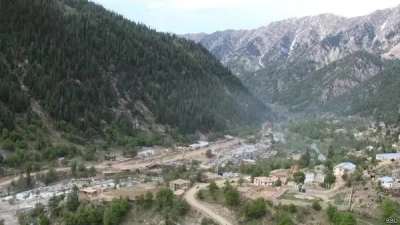
Residents of eastern Nangarhar province who were displaced by Islamic State-Khorasan (IS-K) fighting under the former Afghan republic say the Taliban have failed to deliver on promises to rebuild their destroyed homes, and infrastructure.

Civilians from Haska Mina, Achin, Spin Ghar, Kot, Naziyan and Dur Baba districts told Afghanistan International that clashes during the previous government left their homes, roads, farmland, mosques and health centres in ruins. Many remain without shelter nearly four years later.

The residents say both the former administration and the Taliban pledged reconstruction but no action has been taken. They also report that past fighting destroyed markets, halted economic activity and caused major financial losses.

Displaced families from Haska Mina said Taliban migration officials told them last year that foreign aid agencies would rebuild their areas, but they have seen no follow-up.

Some now live in camps in Kabul or in Jalalabad city, while others have returned to their devastated home areas, struggling to survive among the ruins.

Local estimates put the number of families displaced by the conflict at around 23,000. Many had fled to Pakistan but returned after Islamabad intensified deportations of Afghan migrants.

Most Viewed

Taliban Issue New Family Law Rules On Marriage & Divorce
1

Taliban Issue New Family Law Rules On Marriage & Divorce

2

UN Funding Should Support Trump Policy Goals, Says US

3

Pakistan Dismisses Taliban Denial Over Bannu Police Attack

4

Taliban Governors, Intelligence Chiefs Hold Security Meet In Northern Afghanistan

5

Hazara Leader Accuses Taliban Of Escalating Pressure On Shia Community in Afghanistan

•
•
•

More Stories

Over 3 Million Afghans Living In Country Without Legal Status

Aug 11, 2025, 16:43 GMT+1

More than 6 million Afghan migrants live in Iran, including over 3 million without valid residency documents, according to figures cited by the state-run Fars News Agency.

The outlet, citing official statistics, said more than 1.14 million Afghan migrants have been deported to date. It described the presence of around 3 million undocumented Afghans as “a complex challenge with security, economic and social dimensions.”

Nader Yarahmadi, head of the Interior Ministry’s Office for Foreign Nationals and Migrants, said that by March 2024 Iran had about 2 million undocumented migrants, with a further 2.034 million added by March 2025.

Interior Minister Eskandar Momeni said the country can no longer accommodate more migrants without legal status. He claimed that over 1.1 million Afghans have left Iran during the period, more than 70 per cent of them voluntarily.

A spokesperson for Iran’s Law Enforcement Command said the policy on undocumented migrants has not changed and enforcement operations are ongoing. “Identifying undocumented migrants, arresting individuals suspected of cooperating with hostile groups, and preventing the entry of people using false identities remain priorities,” the spokesperson said.

Iranian analysts predict the deportations will continue due to economic and security pressures but say their success will depend on cooperation from the Taliban and international organisations.

Separately, Iran’s Minister of Health said Afghan patients without valid residency documents are not eligible for health insurance coverage.

Taliban Return 166 Low-Quality Fuel Tankers To Iran, Tajikistan

Aug 11, 2025, 13:37 GMT+1

The Taliban’s Ministry of Finance says it returned 166 tankers of low-quality fuel from Afghanistan’s customs points between 22 June and 22 July.

According to ministry figures, the shipments included 161 tankers of diesel and two of petrol from the Nimruz port, as well as three tankers of petrol from the Sher Khan Bandar crossing.

The Taliban did not disclose the countries of origin for the shipments. Sher Khan Bandar is located near the border with Tajikistan, while Nimruz port lies close to Iran.

Over the past four years, the Taliban have repeatedly described some imported fuel tankers from Iran as “low-quality” and sent them back.

The Taliban’s standards authority says that once fuel enters Afghanistan, samples are taken at the border for quality testing before it is approved for sale.

Taliban Planned Negotiated Kabul Entry Before Ghani’s Exit, Says Haqqani

Aug 11, 2025, 12:26 GMT+1

Senior Taliban figure Anas Haqqani says the group originally intended to enter Kabul in 2021 through a negotiated arrangement with the then-government to preserve international legitimacy.

However, he said, the Taliban was forced to take the city after former president Ashraf Ghani abruptly left the country.

In an interview with a Taliban-run radio station in Kabul, Haqqani said the group had long known the United States would withdraw from Afghanistan. He claimed the plan was to enter the capital “through mutual understanding” so that relations with the world would remain normal, but that strategy failed when news arrived that Ghani had departed Kabul.

Haqqani said that during the Doha talks between the Taliban and the US, the group realised Washington was determined to leave but would not say so publicly. The Ghani government, meanwhile, insisted it was being sidelined in the negotiations and believed US forces would remain.

According to Haqqani, Taliban leaders had expected a transfer of power and sought to keep government institutions functioning, maintain order, and prevent looting by agreeing an orderly entry into Kabul. “We knew the Americans would definitely leave… We understood the situation and recognised the necessity,” he said.

He noted that he refers to Ghani’s departure as “left” rather than “fled” and still calls him “Dr. Ghani” an unusually respectful tone among Taliban leaders.

Speaking about the Doha process, Haqqani said the Taliban negotiating team’s priority was to sign an agreement with the US “in front of the world”, which he described as “the signing of America’s defeat,” though Western governments referred to it as a peace deal.

Once intra-Afghan talks began, he said, Taliban negotiators lost hope of progress. He claimed the Kabul delegation aimed to delay talks until Joe Biden replaced Donald Trump, at which point they would cancel the agreement. “Talks with the Afghan team were pointless, so we decided to hold only symbolic meetings,” he said.

Haqqani’s comments come ahead of the fourth anniversary of the Taliban’s return to power. Many Afghan politicians argue that the key to peace was an intra-Afghan agreement, but in Doha the US signed a deal directly with the Taliban without securing consensus among Afghan factions, paving the way for the collapse of the Islamic Republic of Afghanistan.

Anas Haqqani, the half-brother of Taliban Interior Minister Sirajuddin Haqqani, was arrested by Afghanistan’s National Directorate of Security in 2014 and freed in 2019 in exchange for two American professors. He joined the Taliban’s Doha negotiating team soon after. Although he has never held a senior official post in the Taliban administration, he remains influential in decision-making circles.

Following the Doha deal, the Taliban seized power in August 2021 and imposed sweeping restrictions: banning political activities and parties, censoring media, closing schools and universities to girls and women, barring women from political participation, and even prohibiting them from visiting amusement parks and public spaces.

The group has staffed top government posts exclusively with clerics, prompting many skilled professionals to flee. Due to these policies, and no country except Russia has formally recognised the Taliban government.

Taliban Order Eastern Afghan Media To Air Propaganda On Takeover Anniversary

Aug 11, 2025, 11:28 GMT+1

The Taliban in Kunar, Nangarhar, Nuristan and Laghman provinces have pressured independent radio stations to dedicate programming on 15 August to promote pro-Taliban propaganda, local sources told Afghanistan International.

Media managers in the eastern provinces said they had been threatened with repercussions if they refused to comply. The Taliban’s Directorate of Information and Culture reportedly instructed outlets to invite analysts critical of the former government, use derogatory language to condemn the previous regime, and air only pro-Taliban content that day.

Sources said that while the Taliban operate their own media channels, they have ordered independent outlets to broadcast the group’s scripted programmes without payment. Promises of compensation made in the past were never honoured, forcing stations to cover the costs themselves.

Some outlets said they have little choice but to follow the directives or risk closure under various pretexts. In Nangarhar, the Taliban warned that failure to comply would result in restrictions on programming.

A journalist from eastern Afghanistan, speaking on condition of anonymity, said officials from the Directorate of Information and Culture frequently visit stations, review programme schedules, and make changes. He said such interference has severely disrupted editorial independence.

Last year, the Taliban ordered all private radio and television stations in Jalalabad to air only Taliban songs and content marking the group’s victory on 15 August 2021.

Since seizing power, the Taliban have celebrated 15 August as the anniversary of their entry into Kabul, calling it the “day of victory over the US occupation and its allies.”

Taliban Foreign Ministry Summons UNAMA Officials Over Exposé Report

Aug 11, 2025, 09:48 GMT+1

The Taliban’s Foreign Ministry said on Sunday it had summoned officials from the United Nations Assistance Mission in Afghanistan (UNAMA) over a report detailing the detention and torture of Afghan migrants deported from neighbouring countries.

In a statement issued on 10 August, the ministry warned UNAMA that it would take “necessary measures” if the mission continued publishing reports “intended to disturb public opinion.”

The response came after a joint report by UNAMA and the UN Human Rights Office alleged that Afghan returnees, particularly women, former soldiers, ex-government employees and journalists, face serious risks of torture, arbitrary detention and other human rights abuses by the Taliban. The findings, published earlier, were based on interviews with 49 returnees from Iran and Pakistan in 2024.

The Taliban said a joint commission, comprising representatives from the Foreign Ministry, the Ministry for the Propagation of Virtue and Prevention of Vice, and the intelligence agency, had reviewed the UN findings.

According to the Taliban statement, the report was “substandard,” exaggerated incidents, and framed them in a “political, ethnic and linguistic” context. It accused UNAMA of “distorting realities” and ignoring Afghanistan’s religious and social values.

The ministry claimed that instead of focusing on assistance provided to migrants, UNAMA had “played with words” to stir public concern, relying on the experiences of “a small number” of individuals while overlooking what it called the “safe and dignified” return of millions of Afghans.

The Taliban further alleged that UNAMA “deliberately” chose a handful of deportees for its report and that many of the claims were speculative and unsupported by evidence. It accused the mission of using politically charged language and violating neutrality.

UNAMA’s July report documented alleged abuses including torture and ill-treatment, arbitrary arrest and detention, and threats to personal safety by the Taliban.

The Taliban told UNAMA officials to “seriously review” their reporting methods and take steps to address what they called “scientific and professional shortcomings.”

The summons comes against a backdrop of strained relations between the Taliban and UN human rights bodies. The group has previously barred the UN special rapporteur on human rights from entering Afghanistan, although both the rapporteur and UNAMA continue to release critical reports on the country’s rights situation.

In its latest quarterly update, UNAMA also cited widespread human rights violations, including restrictions on women, risks to returnees, public executions, and pressure on the media and civil society activists.