• العربية
  • پښتو
  • فارسی
Brand
  • Afghanistan
  • Sport
  • Markets
  • Afghanistan
  • Sport
  • Markets
  • Theme
  • Language
    • العربية
    • پښتو
    • فارسی
  • Afghanistan
  • Sport
  • Markets
All rights reserved for Volant Media UK Limited
volant media logo

Karzai Voices Concern Over Alleged Pakistani Drone Attack In Nuristan

Aug 14, 2025, 14:41 GMT+1

Former Afghan President Hamid Karzai has voiced concern over media reports of a Pakistani airstrike in Nuristan province, urging Islamabad to respect Afghanistan’s sovereignty and avoid violating international law. Taliban officials have so far remained silent on the incident.
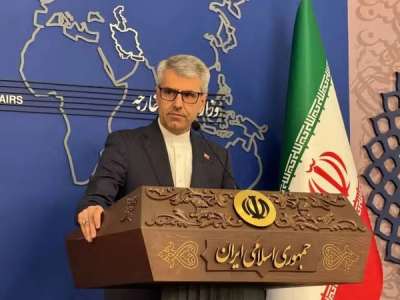
Iran’s Tasnim News Agency, affiliated with the Islamic Revolutionary Guard Corps, cited sources as saying Pakistan carried out a drone strike in Nuristan.

On Thursday, Karzai said he was “deeply concerned” about the reports. He called on the Pakistani government to “respect Afghanistan’s national sovereignty and, by refraining from violating international principles and rules, engage with Afghanistan through the establishment of civilised relations and good neighbourliness.

Pakistani authorities have not yet commented on the reported strike.

Tasnim reported there was no information available on the target or possible damage from the attack, but speculated that Pakistan may have targeted positions of Tehreek-e-Taliban Pakistan (TTP) in the province.

Most Viewed

UN Confirms Taliban Rape & Sexual Abuse Of Afghan Women
1

UN Confirms Taliban Rape & Sexual Abuse Of Afghan Women

2

Taliban Defence Chief Invites Afghan Sikh & Hindu Minorities To Return To Afghanistan

3

Taliban Pressure Is Driving People Away From The Government, Says Senior Shia cleric

4

Taliban Seeks Professional Defence System, Says Group’s Defence Minister

5

Taliban Defence Minister Holds Security Talks With Russian Official

•
•
•

More Stories

Taliban Army Chief Calls Trump ‘Narrow-Minded’ Rules Out Concessions to US

Aug 14, 2025, 10:59 GMT+1

Fasihuddin Fitrat, the Taliban’s chief of army staff, on Wednesday dismissed US demands and described Donald Trump as “narrow-minded” for criticising the group’s parades featuring American-made weapons.

He said the Taliban is building an army of “150,000 to 200,000 personnel” and will not comply with Washington’s conditions.

Speaking to a Taliban-affiliated outlet on the fourth anniversary of the group’s return to power, Fitrat claimed the United States had created problems for them because they refused to meet US demands, though he did not specify what those demands were.

The senior Taliban official also responded to Trump’s comments about Bagram Airbase, insisting the group will not negotiate with foreign countries over its control. Fitrat said that because Taliban forces are stationed at Bagram and hold military parades there, Trump is “begrudging,” claiming the US had “many plans” for the base.

While the US and the Taliban maintain intelligence cooperation against Islamic State-Khorasan (ISIS-K), Washington has pressed the group to change its policies on women and governance in Afghanistan. The US does not recognise the Taliban government, and it remains unclear what other demands Washington has made.

Marking the anniversary of the Taliban takeover, Fitrat said the Ministry of Defence now employs “between 150,000 and 200,000 military and civilian personnel.”

He added that new uniforms had been procured for Taliban forces and would be distributed soon.

Since seizing power, the Taliban have overhauled Afghanistan’s security institutions, removing many trained professional officers from the former Afghan government and replacing them with their own fighters.

Taliban, UN Officials Tied To Aid Diversion, US Watchdog Finds

Aug 14, 2025, 10:20 GMT+1

The Special Inspector General for Afghanistan Reconstruction (SIGAR) has accused the Taliban of seizing and misusing international aid through force and in collusion with United Nations officials.

In its latest report, SIGAR said the Taliban, in coordination with UN personnel, extort humanitarian projects. According to the watchdog, “UN officials demand bribes from companies and NGOs seeking contracts from their agencies. The bribes are calculated as a percentage of the contract at stake, with estimates varying between 5 and 50 percent.”

The report alleges that the Taliban block and redirect aid to ensure it reaches Pashtun communities rather than Tajik and Hazara populations. It says only 30 to 40 percent of all aid sent to Afghanistan has reached those truly in need. The United States has provided nearly $4 billion in humanitarian assistance to Afghanistan over the past four years.

“Taliban use every means at their disposal, including force, to ensure that aid goes where they want it to go, as opposed to where donors intend,” the report states. It adds that the group approaches humanitarian aid distribution with an ethnic bias, favouring Pashtun-majority areas at the expense of other regions and ethnic minorities.

According to SIGAR, an Afghan aid worker was killed for revealing that a Taliban military camp had stolen food aid.

The Taliban have rejected the findings. A spokesperson told Reuters that foreign aid is used independently and that the Taliban government works with aid organisations to ensure transparency and prevent misuse.

The findings are based on information from nearly 90 current and former US officials, UN officials and other sources, including Afghan contacts inside the country.

Established in 2008 to monitor US assistance to Afghanistan, SIGAR presented its final report to Congress on Wednesday.

A senior State Department official told the news site Semafor: “We knew that US funding was, in specific and direct ways, benefiting the Taliban. What shocked me was the extent to which so many NGOs — especially the UN — were involved in this diversion and corruption.”

The report says the Taliban have restricted NGO operations, interfering in their hiring processes to appoint preferred individuals. SIGAR acting inspector general Gene Aloise noted a “culture of denial” among international aid agencies about Taliban exploitation.

One NGO worker told SIGAR that “at least 20 percent of the employees of international NGOs were affiliated with the Taliban.” In some cases, the group reportedly ordered NGOs to add specific people to payrolls so they could receive salaries without working.

Previous SIGAR reports have documented instances where US aid indirectly benefited the Taliban, but the new report focuses specifically on allegations of aid diversion.

A US State Department official said a “turning point” in the Trump administration’s decision to cut aid came when it became clear the Taliban were openly welcoming US assistance and diverting it, whether in cash delivered through UN shipments or in goods and services, for their own gain.

The report comes as more than 23 million Afghans remain in need of international humanitarian aid.

Afghans To Protest Taliban In 14 Cities Worldwide

Aug 13, 2025, 16:58 GMT+1

Afghan protesters are set to hold demonstrations in 14 cities across the globe from Thursday to Sunday to show solidarity with women in Afghanistan.

The rallies will take place in 10 countries, including Germany, Norway, the United States, Switzerland, the Netherlands, France and others, with participants opposing the Taliban and its policies.

Marking the fourth anniversary of the Taliban’s return to power, organisers have called on people in various countries to gather at designated locations.

Protests are planned in Vienna, Darmstadt, Berlin, Munich, Düsseldorf, Hamburg, Oslo, Washington, Geneva, Amsterdam, Madrid, Toronto, São Paulo and Paris.

The four-day demonstrations, running from 14 to 18 August, will denounce the Taliban’s continued rule and its restrictions on women.

HRW: US Policy on Afghan Migrants Conflicts With Its Own Rights Report

Aug 13, 2025, 12:20 GMT+1

Human Rights Watch has accused the United States of pursuing refugee policies that contradict its own findings on human rights abuses in Afghanistan.

In a statement, the organisation said the US State Department’s 2024 annual report on Afghanistan contains credible information about widespread violations, including arbitrary arrests, torture, mistreatment and executions, and acknowledges that the country remains a “dangerous” place.

However, HRW said Washington’s actions are inconsistent with these findings, noting that the US has moved to revoke Temporary Protected Status (TPS) for thousands of Afghan refugees. The US has taken similar steps against refugees from Haiti, Venezuela, Honduras, Nepal and Nicaragua.

TPS is granted to people in the United States who cannot safely return to their home countries due to severe human rights conditions, natural disasters, war or unrest.

In April, the Department of Homeland Security announced it was ending TPS protections for thousands of Afghans. Earlier, a federal judge authorised the process to terminate TPS for Afghan and Cameroonian migrants.

On Tuesday, the State Department released its 2024 rights report, detailing severe restrictions on women, arbitrary detentions, extrajudicial killings, and the Taliban’s repression of civil liberties and free expression. HRW said these findings should compel Washington to protect, not expel, vulnerable Afghans.

Taliban Rule Validates Resistance Against Group, Says Afghan Leader

Aug 12, 2025, 16:29 GMT+1

Ismail Khan, an Afghan leader, has said in a message marking the fourth anniversary of the fall of Herat to the Taliban that the group’s actions over the past four years demonstrate the “legitimacy of the resistance” by its opponents.

Ismail Khan described the fall of Herat as the result of “complex conspiracies and political deal-making,” after which Afghanistan’s major provinces fell one after another.

Herat was captured by the Taliban on 12 August, four years ago today. In his message, Ismail Khan wrote that before the city’s fall, the “Southwest People’s Resistance Movement” had been formed, and its forces had taken part in the defence of the city. However, he said, the course of events led to a “dangerous regression.”

He also described the fall of Kabul as “the end of a multi-layered intelligence project,” paid tribute to those killed during that period, and called for efforts “by every possible means” to establish a “justice-based” order.