One in Four Afghan Children Suffers From Anxiety, Says UNICEF
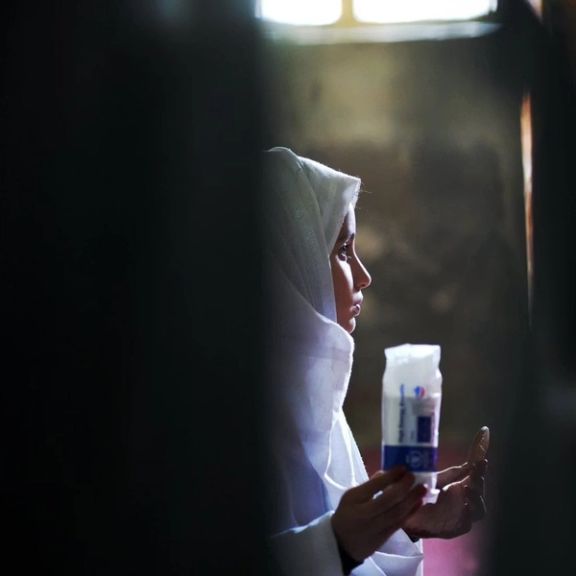
The United Nations Children’s Fund (UNICEF) has reported that one in four Afghan children aged 5 to 17 suffers from anxiety, while one in seven experiences depression.

The United Nations Children’s Fund (UNICEF) has reported that one in four Afghan children aged 5 to 17 suffers from anxiety, while one in seven experiences depression.
In a statement released on Thursday, 9 October, UNICEF said it has organised mental health workshops across Afghanistan for children struggling with anxiety and depression. The agency stressed the urgent need for a national child mental health strategy to address the growing crisis.
UNICEF said it continues to work to ensure that Afghan children have access to healthcare, compassion and hope for the future. Global organisations have repeatedly warned of the deteriorating access to healthcare for women and children in Afghanistan.
The head of the children’s ward at Mirwais Hospital in Kandahar previously told reporters that, due to a shortage of facilities, three children often share one hospital bed, with most suffering from severe malnutrition.
In July, UNICEF also warned that climate change is worsening food insecurity among Afghan children. The agency estimates that more than 875,000 children under the age of five are suffering from acute, life-threatening malnutrition.

Mohib Mudassir, a prosecutor at the People’s Tribunal for Afghan Women, said that the Taliban’s restrictions on women’s freedom of movement have effectively removed them from public life.
He added that the group's restrictions have alsocreated major barriers to their employment and independence.
Speaking on the second day of the tribunal’s hearings in Madrid, Mudassir said the Taliban’s policies have deprived women of access to essential services, education, justice and economic participation, leaving them increasingly isolated.
He noted that the measures have disproportionately targeted young women and girls, calling the restrictions “deliberate and discriminatory” and a direct violation of international laws and conventions.
“These policies have severely curtailed women’s participation in Afghanistan’s economic, social and cultural life,” Mudassir said.
He also highlighted the particular hardships faced by women with disabilities, saying the cumulative impact of the Taliban’s restrictions violates basic human rights and contradicts Afghanistan’s obligations under international treaties.
During this session of the tribunal, Mudassir and fellow prosecutor Azada Raz Mohammad are presenting charges against the Taliban related to the suppression of freedom of movement, bodily autonomy, freedom of expression and freedom of assembly. Witnesses are also expected to testify before the court.

Afghan political analyst Salim Paigeer was wounded in an armed assassination attempt in Kabul on Thursday, 9 October, according to sources close to his family. He was taken to hospital following the attack.
The shooting occurred near Hanzala Mosque in the Shahr-e-Naw area, close to Paigeer’s residence. He was transferred to Emergency Hospital, where sources said he had sustained a gunshot wound to the head.
Neighbours reportedly rushed to help Paigeer and managed to detain the suspected assailant before authorities arrived. Informed sources told Afghanistan International that the Taliban have since restricted access to the analyst, preventing visitors from seeing him in hospital.
The Taliban’s Ministry of Interior confirmed the incident, saying Paigeer underwent surgery after the attack. No individual or group has claimed responsibility.
Paigeer, known for his political commentary, has at times expressed support for the Taliban administration but has also criticised some of its policies, including the continued closure of girls’ schools.

Rostam Ejbari, an Iranian Baluch dissident opposed to the Islamic Republic, was shot and severely wounded by unidentified gunmen in the western Afghan city of Herat, the human rights organisation Haalvsh reported.
The attack took place on Wednesday, 8 October, in one of Herat’s central districts. Ejbari was struck by two bullets to the head and taken to hospital, where doctors described his condition as critical.
Haji Rostam Ejbari, son of Haji Ahmad, was originally from Iran’s Khorasan province. In recent years, he had migrated to Afghanistan and was residing in Herat. Known for his outspoken criticism of Tehran’s policies, Ejbari was regarded as a prominent figure within Baluch opposition circles.
According to Haalvsh, several Iranian state-affiliated media outlets claimed after the attack that Ejbari was a leader of the armed group Jaish al-Adl. His family and associates, however, strongly rejected the allegation, calling it “an attempt to justify his assassination.”
Afghan authorities have not yet commented on the shooting, and no group has claimed responsibility for the attack.

Benafsha Yaqoobi, the prosecutor at the People’s Tribunal for Afghan women, said that the Taliban have completely dismantled the rights and support systems for persons with disabilities since returning to power.
Addressing the second day of the tribunal in Madrid, She described the group’s actions as a form of repression and crimes against humanity.
Yaqoobi said Afghanistan’s education, health and social service systems have collapsed, leaving people with disabilities without any institutional support. She cited a case from Khost province in which a mother said her disabled daughter was denied hospital admission because no one was allowed to touch her, an act Yaqoobi said amounted to denying basic medical care.
According to Yaqoobi, the Taliban’s Ministry of Martyrs and Disabled Affairs, once responsible for assisting people with disabilities, has been stripped of its public service role, effectively eliminating access to essential support mechanisms.
She stressed that the Taliban’s actions are neither rooted in Afghan tradition nor culture but reflect a systematic pattern of repression, coercion and social exclusion.
Yaqoobi urged international institutions to pay closer attention to the plight of persons with disabilities in Afghanistan, warning that global indifference enables the continuation of the Taliban’s structural crimes.

Russian Foreign Minister Sergey Lavrov told Amir Khan Muttaqi, the Taliban foreign minister, that the positive results of Moscow’s recognition of the Taliban government “will soon become evident.”
The two met on the sidelines of the Moscow Format meeting, where Muttaqi hailed Russia’s decision to recognise the Taliban regime as a “historic and significant step” in strengthening bilateral ties.
According to a statement from the Taliban’s Foreign Ministry, Muttaqi said the move opens new opportunities for political and economic cooperation and marks “a major step toward Afghanistan’s active engagement in the international community.” He also underscored the importance of joint efforts to combat narcotics, advance regional economic projects, and strengthen transit corridors.
The Taliban said Lavrov praised the group’s efforts to curb drug trafficking, improve security, and combat terrorism, adding that Russia values the Taliban’s “independent stance,” which he described as contributing to regional stability.
In a separate statement, the Russian Foreign Ministry noted that the regional and global situation “is complex and not getting easier,” but acknowledged progress in the Taliban’s counterterrorism efforts and cited UN reports of a sharp decline in opium cultivation in Afghanistan.
The statement added that Russia is interested in expanding cooperation with the Taliban in combating drug trafficking, terrorism, and organised crime, as well as in promoting peace and stability in Afghanistan.
90-Minute Discussion with Pakistan’s Envoy
On the sidelines of the same event, Muttaqi held a 90-minute meeting with Pakistan’s special envoy for Afghanistan, Mohammad Sadiq Khan.
Khan wrote on X that the discussion focused on enhancing bilateral cooperation in trade, transit, and regional security. Both sides stressed the importance of regional connectivity and agreed to explore practical steps to facilitate trade, including improving infrastructure and simplifying customs procedures.
The delegations also discussed the regional security situation, the presence of militant groups, and their impact on cross-border trade. They reaffirmed the need for continued joint efforts to address security concerns, protect transit routes, and combat illicit activities.