Taliban Foreign Minister Makes First Official Visit To India

Amir Khan Muttaqi, the Taliban’s foreign minister, arrived in New Delhi on Thursday for his first official visit to India.
Amir Khan Muttaqi, the Taliban’s foreign minister, arrived in New Delhi on Thursday for his first official visit to India.
Randhir Jaiswal, spokesperson for India’s Ministry of External Affairs, wrote on X that New Delhi looks forward to “constructive discussions” with Muttaqi on bilateral relations and regional issues.
Anand Prakash, India’s deputy foreign minister for Afghanistan, Iran and Pakistan affairs, formally welcomed Muttaqi upon his arrival.
Muttaqi’s trip follows his participation in the Moscow Format meeting in Russia earlier this week before travelling onward to India.
Since the Taliban’s return to power in 2021, India has gradually expanded its engagement with the group. The Indian embassy in Kabul remains operational, and senior Indian diplomats have paid several visits to Afghanistan.
New Delhi has also accepted Taliban-appointed diplomats at the Afghan embassy in the capital and at the consulate in Mumbai, signalling a cautious yet pragmatic approach to maintaining diplomatic channels with Kabul under Taliban control.
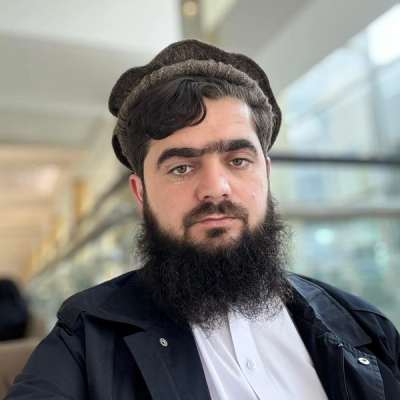
Russian Foreign Minister Sergey Lavrov told Amir Khan Muttaqi, the Taliban foreign minister, that the positive results of Moscow’s recognition of the Taliban government “will soon become evident.”
The two met on the sidelines of the Moscow Format meeting, where Muttaqi hailed Russia’s decision to recognise the Taliban regime as a “historic and significant step” in strengthening bilateral ties.
According to a statement from the Taliban’s Foreign Ministry, Muttaqi said the move opens new opportunities for political and economic cooperation and marks “a major step toward Afghanistan’s active engagement in the international community.” He also underscored the importance of joint efforts to combat narcotics, advance regional economic projects, and strengthen transit corridors.
The Taliban said Lavrov praised the group’s efforts to curb drug trafficking, improve security, and combat terrorism, adding that Russia values the Taliban’s “independent stance,” which he described as contributing to regional stability.
In a separate statement, the Russian Foreign Ministry noted that the regional and global situation “is complex and not getting easier,” but acknowledged progress in the Taliban’s counterterrorism efforts and cited UN reports of a sharp decline in opium cultivation in Afghanistan.
The statement added that Russia is interested in expanding cooperation with the Taliban in combating drug trafficking, terrorism, and organised crime, as well as in promoting peace and stability in Afghanistan.
90-Minute Discussion with Pakistan’s Envoy
On the sidelines of the same event, Muttaqi held a 90-minute meeting with Pakistan’s special envoy for Afghanistan, Mohammad Sadiq Khan.
Khan wrote on X that the discussion focused on enhancing bilateral cooperation in trade, transit, and regional security. Both sides stressed the importance of regional connectivity and agreed to explore practical steps to facilitate trade, including improving infrastructure and simplifying customs procedures.
The delegations also discussed the regional security situation, the presence of militant groups, and their impact on cross-border trade. They reaffirmed the need for continued joint efforts to address security concerns, protect transit routes, and combat illicit activities.
The Taliban’s Minister of Commerce said the group and Kazakhstan have agreed to increase their annual trade volume to $3 billion and accelerate implementation of the “Afghan-Trans” railway project.
According to Nooruddin Azizi, the agreement was reached during a meeting in Kabul on Tuesday, Oct. 7, with Jan-Bek Tayzhanov, Kazakhstan’s deputy transport minister; Iran Sharkhan, deputy minister of industry and construction; and Gaziz Akbasov, Kazakhstan’s ambassador to Afghanistan.
In a statement, the Taliban’s Ministry of Industry and Commerce said the two sides discussed expanding economic cooperation, trade, the Afghan-Trans railway project, and improving transit facilities for exports.
A key point of the talks was a proposal to hold a joint Kazakh-Afghan trade and industry exhibition to strengthen business and industrial ties.
While Kazakhstan has not formally recognised the Taliban government, it maintains close diplomatic and commercial relations with the group. The Taliban have previously claimed that Kazakhstan is ready to cooperate in all areas with their administration.
Kazakh President Kassym-Jomart Tokayev, speaking on Sept. 23 at the 80th session of the UN General Assembly, underscored the importance of peace and stability in Afghanistan, saying inclusive development is essential for lasting regional security. He added that Kazakhstan supports the Afghan people through humanitarian assistance and cooperation in trade, food security, infrastructure, and transport.
In June 2024, Kazakhstan removed the Taliban from its list of terrorist organisations. Earlier that year, it also accepted a Taliban diplomat as Afghanistan’s consul general in Astana.
Russian Foreign Minister Sergey Lavrov has warned that the presence of foreign military forces in Afghanistan could spark new regional conflicts, urging Western nations to abandon “destabilising policies” toward the country.
Speaking at the opening of the seventh Moscow Format meeting on Afghanistan on Tuesday, 7 October, Lavrov said: “We firmly emphasise the absolute unacceptability of deploying the military infrastructure of third countries in Afghanistan or neighbouring states under any pretext.”
The talks, held in Moscow, brought together representatives from Russia, India, Iran, Kazakhstan, Kyrgyzstan, China, Pakistan, Tajikistan, Turkmenistan, and Uzbekistan to discuss Afghanistan’s political and security situation. For the first time, Taliban Foreign Minister Amir Khan Muttaqi attended the meeting as a formal member.
Russian Foreign Ministry spokesperson Maria Zakharova earlier confirmed that a delegation from Belarus had also been invited.
Moscow’s Warning on Foreign Military Presence
Lavrov said Afghanistan’s long history of foreign intervention had already shown the dangers of external military involvement.
“Afghanistan’s history is full of examples of foreign military presence. I believe everyone should have drawn the right conclusions long ago,” he said.
He urged Western countries to “recalibrate their approach” and stressed that humanitarian assistance should not be conditioned on political demands.
Lavrov added that the Taliban’s participation in the Moscow Format would make the dialogue more effective:
“Afghanistan’s problems cannot be solved without Afghans themselves,” he said.
Russia Strengthening Ties with the Taliban
Lavrov said he had held a bilateral meeting with Taliban Foreign Minister Amir Khan Muttaqi to discuss expanding relations between Russia and Afghanistan, including cooperation on counterterrorism, counter-narcotics, and trade.
He confirmed that Moscow had formally recognised the Taliban government in July and lifted restrictions on cooperation.
“Ensuring regional security requires Kabul’s participation in political processes, multilateral cooperation, and joint economic projects,” Lavrov said. “Russia fully agrees with this approach.”
Lavrov also criticised Western nations for holding Afghanistan’s frozen assets and imposing banking restrictions that, he said, had deepened the country’s economic crisis.
The Taliban have granted licences to Uzbek companies to explore and extract hydrocarbon resources, including oil and gas, in Afghanistan. Uzbekistan’s energy minister said that if stability continues, Afghanistan could become his country’s key route to the world’s open seas.
Jurabek Mirzamakhmudov, Uzbekistan’s Minister of Energy, told the Uzbekistan 24 television channel that the Taliban had officially authorised Uzbek companies to carry out exploration and extraction projects in Afghanistan.
He said that on 14 September, work began on developing the Tuti Maden gas field under a 25-year contract signed between the Taliban and the Uzbek company Eriell KAM.
“This is the first phase of the project,” Mirzamakhmudov said. “Depending on the results, work will expand into new areas. The initiative will bring mutual economic benefits to both Uzbekistan and Afghanistan.”
The minister added that sustained peace and infrastructure development in Afghanistan could transform it into a strategic transit hub.
“If peace is established in Afghanistan and its economy and infrastructure develop,” he said, “the country could become the shortest route to the world’s seas, supporting stronger economic growth and expanding Uzbekistan’s logistical capacity.”
Mirzamakhmudov emphasised that peace and stability in Afghanistan are essential not only for Uzbekistan but for all neighbouring and regional countries.
“This is a long-term political and strategic goal,” he said. “Our president understands this reality and believes that step-by-step implementation will bring short-, medium-, and long-term results.”
He also noted that the Afghan people have “deep feelings of friendship and respect” toward Uzbekistan.
Uzbek President Shavkat Mirziyoyev has consistently advocated engagement and cooperation with the Taliban government, warning that isolating Afghanistan would harm regional and global interests.
Earlier in September, the Taliban government and Uzbekistan launched joint energy projects worth $250 million, including the construction of new power transmission lines and substations, among them, the 500-kilovolt Surkhan–Pul-e Khumri line and electricity facilities in Nangarhar and Kabul. The projects are expected to be completed by 1 April 2027.
The German government has confirmed that its officials held talks with Taliban representatives in Kabul to discuss the deportation of Afghan nationals whose asylum claims were rejected in Germany.
A spokesperson for Germany’s Interior Ministry said on Monday that while the Taliban had agreed in principle to accept deported Afghans, Berlin had offered “no concessions and no political recognition” in return.
A German delegation travelled to Kabul last week and met with officials from the Taliban’s Interior and Foreign Ministries, as well as airport authorities, to discuss the technical and administrative aspects of deportation procedures.
The Taliban reportedly agreed to accept Afghan citizens verified through charter flights. Germany’s interior minister had earlier suggested the use of commercial flights, but Taliban officials did not approve that option.
Amid criticism over direct engagement with the Taliban, the spokesperson defended the meeting, saying an in-person discussion in Kabul was “absolutely necessary” to resolve operational issues.
The spokesperson also dismissed reports that the talks covered broader cooperation, including counter-narcotics initiatives. “These discussions were strictly about the return of individuals,” they said.
Some Taliban representatives had earlier claimed that the meetings involved wider collaboration, including on drug control.
Germany has not recognised the Taliban administration and continues to criticise its human rights record, particularly its restrictions on women and girls. However, Berlin has decided to proceed with deportations of Afghan nationals who committed serious crimes or pose security risks.
Germany has previously carried out two deportation flights to Kabul with logistical support from Qatar. The latest trip marks the first visit by German officials to Afghanistan since the Taliban returned to power in 2021.
The decision to engage directly with the Taliban has sparked controversy in Germany, with critics arguing that such contact risks legitimising a regime accused of systematic human rights abuses.