
The Taliban said it has ordered its forces to refrain from launching new attacks against Pakistan out of respect for ongoing negotiations in Doha, despite what it described as continued Pakistani aggression along the border.
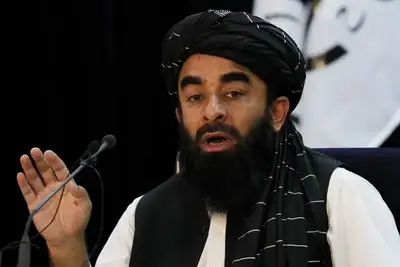
Taliban spokesperson Zabihullah Mujahid confirmed on Saturday, that Defence Minister Mullah Yaqub Mujahid has travelled to Doha for talks with Pakistani officials.
In a post on X, Mujahid said that although the Taliban reserves the right to respond to Pakistani strikes, its forces have been instructed to hold fire while the talks are underway.
He said Pakistani military attacks on parts of Paktika province the previous night left several civilians dead and wounded, condemning the assaults as “an attempt to prolong the war.”
Mujahid reiterated that the Taliban remains committed to peaceful solutions and regional stability but added, “Whatever happens is the result of Pakistani aggression.”

Taliban intelligence officials have ordered the suspension of broadcasts by Shamshad TV, one of Afghanistan’s leading television networks, sources told Afghanistan International.
The directive reportedly came from Taliban supreme leader Hibatullah Akhundzada on Friday evening. The reason for the shutdown has not yet been officially confirmed.
According to sources, Taliban intelligence officers visited Shamshad TV’s office and halted all programming indefinitely. Another source suggested the decision may have been linked to content and programmes deemed inconsistent with Taliban policies.
Shamshad TV is one of Afghanistan’s most prominent broadcasters, with a large viewership across the country. Media freedom advocates and journalists expressed concern that the move would further restrict press freedom and intensify pressure on reporters.
The Afghanistan Media Support Organisation condemned the Taliban’s decision to suspend Shamshad TV and radio broadcasts, calling it further evidence of the group’s intolerance toward independent media and freedom of expression.
The organisation noted that over the past four years, the Taliban have severely restricted Afghanistan’s media environment by imposing sweeping limitations, closing outlets, and detaining and threatening journalists.
The Taliban have previously suspended the operations of several other media networks. Earlier, the Afghanistan Journalists Centre reported that Taliban directives banning the broadcasting of images of living beings had been enforced in more than 20 provinces.
The ceasefire between the Taliban and Pakistan has been extended, Taliban sources in Kabul told Afghanistan International on Friday. The sources said both sides agreed to maintain the truce until the conclusion of upcoming talks in Doha.
According to the sources, a Taliban delegation led by Defence Minister Mullah Yaqub is expected to travel to Doha on Saturday.
Taliban spokesperson Zabihullah Mujahid told Ariana TV that the ceasefire with Pakistan is indefinite, saying, “As long as Pakistan does not attack Afghanistan, the Taliban will not attack Pakistan.” Mujahid added, however, that no delegation from Afghanistan had yet departed for the talks.
Pakistani officials have not issued any official statement regarding the ceasefire extension.
The 48-hour ceasefire between the Taliban and Pakistan was set to expire at 5 p.m. local time on Friday, with no indication of formal negotiations or an extension, officials said.
Pakistan’s Foreign Ministry spokesperson told reporters he had no specific information regarding possible talks in Qatar, where discussions were reportedly being planned.
Taliban sources told Afghanistan International that a delegation, led by Defence Minister Mullah Yaqub, is expected to travel to Doha to meet Pakistani officials. The talks would reportedly focus on the recent border clashes and the potential for extending the ceasefire.
However, Pakistan’s Foreign Ministry declined to comment on any planned meetings in Doha.
Meanwhile, Qatar, Iran, and Saudi Arabia have each expressed readiness to mediate between the Taliban and Pakistan amid heightened tensions following deadly cross-border fighting earlier this week.
The European Union’s special envoy for Afghanistan, Gilles Bertrand, has called for the start of an intra-Afghan dialogue, saying it could pave the way for lasting peace in the country.
Speaking at a press conference in Kabul on Thursday, at the end of a six-day visit, Bertrand said the EU views a multilateral process as the only viable path to address the international community’s concerns about Afghanistan. He emphasised that the Taliban must honour its international commitments.
Bertrand said he had met several Taliban officials, UN representatives, diplomats, and aid agencies during his visit, stressing the importance of the UN’s comprehensive approach as outlined in the 2024 report by Feridun Sinirlioğlu, the UN special coordinator for Afghanistan. The approach, he said, involves identifying initial common steps acceptable to all parties.
The envoy reiterated that the EU considers inclusivity, adherence to international obligations, and intra-Afghan dialogue essential for sustainable peace. He added that the EU had raised concerns with Taliban officials about the presence and cross-border activities of regional terrorist groups in Afghanistan, while acknowledging the Taliban’s efforts to curb opium cultivation and combat ISIS-Khorasan.
Bertrand met with senior Taliban officials, including Deputy Prime Minister Abdul Salam Hanafi, Minister of Economy Deen Mohammad Hanif, Minister of Refugees Abdul Kabir, Minister of Information and Culture Sher Ahmad Haqqani, and Deputy Foreign Minister Naeem Wardak.
His visit came amid heightened tensions between the Taliban and Pakistan. Bertrand said he had urged both sides in discussions with Taliban officials and Pakistan’s ambassador in Kabul to exercise restraint, respect each other’s territorial integrity, protect civilians, and resume security dialogue.
This was Bertrand’s first visit to Afghanistan as the EU’s special envoy. He previously served as a diplomat in Kabul during the early years of the Karzai administration.
EU Concerns Over Women’s Rights
Bertrand said he had discussed human rights with Taliban officials and expressed deep concern over restrictions on Afghan women and girls. He said the Taliban’s recent ban on women working in UN offices had sent “another negative message” to the international community.
He reaffirmed the EU’s strong support for media freedom in Afghanistan.
EU Aid and Development Support
Since the Taliban’s return to power in 2021, the EU has provided €1.8 billion in humanitarian aid, essential services, healthcare, private-sector development, and alternative livelihoods, Bertrand said.
He announced a new €83 million support package approved by EU member states to assist Afghanistan’s private sector, vulnerable families, job creation, women’s economic empowerment, and education and health programmes.
However, Bertrand noted that restrictions imposed on aid partners have undermined the efficiency and cost-effectiveness of assistance. He stressed that after four years of substantial support, the EU and its partners remain committed to improving the lives of Afghans but those restrictions must be reconsidered.
Afghan Refugees and Deportations
Bertrand said the mass return of Afghan migrants had become “a major challenge and considerable additional pressure” on Afghanistan’s fragile situation.
He said UN and international partners acknowledged the Taliban’s efforts to accommodate returnees and provide basic services, but emphasised the need for reintegration, housing, and employment opportunities.
The envoy said EU support for Afghan returnees would increase in 2025 through the International Organization for Migration (IOM) and the UN Refugee Agency (UNHCR), focusing on sustainable reintegration, job creation, private-sector development, and access to health and education.
EU Conditions for Engagement
Bertrand said the EU’s engagement with the Taliban is guided by principles, pragmatism, and a focus on the Afghan people.
He said the EU seeks to work with all Afghans striving for a peaceful, inclusive, and self-reliant Afghanistan and pledged to continue visiting the country regularly to meet with Taliban officials, women, civil society representatives, and other social groups.
Iran will allocate 200,000 work visas for Afghan labourers, a senior Iranian diplomat announced during a meeting with Abdul Kabir, the Taliban’s Minister for Refugees, in Kabul.
Mohammad Reza Bahrami, Director General for South Asia at Iran’s Ministry of Foreign Affairs, said Tehran remains committed to addressing the situation of undocumented Afghan migrants and will continue talks with the Taliban administration on the issue.
Bahrami expressed satisfaction with the growing ties between Tehran and Kabul and confirmed that a high-level Iranian delegation will soon visit Afghanistan. He added that Iran has fulfilled its commitments toward Afghan migrants.
In response, Abdul Kabir urged Iranian authorities to treat Afghan migrants with dignity, protect their rights, and halt deportations. He described Iran’s decision to issue work visas as an important step and said the Taliban government would soon submit a proposal to address the challenges faced by Afghan nationals in Iran.
According to official figures, Iran has deported nearly two million Afghan migrants since the beginning of this year.