• العربية
  • پښتو
  • فارسی
Brand
  • Afghanistan
  • Sport
  • Markets
  • Afghanistan
  • Sport
  • Markets
  • Theme
  • Language
    • العربية
    • پښتو
    • فارسی
  • Afghanistan
  • Sport
  • Markets
All rights reserved for Volant Media UK Limited
volant media logo

Pakistan, Taliban To Resume Peace Talks In Istanbul After Mediation By Turkiye

Oct 30, 2025, 10:05 GMT+0

Pakistan and the Taliban have agreed to resume peace talks in Istanbul following mediation efforts by Turkiye, Reuters reported on Thursday, citing three informed sources.

The decision comes just a day after Pakistan officially announced the collapse of the Istanbul negotiations, which had aimed to resolve growing tensions between Islamabad and the Taliban in Kabul.

According to Pakistan’s Geo News, Islamabad agreed to return to the negotiating table at Turkiye’s request, in an effort to preserve the ceasefire and prevent further escalation.

The report said the Pakistani delegation, which had been preparing to leave Istanbul, has now extended its stay to continue discussions with the Taliban. It added that Pakistan decided to give peace “another chance.”

While the exact timing of the renewed talks has not been confirmed, Afghan media outlets have reported that delegations from both sides were expected to reconvene on Thursday.

The Taliban have not yet issued an official statement regarding the resumption of the negotiations.

The earlier round of talks, held over four consecutive days in Istanbul with mediation by Qatar and Turkiye, ended on Tuesday without an agreement. Both sides later blamed each other for the failure of the discussions.

Most Viewed

Taliban Ignore Afghanistan’s Interests By Backing Militants, Says Pakistan Army Chief
1

Taliban Ignore Afghanistan’s Interests By Backing Militants, Says Pakistan Army Chief

2

United Nations Delivers Education Kits To Four Million Afghan Children

3

Taliban Renews Call For China To Launch Aynak Copper Mine

4

Taliban Leaders In South-West Hold Security Meet In Kandahar

5

Afghan Deportations Is Strategic Mistake, Says European Parliament Member

•
•
•

More Stories

Instability In Afghanistan Still Poses Regional Risk, Says CSTO Official

Oct 29, 2025, 16:21 GMT+0

Tolatbek Musadikov, Deputy Secretary-General of the Collective Security Treaty Organization (CSTO), has warned that threats emanating from Afghanistan have not yet been eliminated. He said that instability in the country continues to endanger the borders of CSTO member states.

Speaking on Wednesday at the Third Eurasian Security International Conference in Minsk, Musadikov said large-scale and potentially escalating conflicts were unfolding near the CSTO’s area of responsibility, including Afghanistan, the Middle East, and Eastern Europe.

“The situation in Afghanistan remains tense, and its challenges and threats have not yet been resolved,” he said, as quoted by Russia’s state news agency TASS.

Musadikov also noted that Western countries, in pursuit of geopolitical interests, are employing “complex forms of warfare” and new technologies, including artificial intelligence, to manipulate information and spread “fake and provocative content.”

The CSTO, a Moscow-led military alliance that includes Russia, Belarus, Armenia, Kazakhstan, Kyrgyzstan, and Tajikistan, has repeatedly expressed concern about security risks emanating from Afghanistan, particularly the presence of extremist groups such as ISIS and radical Central Asian groups.

CSTO member states, especially Tajikistan, have voiced alarm over the possibility of militant infiltration and instability spilling across their borders since the Taliban takeover in 2021.

Renewed Taliban Infighting Reported In Afghanistan’s Badakhshan Province

Oct 29, 2025, 14:52 GMT+0

Fighting has again broken out among Taliban forces in Afghanistan’s Badakhshan province.

Local sources reported renewed clashes early Wednesday in the Shahr-e-Buzurg district between Taliban units and fighters loyal to Abdul Rahman Ammar, the group’s former provincial head of mining.

Sources told Afghanistan International that casualties have not yet been confirmed, but Ammar’s fighters are currently surrounded by Taliban reinforcements sent to the area.

Fasihuddin Fitrat, the Taliban’s army chief of staff, reportedly travelled to Badakhshan on Tuesday to mediate and end the conflict. However, according to multiple sources, his efforts have so far failed to halt the fighting.

Ammar’s loyalists are said to have taken defensive positions in the mountains around Shahr-e-Buzurg, where the former commander enjoys significant local support.

The clashes, which have continued for several days, pit Ammar’s forces against those of Shafiqullah Hafizi, the Taliban’s current head of mining in Badakhshan, in what sources describe as a dispute over control of lucrative gold mines. Ammar is believed to have backing from senior Taliban figures, including Fitrat.

The Taliban authorities have not commented publicly on the confrontation.

On Monday, Taliban border battalion troops reportedly fought against Ammar’s forces in support of Hafizi. Additional reinforcements were later dispatched from the provincial capital to contain the violence.

Earlier reports from Badakhshan suggested that at least three people had been killed, including two fighters loyal to Ammar and one Taliban officer identified as Abdul Alim Hamidi, commander of operations for the group’s 1st Brigade. Taliban units are now said to be pursuing the “rebel commander.”

Both Ammar and Hafizi are influential Taliban figures in Badakhshan. Although Ammar no longer holds an official post, he is regarded as a powerful local commander with his own loyal fighters and funding network.

Since taking power, the Taliban have prioritised mining operations across Afghanistan. In Badakhshan, in particular, competition among commanders for control and profit from the province’s natural resources has repeatedly led to internal clashes.

Taliban Publicly Flog Two Women, Three Men in Ghor & Balkh

Oct 29, 2025, 12:53 GMT+0

The Taliban’s Supreme Court said on Wednesday that two women and three men were publicly flogged in Afghanistan’s Ghor and Balkh provinces on charges of “moral corruption” and “alcohol trafficking.”

According to the court’s statement, each of the convicted individuals received at least 39 lashes in public.

The statement said the Ghor court sentenced four people, including two women, for “moral corruption.” The punishment was carried out at the provincial stadium in the presence of local officials, Taliban security forces, and residents.

In a separate case, the Supreme Court said another person in Balkh province was flogged in public for allegedly transporting alcoholic beverages.

Despite widespread international condemnation, the Taliban continue to impose public floggings and corporal punishments, describing them as enforcement of “Islamic Sharia law.”

Human rights organisations have repeatedly called on the Taliban to end such practices, which they say constitute torture and violate Afghanistan’s international obligations.

Pakistan’s Defence Minister Threatens To Drive Taliban ‘Back To Tora Bora Caves’

Oct 29, 2025, 11:37 GMT+0

Pakistan’s Defence Minister Khawaja Asif has issued a sharp warning to the Taliban, threatening their complete destruction and saying Pakistan could force them to “flee back to the Tora Bora caves.”

Asif claimed that Pakistan would not need to use even a fraction of its military power to “completely obliterate the Taliban regime” and said a repeat of the Taliban’s retreat into Tora Bora would be “a spectacle to watch.” The Tora Bora mountain complex in eastern Afghanistan gained notoriety for its strategic role after the Taliban's fall in 2001.

The minister accused the Taliban of dragging Afghanistan toward another war to preserve their rule and sustain what he called a “war economy.”

Following the collapse of four days of talks between Pakistan and the Taliban in Istanbul, Asif wrote on X on Wednesday that Pakistan had only entered the discussions “at the request of brotherly countries who were persistently being beseeched by Taliban Regime”

He said recent “venomous statements" by Taliban officials revealed “the devious and splintered mindset of the Taliban regime.”

Asif alleged that the Taliban were blindly pushing Afghanistan into conflict “to retain its usurped rule and maintain the war economy.”

“Despite fully knowing their inherent limitations and hollowness of their war cries, they are beating the war drums to maintain their crumbling facade,” he wrote.

He added that if the Taliban insist on “madly hellbent upon ruining Afghanistan and its innocent people once again then so be it.”

Responding to those warning that “Afghanistan is the graveyard of empires” and that war with it would have dire consequences, Asif said: “Pakistan certainly doesn’t claim it to be an empire but Afghanistan is definitely a graveyard, surely for its own people.”

“Never a graveyard of empires” he continued, “but certainly a playground of empires you have been throughout history.”

The defence minister warned Taliban “warmongers” who, he said, benefit from continued instability in the region, that they were underestimating Pakistan’s “resolve and courage.”

“If the Taliban regime wants to fight us,” he said, “the world will Inshallah see that their threats are nothing but performative circus!.”

Failed Talks in Istanbul

The Taliban and Pakistani delegations held several rounds of lengthy discussions in Istanbul between Saturday and Tuesday, mediated by Qatar and Turkiye.

On Tuesday, Pakistan’s Minister of Information, Attaullah Tarar, announced that the four-day talks with the “Afghan Taliban regime” had ended without results.

Although the Taliban have not yet commented on the failure of the talks, Tarar accused the Taliban delegation of evading key issues and confirmed that Islamabad would take “all necessary measures” to protect its citizens.

He said that since the Taliban’s return to power in Kabul, Pakistan has repeatedly engaged with them over cross-border terrorism, particularly involving Tehreek-e-Taliban Pakistan (TTP) and Baloch separatists.

A Taliban Foreign Ministry source earlier told Afghanistan International that Pakistan had demanded the Taliban launch operations against the TTP and declare it a terrorist organisation.

The source said Islamabad warned that if the Taliban refused, Pakistan reserved the right to carry out airstrikes on “suspicious movements” inside Afghanistan in response to TTP attacks.

The Taliban’s official position, the source added, is that it does not recognise the Pakistani Taliban as a “responsible entity” and regards the issue as Pakistan’s “internal matter.”

The Taliban delegation in Istanbul included Deputy Interior Minister Rahmatullah Najib, Taliban representative in Qatar Suhail Shaheen, senior member Anas Haqqani, Foreign Ministry Political Director Noor Ahmad Noor, Defence Ministry Operations Chief Noor Rahman Nusrat, and Foreign Ministry spokesperson Abdul Qahar Balkhi.

The seven-member Pakistani delegation consisted of diplomats and senior intelligence officials
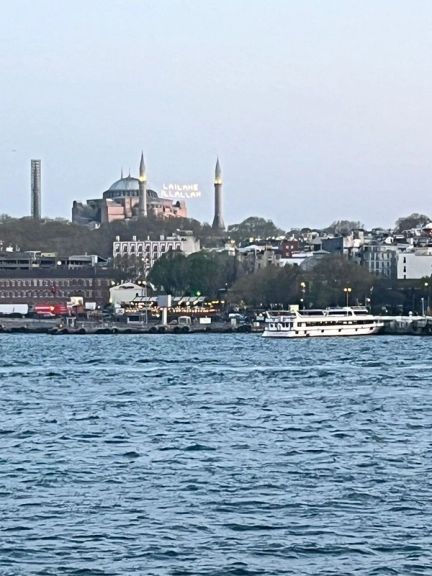
Istanbul Peace Talks Between Pakistan & Taliban Break Down

Oct 29, 2025, 10:09 GMT+0

Pakistan’s Minister of Information and Broadcasting, Attaullah Tarar, announced on Tuesday that four days of negotiations with the “Afghan Taliban regime” in Istanbul had ended without agreement.

In a statement on X, Tarar thanked Qatar and Turkiye for mediating the talks but accused the Taliban delegation of avoiding discussions on key issues.

He said Pakistan would take “all necessary measures” to protect its citizens, adding that since the Taliban’s return to power in 2021, Islamabad had repeatedly engaged with Kabul over cross-border terrorism particularly attacks by Tehreek-e-Taliban Pakistan (TTP) militants and Baloch separatists.

Tarar said Pakistan had urged the Taliban administration to uphold commitments made under the Doha Agreement, both to Pakistan and the international community, but that efforts to secure cooperation had failed. He accused the Taliban of continuing to provide support and shelter to anti-Pakistan militant groups.

“We will continue to take all possible measures necessary to protect our people from the menace of terrorism,” he said, adding that the government would use “all available resources to eliminate terrorists, their hideouts, facilitators, and supporters.”

The minister also warned that Pakistan’s patience had worn thin, accusing the Taliban of “dragging the Afghan people into a destructive conflict.”

He said Pakistan had presented “conclusive and verifiable evidence” of militant activity emanating from Afghan soil, but the Taliban delegation “avoided responsibility” and refused to provide assurances of action, leading to the failure of the talks.

Tarar reiterated his gratitude to Qatar and Turkiye for hosting and mediating the negotiations, saying the Taliban representatives had “verbally agreed” several times to Pakistan’s “logical and legitimate demand” for credible and decisive action against terrorist groups.

Taliban officials have not yet commented on the collapse of the talks.

The Istanbul negotiations followed a meeting between the defence ministers of Pakistan and the Taliban in Doha earlier this month, during which both sides agreed to a ceasefire and to reduce border hostilities. Technical discussions and monitoring mechanisms were deferred to the Istanbul round.

Pakistan has demanded that the Taliban prevent cross-border attacks by TTP militants and provide a written guarantee to curb further assaults on Pakistani territory.