• العربية
  • پښتو
  • فارسی
Brand
  • Afghanistan
  • Sport
  • Markets
  • Afghanistan
  • Sport
  • Markets
  • Theme
  • Language
    • العربية
    • پښتو
    • فارسی
  • Afghanistan
  • Sport
  • Markets
All rights reserved for Volant Media UK Limited
volant media logo

Afghanistan Faces One Of The World’s Worst Nutrition Crises, Says UNICEF

Oct 31, 2025, 17:12 GMT+0

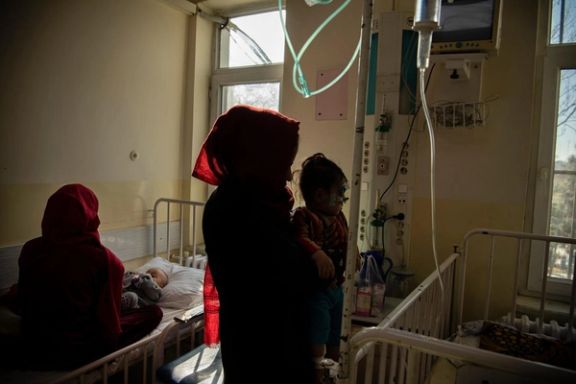
UNICEF representative in Afghanistan has said the country is facing one of the most severe nutrition crises in the world, with 3.5 million children suffering from acute malnutrition and one million experiencing extreme wasting and at serious risk.

Tajudeen Oyewale, UNICEF’s representative in Afghanistan, wrote on X that funding and allowing female health workers access to communities can save lives and secure children’s futures.

He added that despite enormous challenges, UNICEF continues to work every day for the health of the Afghan people, and this year alone, more than 480,000 children suffering from severe acute malnutrition have received treatment.

The World Food Programme reported in September that nearly five million mothers and children in Afghanistan are malnourished, warning that the hunger crisis is deepening across the country.

According to UN figures, every ten seconds, one child in Afghanistan becomes malnourished.

Most Viewed

Taliban Ignore Afghanistan’s Interests By Backing Militants, Says Pakistan Army Chief
1

Taliban Ignore Afghanistan’s Interests By Backing Militants, Says Pakistan Army Chief

2

United Nations Delivers Education Kits To Four Million Afghan Children

3

Taliban Renews Call For China To Launch Aynak Copper Mine

4

Taliban Leaders In South-West Hold Security Meet In Kandahar

5

Afghan Deportations Is Strategic Mistake, Says European Parliament Member

•
•
•

More Stories

Ties With Taliban Depend On Crackdown On TTP, Says Pak Defence Minister

Oct 31, 2025, 16:10 GMT+0

Pakistan’s Defence Minister Khawaja Asif has said that relations between Islamabad and Kabul will not normalise until the Taliban ends its support for Tehreek-e-Taliban Pakistan (TTP).

In an interview with Geo News on Friday, Asif said peaceful relations with Afghanistan are only possible if the Taliban take decisive action against the Pakistani Taliban group.

He claimed that several TTP members have taken refuge in Afghanistan and continue to infiltrate Pakistani territory.
Asif said Pakistan’s top priority is ending terrorist infiltration from Afghan soil.

His comments come a day after Taliban Interior Minister Sirajuddin Haqqani described the TTP issue as Pakistan’s “internal matter” and urged Islamabad to resolve it domestically.

Speaking at a meeting in Kabul on Thursday, Haqqani said the Taliban lack “tanks, artillery, or aircraft” but have the determination to defend Afghanistan against foreign aggression.

Referring to Islamabad’s recent warnings, Haqqani said other nations should learn from the fate of the Soviet Union, NATO, and the United States.

He also accused certain individuals in Pakistan of “fanning the flames of war,” saying their actions threaten to destabilise the region further.

Pakistan Hopes Next Round Of Taliban Talks Will Yield Results

Oct 31, 2025, 13:06 GMT+0

Pakistan’s Foreign Ministry has expressed optimism that the next round of talks with the Taliban, scheduled for next week in Istanbul, will produce “positive results.”

Foreign Ministry spokesperson Tahir Andarabi told reporters on Friday that the second round of talks, initially planned for two days, extended to four as both sides sought common ground.

Speaking at a press conference on Friday, Andarabi said Pakistan expects the third round of talks, due to begin on November 6, to lead to “positive outcomes.”

The second round, which ended on Thursday without a breakthrough, concluded with both delegations agreeing to extend the ceasefire.

Türkiye’s Foreign Ministry confirmed that Pakistan and the Taliban reached a general understanding to continue the truce, adding that discussions on maintaining the ceasefire will resume on 6 November.

“Pakistan participated in the Istanbul talks, which started on 25 October, in good spirit and with positive intention,” Andarabi said, noting that the talks were prolonged in hopes of achieving an agreement.

He reiterated Islamabad’s firm position that Afghan soil must not be used for terrorist acts against Pakistan.

Andarabi emphasised that Pakistan is not seeking escalation but expects the Taliban to honour their international obligations and address Islamabad’s “legitimate security concerns” through verifiable actions against Tehreek-e-Taliban Pakistan (TTP) and Baloch separatists.

He said that for the past four years, Pakistan has repeatedly urged the Taliban to take “decisive and effective measures” against militant groups operating from Afghan territory.

According to Andarabi, Pakistan has shared credible intelligence with Taliban authorities on the presence of TTP leaders and Baloch separatists inside Afghanistan, but cross-border attacks have continued to rise despite repeated assurances.

He added that the Taliban have ignored Pakistan’s legitimate concerns and warned that Pakistani forces have responded firmly to provocations aimed at destabilising the border and enabling terrorism. “Any future provocations,” he said, “will face an equally strong response.”

Andarabi stressed that Pakistan continues to support a “peaceful, stable, united, and prosperous Afghanistan.”

He said that after the Taliban’s return to power in August 2021, Pakistan had expected improved prospects for regional peace and cooperation. Despite ongoing security challenges, Islamabad launched several initiatives to assist Afghanistan, including providing special transit trade facilities.

He added that Pakistan upgraded its diplomatic relations with Kabul from a chargé d’affaires to a full ambassador and supported the extension of the China–Pakistan Economic Corridor (CPEC) into Afghanistan.

The Taliban, however, maintain that the TTP issue is an internal matter for Pakistan. On Thursday, Taliban Interior Minister Sirajuddin Haqqani said the TTP problem must be resolved domestically within Pakistan.

Taliban spokesperson Zabihullah Mujahid said the Taliban seeks constructive relations with Pakistan, describing the Istanbul talks as a “complex process” that ended with an agreement for both sides to reconvene and address outstanding issues.
Pakistani Police Have Detained More Than 10,000 Afghan Migrants, Says Taliban

Oct 31, 2025, 11:52 GMT+0

The Taliban’s embassy in Islamabad has claimed that Pakistani police have detained more than 10,000 Afghan migrants amid rising tensions between the two countries.

In a statement issued on Thursday, Taliban Ambassador Sardar Ahmad Shakib said police have been publicly urging citizens to identify and report Afghans for arrest. He described the situation as “dire,” saying many migrants are living in “extremely difficult conditions.”

Shakib said the crackdown has intensified as all border crossings between the two countries remain closed. Nearly 20 days have passed since the closure of the Torkham and Chaman–Boldak crossings, halting trade, transit and the movement of people entirely, he added.

The Taliban envoy warned that thousands of Afghan refugees are stranded along roadsides without shelter, clean water, food or medicine. He said that in recent days, three children and one woman have died due to harsh conditions.

According to Shakib, Pakistani police have been broadcasting public notices in camps, mosques and marketplaces, urging people to evict Afghans from their homes and shops, report them to authorities, and refrain from renting property to them.

He added that hundreds of trucks carrying Afghan migrants are stuck on the road to Torkham, where women, children and elderly people are suffering from cold weather and a lack of basic necessities. The Taliban embassy accused Pakistani police of harassing migrants and extorting money at checkpoints.

The statement warned that continuing forced deportations while the border crossings remain closed could trigger a major humanitarian crisis.

The embassy urged the Pakistani government to reopen the Torkham, Boldak, Chaman, Angoor Adda, Ghulam Khan and other crossings “to allow Afghan migrants to return home in an orderly and dignified manner.” It said that, until then, deportations should be suspended.

The Pakistani government has not yet responded to the statement. Islamabad has announced plans to expel all undocumented Afghan migrants from the country, citing national security and economic pressures.

Some Pakistani officials, referencing more than four decades of hosting Afghan refugees, have said the country can no longer afford to provide them shelter.

Pakistan Warns Taliban Over Kunar Dam, Says It Holds Leverage

Oct 31, 2025, 10:28 GMT+0

Pakistan’s Defence Minister Khawaja Asif has warned the Taliban against proceeding unilaterally with plans to build a dam on the Kunar River, saying Kabul “cannot disregard Pakistan’s water rights.”

Speaking to Geo News on Thursday, Asif said Islamabad has pressure tools at its disposal and cautioned that the Taliban won’t even be able to do 100 per cent of what they’re thinking of.

The remarks follow Taliban leader Hibatullah Akhundzada’s directive to Afghanistan’s Ministry of Energy and Water to begin construction of a dam on the Kunar River as soon as possible. Taliban Energy Minister Abdul Latif Mansoor said the group would not wait for foreign investors and has been instructed to sign contracts with domestic companies instead.

Pakistan has expressed concern that any large-scale dam on the river, which flows from Afghanistan into Pakistan, could disrupt water supplies to its border regions. The two countries have no formal water-sharing treaty.

At the same time, India’s Ministry of External Affairs said New Delhi is ready to cooperate with the Taliban on the project. Ministry spokesperson Randhir Jaiswal, referring to Taliban Foreign Minister Amir Khan Muttaqi’s recent visit to India, said New Delhi is prepared to support all Taliban initiatives related to water resource management, including hydropower projects.

He stressed that between the two countries, there has been a long history of cooperation on water matters and added that the Salma Dam, for example, is a perfect example of this cooperation, which today is called the India–Afghanistan Friendship Dam.

During his interview, Asif also discussed the recent Istanbul talks between Pakistan and the Taliban, confirming that different drafts are being exchanged for an eventual agreement.

He said any final accord must be in written form and endorsed by mediators Qatar and Turkiye.

Asif added that the Taliban leadership remains partly dependent on Qatar, which played a key role in the group’s previous negotiations with other countries. He reiterated that Islamabad will not accept any agreement unless it is formalised in writing and verified by mediators.

Pakistan, Taliban End Istanbul Talks With No Breakthrough

Oct 31, 2025, 10:08 GMT+0

Türkiye’s Foreign Ministry has announced that Pakistan and the Taliban have agreed to continue observing the ceasefire reached earlier this month, though key issues remain unresolved.

The two sides are set to resume talks on 6 November in Istanbul to finalise a monitoring mechanism for the truce.

In a statement released late Thursday, the Turkish Foreign Ministry confirmed the conclusion of the second round of negotiations between Taliban and Pakistani delegations in Istanbul. The five-day talks, held from 25 to 30 October, took place under the mediation of Qatar and Türkiye.

According to the statement, senior officials from both sides will participate in the next round of discussions. The ministry said the delegations reaffirmed their commitment to maintain the ceasefire, initially agreed between the defence ministers of Pakistan and the Taliban administration during their meeting in Doha.

Despite this, no concrete agreement was reached in Istanbul. The main sticking point remains the presence of militant groups inside Afghanistan and their cross-border attacks on Pakistan. The Taliban deny that Pakistani militants operate from Afghan soil, describing the matter as Pakistan’s “internal issue.” Pakistani military officials, however, have warned that continued attacks by Tehreek-e-Taliban Pakistan (TTP) militants could trigger a strong response from Islamabad.

Türkiye’s Foreign Ministry said both sides agreed to establish a joint monitoring and verification mechanism to help maintain peace, under which any violation of the ceasefire would carry specific consequences.

Meanwhile, Taliban spokesman Zabihullah Mujahid said in a statement that the Istanbul negotiations, which he described as “a complex process”, ended with an agreement for both sides to reconvene to discuss outstanding issues.

Mujahid reiterated that the Taliban “believe in peace and dialogue” and, like other countries in the region, seek “peaceful and respectful relations” with Pakistan. He also underscored the importance of mutual respect, non-interference in each other’s affairs, and ensuring that neither country’s territory is used for hostile actions.