Taliban Announces $90 Million Trade Agreement With Iranian Shipping Firm

Taliban-affiliated media say a 90 million dollar agreement has been signed between Afghanistan’s Dried Fruit Exporters’ Union and an Iranian shipping company.

Taliban-affiliated media say a 90 million dollar agreement has been signed between Afghanistan’s Dried Fruit Exporters’ Union and an Iranian shipping company.
The agreement enables Afghan goods to be transported to international markets by sea.
Al-Emarah, one of the Taliban’s official media outlets, reported on Wednesday that the deal was concluded on the sidelines of a “trade connectivity” meeting attended by Taliban officials and representatives from Iran, Uzbekistan and India.
The agreement comes as the Taliban have severed trade and transit ties with Pakistan and are seeking alternative corridors, particularly through Iran, to sustain exports. Earlier, the Taliban’s minister of industry and commerce travelled to Iran to participate in a joint economic forum.
The Taliban are working to shift Afghanistan’s trade routes away from Pakistan’s ports, including Karachi, and towards Iran’s Chabahar and Bandar Abbas ports. Abdul Ghani Baradar, the Taliban’s deputy prime minister for economic affairs, recently urged Afghan traders to adopt alternative routes to reach regional and international markets.
Iran has welcomed the growing commercial engagement. Alireza Bikdeli, Iran’s ambassador in Kabul, said Tehran now stands with the Taliban more firmly than ever in advancing economic objectives and described Iran as a “reliable partner” with significant transit, commercial and agricultural capacity.
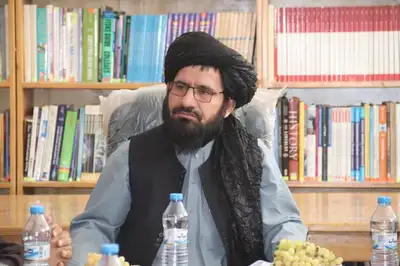

Iran’s interior minister, Iskandar Momeni, says an estimated six million Afghan migrants are currently living in the country. Speaking to reporters on Wednesday, he said Iranian authorities have deported 1.5 million Afghans so far.
According to Iranian media, Momeni told reporters on the sidelines of a cabinet meeting that border security remained stable and that overall national security indicators had improved compared with last year. He said Iran was not “anti-migrant” but argued that the country’s resources were insufficient to support larger numbers.
Momeni said in September that Iran planned to deport around two million additional Afghan migrants by the end of the current solar year.
Human rights groups and accounts from local sources and eyewitnesses indicate that the Islamic Republic has expelled tens of thousands of Afghan migrants without due legal process, often using threats, beatings and forced transfers to detention camps before returning them to Afghanistan.
UN experts warn that returning migrants face severe challenges in Afghanistan, including lack of access to education, a deepening humanitarian crisis, acute food shortages and rapidly deteriorating living conditions.

The European Union’s ambassador to Islamabad, Raimundas Karoblis, has said Pakistan’s request that the Taliban take action against Tehreek-e-Taliban Pakistan (TTP) is reasonable. He added that Islamabad’s concerns stem from security threats originating from across the border.
In an interview with the Pakistani newspaper The News, Karoblis said the EU condemns terrorism in all forms and that Pakistan’s expectation for Afghanistan to act against TTP was grounded in legitimate security concerns. The newspaper reported that the ambassador expressed support for Islamabad’s assertion that militants operating from Afghanistan were responsible for recent attacks inside Pakistan.
The comments appeared in a report published on Wednesday in which the EU envoy also emphasised that tensions between Pakistan and the Taliban should be resolved through diplomatic channels.
Karoblis presented his credentials as the EU’s ambassador to Pakistan on 10 September. He previously served as the European Union’s ambassador to Tajikistan from 2022 to 2025.
Referring to Türkiye’s recent mediation efforts between Islamabad and the Taliban, Karoblis said the EU encourages Pakistan to keep diplomatic channels open. When asked whether the Taliban were fulfilling their Doha commitment not to allow Afghan territory to be used against neighbouring states, he said he did not have independent information to assess the matter and that it was too early to reach a firm conclusion.
Karoblis also said a high-level Pakistan–EU strategic dialogue is scheduled to take place in the coming weeks, led by EU foreign policy chief Kaja Kallas and Pakistan’s foreign minister, Mohammad Ishaq Dar. According to information provided, the discussions will cover Afghanistan, the Russia–Ukraine war, regional security and Pakistan’s role at the United Nations.
His remarks come after the recent collapse of the third round of talks between Pakistan and the Taliban in Istanbul. Pakistan’s defence minister, Khawaja Asif, said the negotiations had reached a complete deadlock and that there were no plans for further talks, adding that the delegation’s return without progress suggested mediators had also lost confidence in the process.
Taliban spokesperson Zabiullah Mujahid later confirmed that the Istanbul talks had failed, saying they produced no results. He added that the Taliban would not allow Afghan soil to be used against any other country.

Taliban Minister of Industry and Commerce Nooruddin Azizi travelled to India on Wednesday at the head of a delegation.
The Taliban’s Ministry of Industry and Commerce said in a statement that the visit was made at India’s invitation and aims to activate and expand the use of Chabahar Port while encouraging Indian investment in the project.
The ministry said that boosting bilateral trade between Afghanistan and India is a key objective of the trip.
According to the statement, the delegation will visit the Pragati Maidan International Trade Fair and hold meetings with senior Indian officials, including the ministers of foreign affairs and commerce. The Taliban said talks will focus on expanding economic cooperation, facilitating trade, creating opportunities for joint investment and strengthening Afghanistan’s role in regional transit routes.
The ministry described the visit as an important step toward enhancing economic and trade relations between New Delhi and Kabul.
This marks the second Taliban minister-level visit to India in less than a month. Earlier, Taliban Foreign Minister Amir Khan Muttaqi travelled to New Delhi, where he and Indian officials agreed to expand diplomatic and economic cooperation.
Azizi’s trip coincides with a suspension of Afghanistan’s trade relations with Pakistan, as all border crossings and commercial routes between the two countries remain closed.
Earlier this week, Azizi travelled to Iran to discuss expanding trade ties and increasing the use of Chabahar Port. The Taliban have signalled their intention to replace Pakistan’s ports, particularly Karachi, with Iran’s Chabahar and Bandar Abbas ports.
Recently, the Taliban’s Ministry of Industry and Commerce urged the United States to extend the sanctions waiver for Chabahar Port. The current exemption is valid for six months. India has invested heavily in the port to gain access to markets in Afghanistan and Central Asia.
Taliban officials have ordered Afghan traders to urgently find alternatives to Pakistan’s ports.
Meanwhile, Ariana Afghan Airlines announced special discounted cargo rates on the Delhi route, based on a directive from the Taliban’s deputy prime minister for economic affairs.
Bakht-ur-Rahman Sharafat, head of Ariana, said: “Each kilogram of export cargo will cost $1, and import cargo 80 cents.” He noted that the previous rate was $2 per kilogram.
With relations between the Taliban and Pakistan at their lowest point in years, the Taliban are prioritising economic cooperation with India and Iran, aiming to bypass Pakistan’s ports entirely and build an economic corridor through Chabahar.
However, experts warn that international sanctions on Iran mean Chabahar is not yet a fully reliable option.
Currently, a significant share of Afghanistan’s trade is conducted through Chabahar and direct air routes to India. But shipping through Chabahar and Bandar Abbas is about 20 percent more expensive than using Pakistani ports.
Bilateral trade between Afghanistan and Iran has exceeded $1.6 billion in the past six months, surpassing Afghanistan’s trade volume with Pakistan.

The 24th meeting of the Shanghai Cooperation Organisation (SCO) Council of Heads of State opened on Tuesday in Moscow under the chairmanship of Russia’s prime minister.
Senior officials from Russia, China, India, Pakistan, Tajikistan, Kyrgyzstan, Kazakhstan, Uzbekistan and Belarus are attending the summit. Taliban officials are not participating.
High-level representatives from Bahrain, Egypt, Qatar, Kuwait, Mongolia and Turkmenistan, along with leaders of several international organisations, have also been invited.
Russian Prime Minister Mikhail Mishustin is presiding over the meeting.
Images released by the Russian Foreign Ministry show heads of delegations from SCO member states arriving at Russia’s National Centre in Moscow. No Afghan or Taliban flag appears in the photos. Russian officials and the SCO have not commented on the absence of Taliban representatives.
The SCO, founded in 2001, includes Russia, China, India, Kazakhstan, Kyrgyzstan, Tajikistan, Pakistan, Iran and Uzbekistan as full members. Belarus joined the organisation on 4 July 2024. As the world’s largest trans-regional organisation, the SCO plays a growing role in promoting peace, security and stability across Eurasia.
SCO Secretary-General Nurlan Yermekbayev told Izvestia news agency that the meeting will focus on implementing decisions adopted at the leaders’ level. The SCO leaders’ summit was held in Tianjin in September.
Afghanistan and Mongolia are observer states, while dialogue partners include Azerbaijan, Armenia, Bahrain, Egypt, Cambodia, Qatar, Kuwait, the Maldives, Myanmar, Nepal, the United Arab Emirates, Saudi Arabia, Türkiye and Sri Lanka.

A new report from the World Health Organization (WHO) says suspected dengue cases in Nangarhar province have risen sharply this month.
According to the organisation more than 1,000 suspected infections recorded in November, an increase of nearly 8 percent compared with October. The organisation says no deaths have been reported.
Dengue fever is a viral illness transmitted to humans by the Aedes, or tiger, mosquito.
According to the report, 41.6 percent of those infected were women, and around 98 percent of patients were older than five years. WHO figures show that since the start of 2025, 4,384 suspected cases have been documented across six provinces: Nangarhar, Laghman, Kunar, Kabul, Ghazni and Paktia.
Of the 1,096 samples collected and tested, 685 were confirmed positive for dengue, meaning roughly six in ten people tested had the virus, a sign of active circulation in eastern Afghanistan.
The WHO warns that the increase in cases requires strengthened surveillance, reinforced rapid-response teams and improved public awareness to prevent further spread.